 kevin@heshengstar.com
 +8613295467567




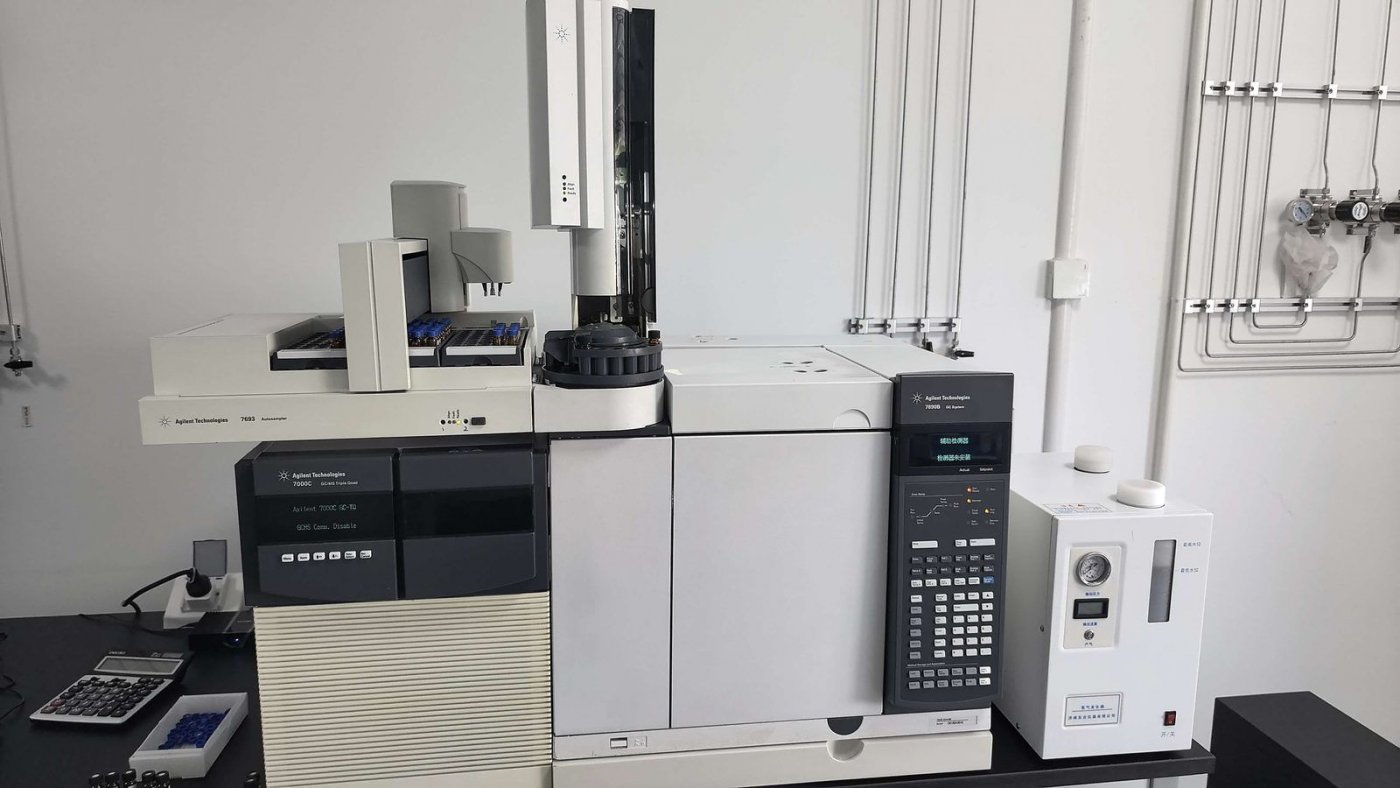
When you qualify an MCT oil supplier, the fatty acid composition line on the certificate of analysis is the single most important data block on the page. It tells you whether the "C8/C10 60:40" you are paying for is real. Yet many buyers never ask how the supplier produces that number. In this post we open up our quality control laboratory and show exactly which instrument sits behind the data — an Agilent 7890B gas chromatograph with a 7693A autosampler — and explain why that matters for your next purchase of MCT oil, medium-chain triglycerides, or caprylic/capric triglyceride (GTCC).
Why fatty acid composition is the core quality test for MCT oil
MCT oil is a distilled blend of caprylic acid triglycerides (C8:0) and capric acid triglycerides (C10:0). The ratio between the two drives almost every performance property a formulator cares about: color and odor stability, metabolic kinetics in sports nutrition, spreading behavior in cosmetics, and digestibility in clinical and pet nutrition. A batch labeled "60% C8" that actually contains 52% C8 will behave differently in your finished product — and you will only discover it after production, when it is too late.
This is why a serious supplier does not estimate composition. It is measured, batch by batch, by gas chromatography of the fatty acid methyl esters (FAME), and the result is printed on every certificate of analysis we ship.
The instrument: Agilent 7890B GC with 7693A autosampler
Agilent Technologies is widely regarded as the reference brand in gas chromatography. The 7890B platform is the same family of instrument specified in many national standards and found in third-party inspection laboratories such as SGS, CTI and Eurofins. Our laboratory operates a 7890B GC system equipped with:
- Flame ionization detector (FID) — the standard detector for fatty acid composition, offering a linear response across the full C6–C18 chain-length range.
- 7693A automatic liquid sampler — robotic sample injection with precise 1 µL dosing, eliminating manual injection variability and allowing unattended overnight sequences for batch consistency checks.
- Programmable-temperature vaporizing inlet and capillary column — clean separation of C6, C8, C10, C12 and longer-chain peaks, so the integration of each fatty acid is unambiguous.
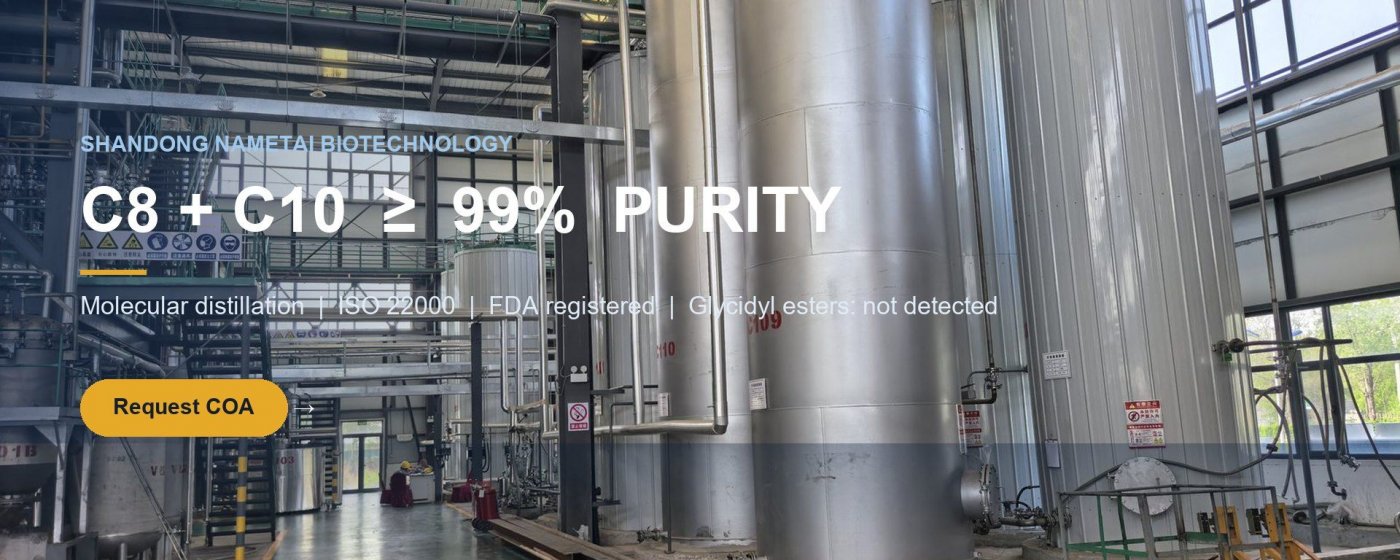
In practical terms, this means every production batch of our MCT oil and esters can be verified against its specification within hours, not days — and the chromatogram is archived, so any historical batch can be re-examined if a customer question ever arises.
What we measure, and what the numbers look like
To make this concrete, here are real values from recent production batches, measured on our Agilent 7890B and supporting instruments. Each value sits comfortably inside the corresponding specification limit.
| Product | Parameter | Specification | Typical value (recent batch) |
|---|---|---|---|
| MCT oil (C8/C10 blend) | C8:0 content | 50–80% | 56.98% |
| MCT oil (C8/C10 blend) | C10:0 content | 20–50% | 42.37% |
| Pure C8 MCT (glyceryl trioctanoate) | C8:0 content | ≥95% | 96.6% |
| Isopropyl myristate (IPM) | Ester content | ≥99.0% | 99.80% |
| 2-ethylhexyl laurate (2EHL) | Ester content | ≥99.0% | 99.27% |
| Isopropyl laurate (IPL) | Ester content | ≥98.0% | 99.0% |
Composition is only one column of the COA. The same batch is also checked for acid value, peroxide value, saponification value, hydroxyl value, moisture, iodine value and color — full panels that you can review on each MCT oil product page together with the typical values we publish.
From chromatogram to certificate: our batch workflow
A single GC run never stands alone. Our release workflow for every batch of MCT oil and esters follows five steps. First, production releases a composite sample drawn from multiple points of the batch, not just the drum head. Second, the sample is esterified to FAME and loaded into the 7693A autosampler, which runs each extract together with a chain-length standard to confirm calibration. Third, the chemist reviews peak integration and calculates the C8, C10 and remaining chain fractions. Fourth, the supporting panel — acid value, peroxide value, saponification value, moisture, iodine value, color — is completed on the same composite sample. Only when every line of the COA falls inside the specification does the batch receive release status, and the signed certificate plus the archived chromatogram are linked to the batch number for the retention period. If any value trends toward its limit, the batch is held and re-tested before a decision is made. This is the routine behind the typical values you see on our product pages — nothing on the certificate is projected, averaged across seasons, or borrowed from a datasheet.
How buyers can use this in supplier qualification
When you audit a supplier — remotely or on site — the GC laboratory is one of the highest-value stops. Three practical checks:
- Ask which instrument produced the COA. If fatty acid composition comes from an in-house calibrated GC system with archived chromatograms, batch traceability is real. If the number is borrowed from a handbook or an old batch, treat the COA as marketing material.
- Ask for the chromatogram, not just the summary. A one-page chromatogram with the C8 and C10 peak areas lets your own QA team verify the ratio independently.
- Cross-check with a third party. For critical projects, send a retained sample to an independent lab. Because we run the same instrument family as major third-party laboratories (such as the CTI reports on our factory page), the two sets of numbers line up.
What this means for your supply chain
An in-house Agilent 7890B GC does not replace third-party verification — it precedes it. Every batch leaves our plant already verified against specification; the third-party report then confirms what our own data predicted. For you as a buyer, that shortens the qualification cycle: you can review batch chromatograms, COA panels and third-party cross-checks before a single drum ships, and re-verify any lot on request.
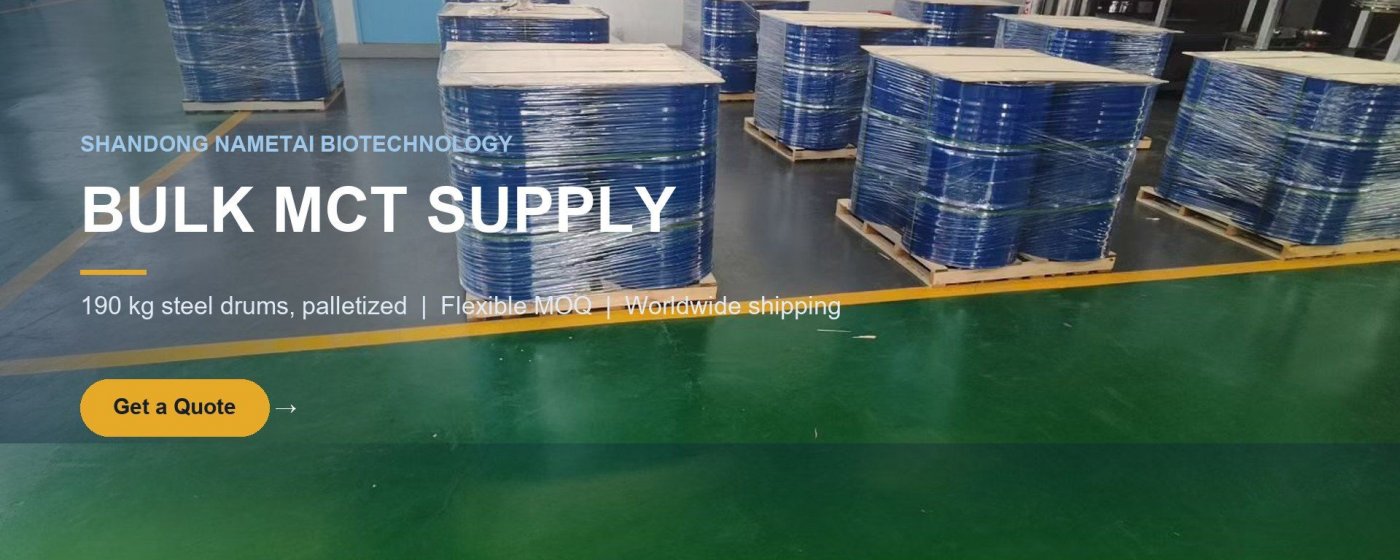
If you are sourcing MCT oil, GTCC/ODO, or fatty acid esters such as IPM, IPP, IPL or the 2-ethylhexyl esters, ask us for the batch COA and chromatogram supporting your target ratio. We ship 190 kg steel drums and 25 kg plastic pails worldwide from ready stock, and custom C8:C10 ratios are confirmed against measured data before production — see our technical blog for other buyer-focused guides, or contact our sales team for samples and documentation.