 kevin@heshengstar.com
 +8613295467567



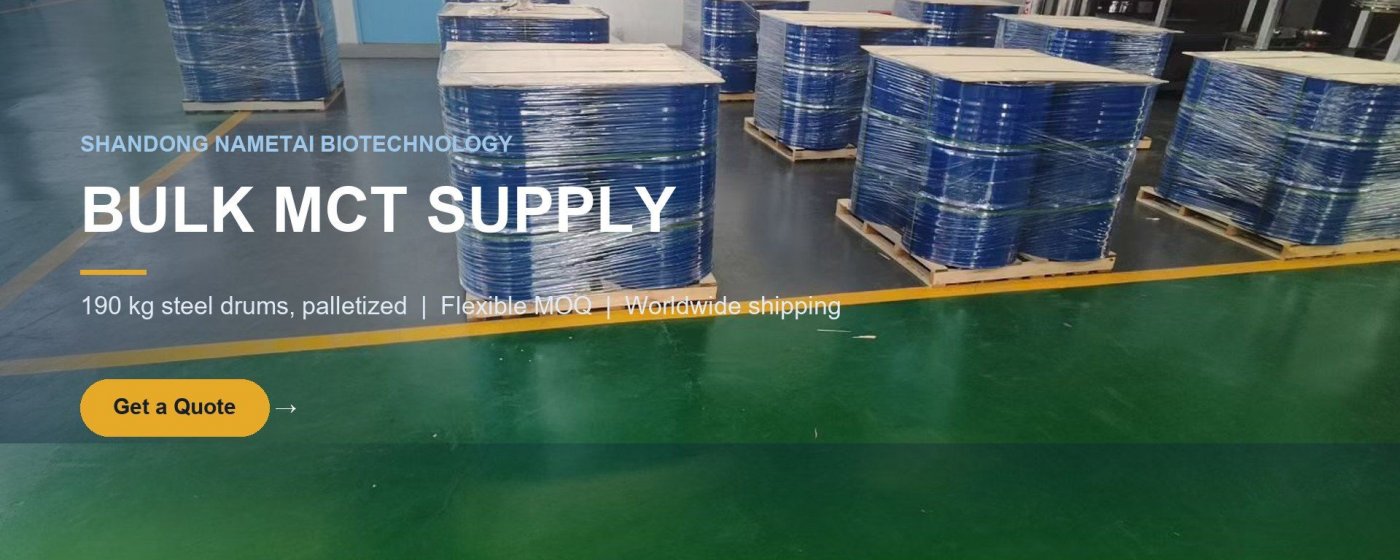

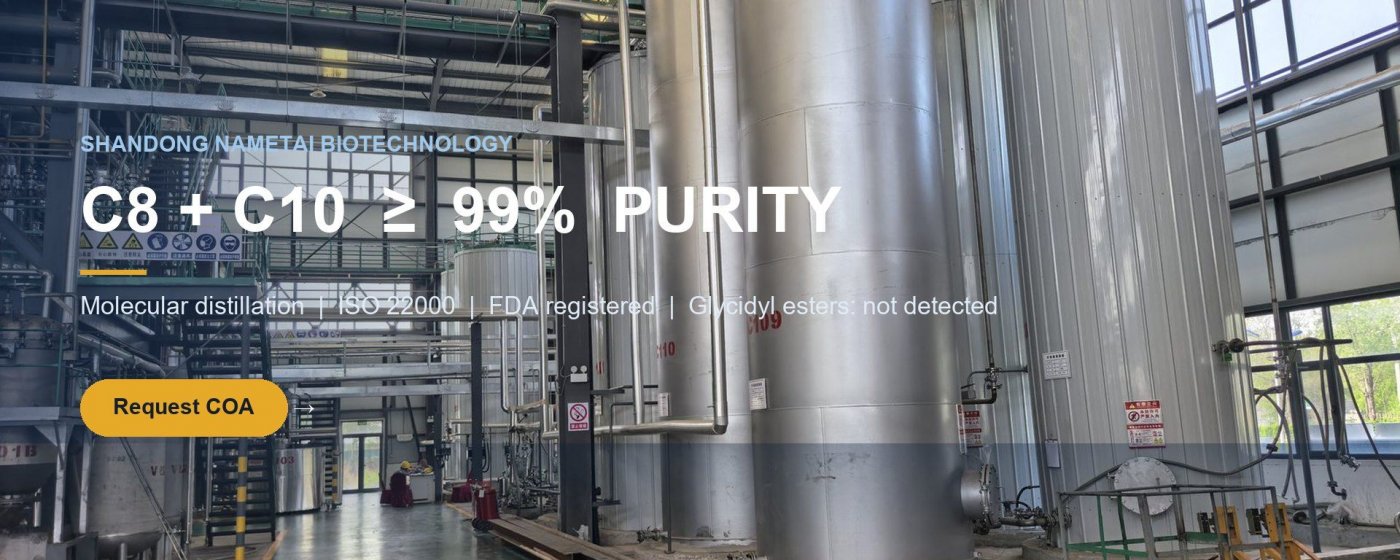
Two drums of medium-chain triglycerides can look identical, carry the same CAS number (65381-09-1) and the same INCI name (Caprylic/Capric Triglyceride) — and still be sold under two completely different specifications. Food grade and pharmaceutical grade are not marketing labels. They are two different test menus, and the difference shows up the moment a customs officer, a QA auditor or a formulation chemist reads your COA.
This article compares the two specifications parameter by parameter, so you can see exactly what you are paying for and which grade your application actually requires.
What "pharmaceutical grade" means in practice
A pharmaceutical-grade triglyceride is defined by a pharmacopoeia monograph — the European Pharmacopoeia, USP-NF, or the Chinese Pharmacopoeia (2025 edition, Volume IV). A monograph does two things: it fixes the identity tests and the limit tests, and it points to the general chapters that prescribe the test method. For medium-chain triglycerides the relevant general chapters include:
- 0521 — fatty acid composition by gas chromatography
- 0601 — relative density
- 0622 — refractive index
- 0633 (method 1) — viscosity
- 0713 — fats and fixed oils: acid value, hydroxyl value, iodine value, peroxide value, saponification value, unsaponifiable matter
- 0832 (method 1) — water determination
- 0841 — residue on ignition
- 0901 — clarity and colour of solutions
Food-grade MCT oil, by contrast, is governed by national food safety standards (in China, GB 15196 for edible oil products and GB/T 29602 for solid beverages) plus the supplier's own enterprise standard. That enterprise standard is where the numbers usually live — and it is also where suppliers have the most room to move.
The parameters, side by side
The table below puts a typical food-grade specification next to the pharmacopoeia requirement. Read the two columns together: the differences in the right-hand column are what "pharmaceutical grade" actually costs.
| Parameter | Food grade (typical) | Pharmaceutical grade (pharmacopoeia) | Method |
|---|---|---|---|
| Appearance | Clear, colourless to pale yellow oily liquid | Clear, colourless to slightly yellowish oily liquid; freely soluble in methanol, practically insoluble in water | Visual |
| Identification | Usually not required | Required — retention time of the methyl caprylate and methyl caprate peaks must match the reference solution | GC 0521 |
| Relative density | 0.940 – 0.955 | 0.93 – 0.96 | 0601 |
| Refractive index | Not routinely specified | 1.440 – 1.452 | 0622 |
| Viscosity (25 °C) | Not routinely specified | 25 – 33 mPa·s | 0633 |
| Acid value | ≤ 0.2 mg KOH/g | ≤ 0.2 mg KOH/g | 0713 |
| Hydroxyl value | ≤ 10 | ≤ 10 | 0713 |
| Iodine value | ≤ 0.2 | ≤ 1.0 | 0713 |
| Peroxide value | ≤ 1.0 | ≤ 1.0 | 0713 |
| Saponification value | 325 – 360 | 310 – 360 | 0713 |
| Clarity and colour | Not routinely specified | Required — shall be clear and colourless; if coloured, not deeper than reference solution Y3 | 0901 |
| Unsaponifiable matter | Not routinely specified | ≤ 0.5% | 0713 |
| Alkaline impurities | Not specified | Required — consumption of 0.01 mol/L hydrochloric acid ≤ 0.15 mL | Monograph |
| Water | ≤ 0.2% | ≤ 0.2% | 0832 |
| Residue on ignition | Not routinely specified | ≤ 0.1% | 0841 |
| Caproic acid C6:0 | Not specified | ≤ 2.0% | 0521 |
| Caprylic acid C8:0 | 50.0 – 80.0% | 50.0 – 80.0% | 0521 |
| Capric acid C10:0 | 20.0 – 50.0% | 20.0 – 50.0% | 0521 |
| Lauric acid C12:0 | Not specified | ≤ 3.0% | 0521 |
| Myristic acid C14:0 | Not specified | ≤ 1.0% | 0521 |
| ≥ C16 fatty acids | Not specified | ≤ 1.0% | 0521 |
Where the two specifications really diverge
Five differences matter commercially, and they all point the same way: the pharmaceutical monograph tests things a food specification never asks about.
- Identity is proven, not assumed. The pharmacopoeia requires a gas chromatogram whose retention times match a reference solution. A food-grade COA will normally report composition but not an identification test — so a buyer has no evidence that the C8 fraction is caprylic acid and not a cheaper substitute.
- Physical constants act as a fingerprint. Refractive index and viscosity are cheap to run and hard to fake. If a supplier's material behaves like a blended or partly fractionated oil, these two numbers usually give it away.
- Purity of the residue. Residue on ignition (≤ 0.1%) and alkaline impurities catch inorganic and alkaline carry-over from refining and neutralisation — directly relevant if the oil ends up in an injectable, an oral solution or a softgel fill.
- Colour is a limit, not a description. "Not deeper than reference solution Y3" turns a subjective appearance statement into a pass/fail test.
- The fatty-acid window is closed on all sides. The monograph caps C6, C12, C14 and ≥ C16. A food-grade specification often only brackets C8 and C10 — which means a material can pass on C8/C10 while carrying short- and long-chain residues the monograph would reject.
Reading a real batch, line by line
Specifications tell you what is allowed. A batch COA tells you what you actually got. From a recent food-grade production batch we ran (batch NMT-260601, tested against our enterprise standard Q/NMT-004-2026):
| Parameter | Specification | Result | What it tells you |
|---|---|---|---|
| Acid value | ≤ 0.2 mg KOH/g | 0.06 | Very low free fatty acid — fresh, well refined, low hydrolysis |
| Peroxide value | ≤ 1.0 | 0.05 | Almost no oxidation; the oil has not been heat-abused or stored badly |
| Iodine value | ≤ 0.2 | 0.05 | Confirms a fully saturated C8/C10 triglyceride, not a blend with unsaturated oil |
| Saponification value | 325 – 360 | 337.57 | Confirms the correct triglyceride structure and esterification |
| Water | ≤ 0.2% | 0.03% | Dry enough for oil-based and encapsulated systems |
| Relative density | 0.940 – 0.955 | 0.940 | Physical identity consistent with a medium-chain triglyceride |
| Hydroxyl value | ≤ 10 | 5.16 | Little partial glyceride (mono-/diglyceride) present |
| C8:0 | 50.0 – 80.0% | 56.98% | C8:C10 ≈ 57:43 — a balanced, mainstream food/sports grade |
| C10:0 | 20.0 – 50.0% | 42.37% |
Notice what the pair of numbers at the bottom does. A C8:C10 ratio near 60:40 is the classic food and sports-nutrition profile. If your formulation needs faster ketone conversion, you want the ratio pushed much higher — which is a different product: our powdered pure C8 grade carries ≥ 95% C8 of total fatty acids. If you need the pharmaceutical monograph tests instead, see our pharmaceutical-grade MCT oil, where the pharmacopoeia test menu above is applied item by item.
Which grade does your application need?
| Application | Grade to specify | Why |
|---|---|---|
| Softgel fill, oral solutions, lipid-based drug delivery | Pharmaceutical | Requires monograph identity, alkaline impurities, residue on ignition and full documentation |
| Clinical and enteral nutrition | Pharmaceutical or premium food | Depends on the regulatory pathway in your market |
| Sports nutrition, keto blends, MCT coffee | Food grade | Acid value, peroxide value and C8:C10 profile are the parameters that decide quality |
| Solid beverages, protein and meal-replacement powders | Food-grade MCT powder | Flowability, surface oil and dispersion matter more than the oil's identity tests |
| Cosmetics and personal care | Cosmetic grade | Governed by the INCI listing and skin-safety dossier, not the food or pharma monograph |
What to request before you place the order
- A specification sheet with a version number and effective date — undated specs are unenforceable.
- A batch COA with actual measured values and test methods, not a tick-box list of "conforms".
- The standard the COA was tested against, named explicitly (pharmacopoeia chapter, GB number, or enterprise standard code).
- MSDS, food production licence or pharmaceutical excipient registration status, and quality certificates (ISO 9001/22000, HACCP, Halal, Kosher as applicable).
- An allergen and non-GMO statement if the oil will be used in food or feed.
- A 1 kg sample from the same production line you will actually be supplied from.
The short version
Food grade and pharmaceutical grade share a CAS number and a name, but not a specification. If your product is regulated as a drug or an excipient, the pharmacopoeia test menu is not optional — and the extra tests (identification, refractive index, viscosity, clarity and colour, unsaponifiable matter, alkaline impurities, residue on ignition, and the closed fatty-acid window) are what you are paying for. If your product is a food, sports or beverage application, the food-grade profile with a tight acid value, a low peroxide value and a controlled C8:C10 ratio will do the job at a better cost.
Either way, ask for the batch COA and read it against the specification line by line. If a supplier cannot show you the methods behind the numbers, you are buying a description, not a grade.
We manufacture both grades in Shandong and ship a batch COA with every lot. For specifications, samples or a quotation, contact kevin@heshengstar.com.