 kevin@heshengstar.com
 +8613295467567



When you source MCT oil (Caprylic/Capric Triglyceride) from a new supplier, the single most useful document they can give you is a Certificate of Analysis (COA). It is the factory's own quality report for the exact batch you will receive — not a marketing brochure.
Yet many buyers receive a COA, glance at the word "PASS", and file it away. That is a mistake. A COA only has value if you know which numbers matter, what a good result looks like, and when a result should make you walk away.
Below is the checklist we use internally at Shandong Nametai. We publish it because we would rather have informed buyers: it makes qualification faster for both sides.
1. The eight parameters that actually matter
Here is a real COA from our production line — batch NMT-260601, produced 2026-05-31, tested 2026-06-10 under our internal standard Q/NMT-004-2026. We show the limits, the actual results and the test method, because a result without a limit and a method is meaningless.
| Parameter | Specification | Result | Method |
|---|---|---|---|
| Odor | No foreign odor | Pass | GB/T 5009.37-2003 |
| Appearance | Colorless or slight yellow oily liquid | Colorless | Internal method |
| Acid value (mgKOH/g) | ≤ 0.2 | 0.06 | GB 5009.229-2016 |
| Iodine value (g/100g) | ≤ 0.2 | 0.05 | GB 28302-2012 |
| Saponification value (mgKOH/g) | 325–360 | 337.57 | GB/T 5534 |
| Moisture & volatile matter (%) | ≤ 0.2 | 0.03 | GB 5009.236 |
| Specific gravity (20°C) | 0.940–0.955 | 0.940 | GB 5009.2 |
| Peroxide value (mmol/kg) | ≤ 1.0 | 0.05 | GB 5009.227 |
| Hydroxyl value (mgKOH/g) | ≤ 10 | 5.16 | Chinese Pharmacopoeia 0713 |
| Fatty acid composition (C8+C10 > 99%) | C8: 50–80 / C10: 20–50 | C8 56.98 / C10 42.37 | GB 5009.168 |
2. What each number tells you
Acid value — the freshness indicator
Acid value measures free fatty acids. In a fresh, well-refined MCT oil it should be very low. Our limit is ≤ 0.2 mgKOH/g and this batch measured 0.06. A high acid value means hydrolysis has started: the oil was either poorly refined or has been sitting too long. For cosmetic and food applications, a high acid value shows up as off-odor and skin irritation.
Peroxide value — the oxidation indicator
Peroxide value is the earliest warning of rancidity. Our limit is ≤ 1.0 mmol/kg; this batch measured 0.05, twenty times under the limit. MCT oil is prized for oxidative stability — this is the number that proves it.
Iodine value — the purity indicator
Iodine value measures unsaturation. Fully saturated C8/C10 triglycerides should be close to zero. Our limit is ≤ 0.2 g/100g and the result was 0.05. A high iodine value means the feedstock was not fully fractionated — you may be buying "MCT" that contains long-chain triglycerides.
Fatty acid composition — the one most buyers skip
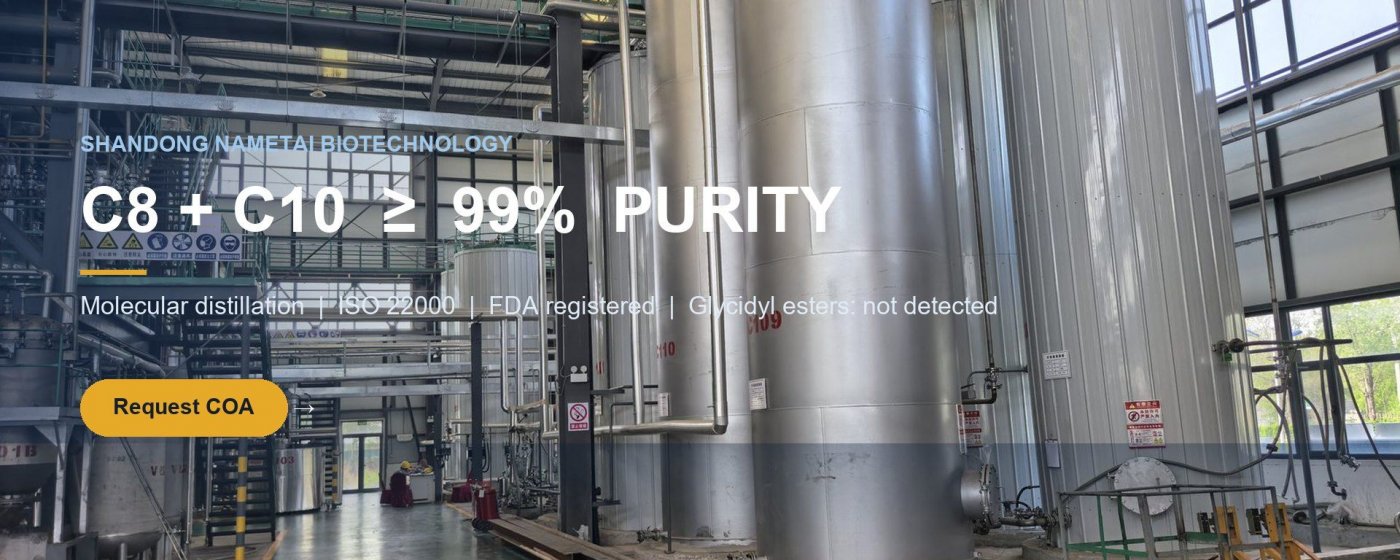
This is the most important row on the whole document and the one most often missing from a supplier's COA. It tells you the actual C8:C10 ratio. Ours is C8 56.98% / C10 42.37%, with C8+C10 above 99%. Without this row, a supplier can sell you anything and call it MCT.
Saponification value, specific gravity, hydroxyl value
These three confirm identity and consistency batch to batch. Saponification value 325–360 and specific gravity 0.940–0.955 at 20°C are the fingerprint of a genuine C8/C10 triglyceride. Hydroxyl value (≤ 10) indicates residual mono- and diglycerides — important if you use the oil in clear formulations or as a pharmaceutical excipient.
3. Red flags when you review a supplier's COA
- No batch number or production date — a COA without a batch number is a template, not a test report.
- No test method column — if you cannot see which standard was used, the result cannot be reproduced or disputed.
- "Typical values" instead of actual results — typical values are marketing; a COA must show the measured number for your batch.
- Missing fatty acid composition — the most common omission, and the most important one.
- The same results on every batch — real production varies slightly. Identical numbers across three batches usually mean the document was copied.
4. The document set to request before your first order
- COA for the specific batch (with test methods)
- MSDS (safety data sheet)
- Full quality inspection report
- Relevant certifications for your market (ISO 9001 / ISO 22000, HACCP, Kosher, HALAL, FDA registration where applicable)
- Free sample for your own lab to verify against the COA
A factory that produces its own oil will send all of these the same week. A trader will usually stall — that delay is itself useful information.
5. About this data
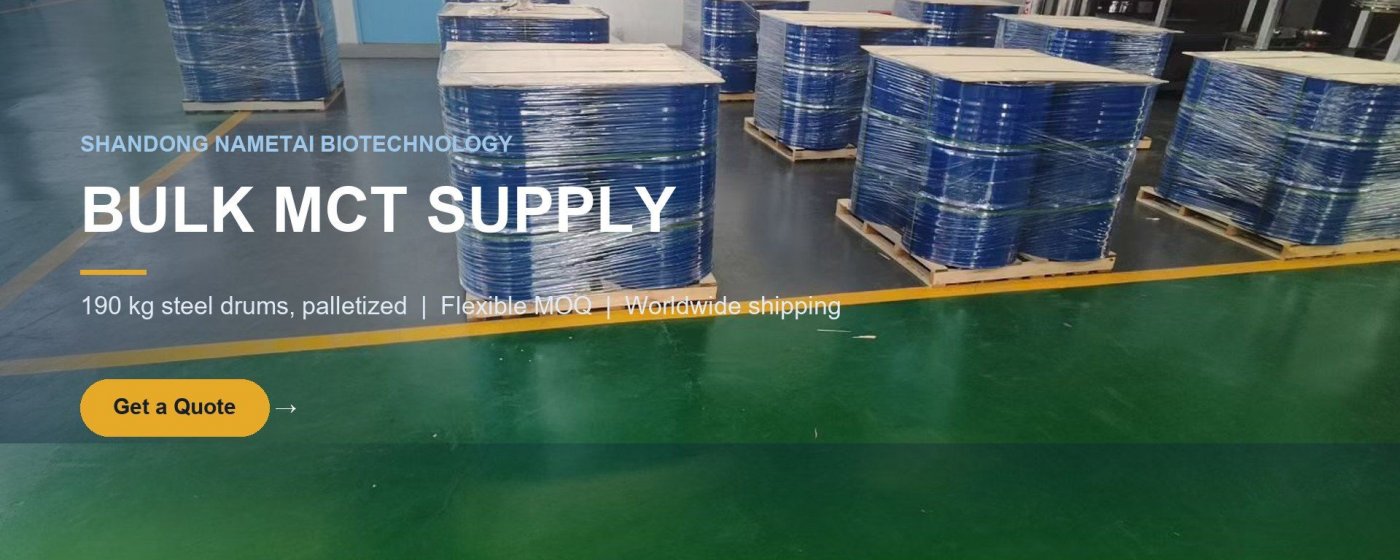
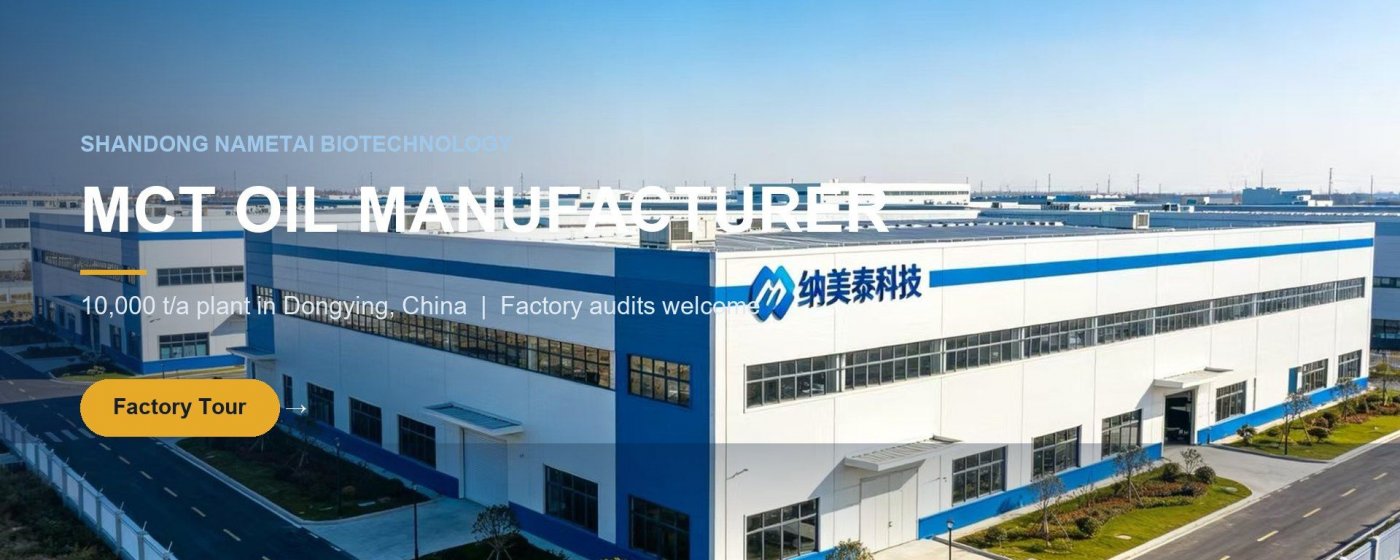
The batch above is real production data from our facility in the Yellow River Delta Agricultural High-Tech Industrial Zone, Shandong. We produce MCT oil, caprylic/capric triglyceride (GTCC/ODO) and a full ester range (IPM, IPP, IPL, 2EHP, 2EHL, 2EHS) with capacities of 190 kg drums for bulk, 25 kg drums for small and medium batches, and samples for lab verification.
If you would like a COA for a current batch, or a sample to test in your own lab, contact us — we will send the documents first, so you can qualify us before you qualify the sample.