
 +8613295467567



Caprylic/capric triglyceride — usually called GTCC on an ingredient label — is the emollient behind the light, non-greasy skin feel in a large share of modern skincare and sun care formulas. It is also one of the most commonly mis-specified materials in cosmetic sourcing, because the name on the label does not tell you the ratio, the purity or the documentation behind the drum.
This guide is for cosmetic formulators, procurement teams and brand-side R&D who are qualifying a GTCC supplier for the first time, or re-qualifying one for a market with stricter documentation expectations.
Start with the Name and the Ratio
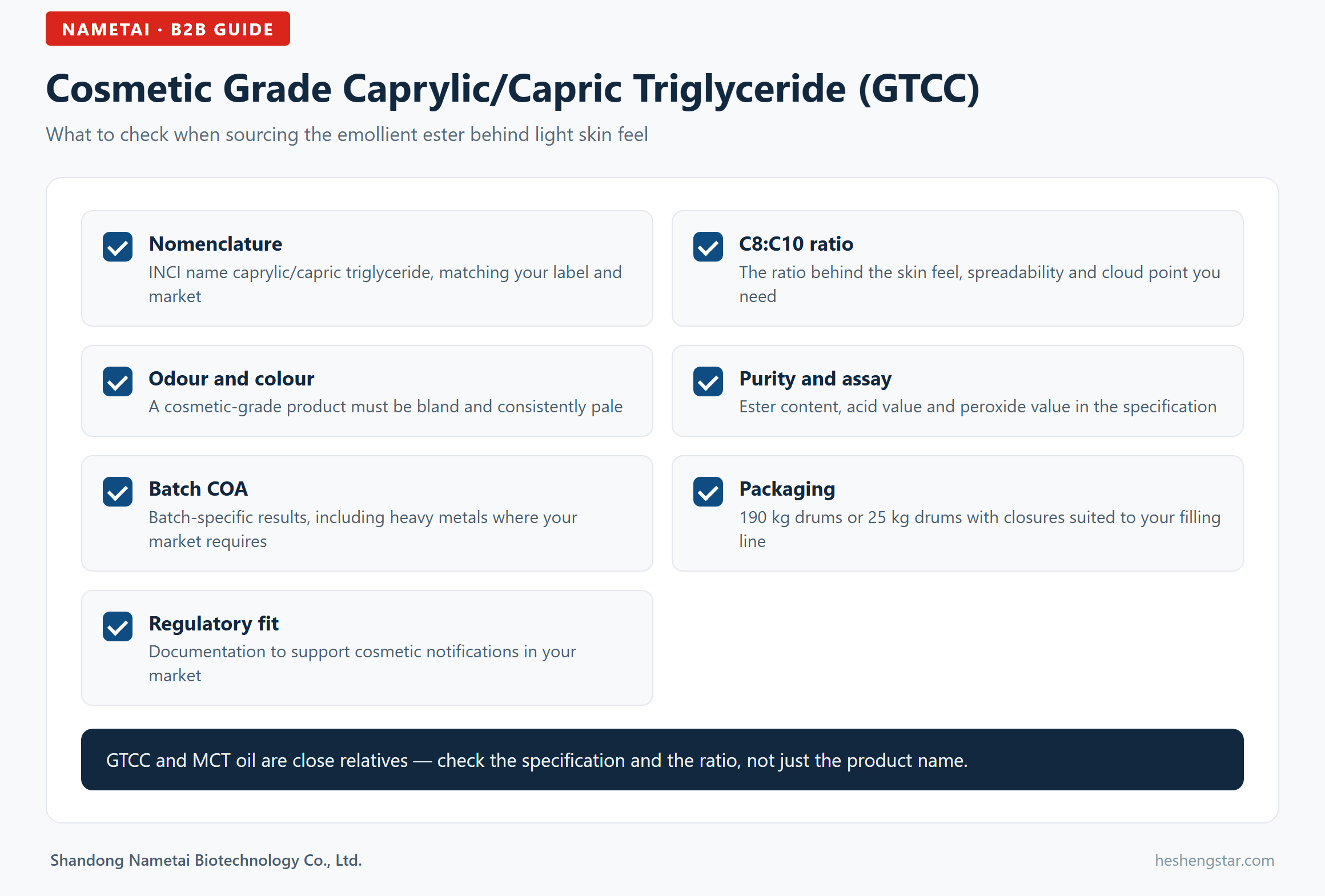
Seven checkpoints when sourcing cosmetic-grade GTCC.
GTCC is the ester of glycerol with caprylic (C8) and capric (C10) fatty acids. The INCI name is caprylic/capric triglyceride; the ratio between the two fatty acids is not fixed by the name and is the single biggest determinant of skin feel, spreadability and cloud point.
Ask for the ratio in writing and match it to the sensory profile your formula expects. Our article on C8 versus C10 explains how the two fractions behave differently; our product page for cosmetic-grade caprylic/capric triglyceride (GTCC) states the ratio and specification for the grade we produce.
Sensory and Purity Parameters
A cosmetic-grade ester is judged on things a food-grade certificate may not emphasise:
- Odour. A cosmetic base must be bland. Any residual fatty odour will surface in a low-fragrance or fragrance-free formula.
- Colour. Consistently pale, batch after batch. Instability here usually traces back to the refining step.
- Ester content and acid value. The acid value is the number that correlates with irritation risk and with how the material will behave in an emulsion.
- Peroxide value. The early-warning indicator for oxidation — the contaminant a buyer creates through storage and handling rather than through production.
Our article on contaminants in MCT oil covers the oxidation and metal parameters that apply to the ester family as well.
Documentation for Cosmetic Markets
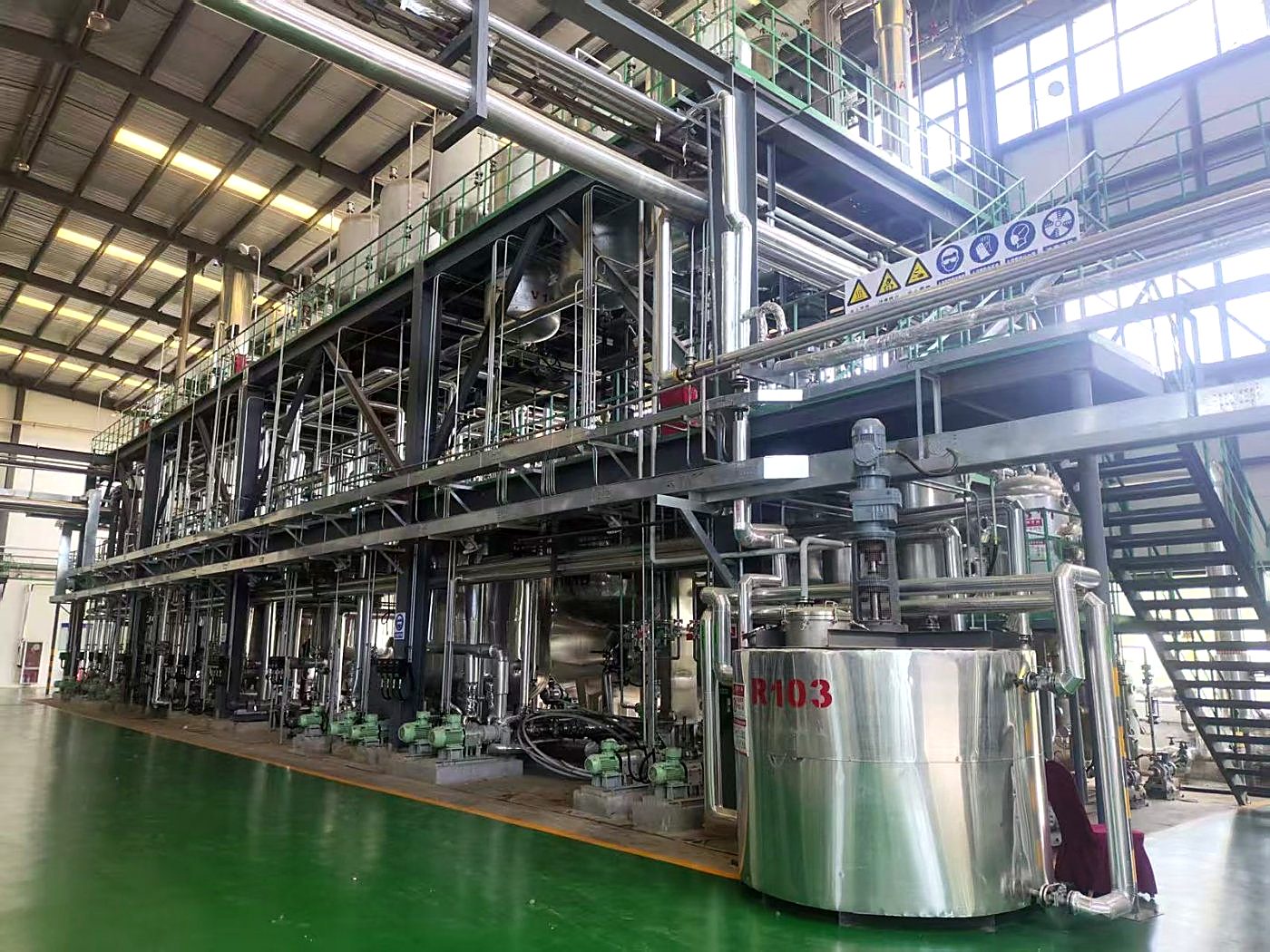
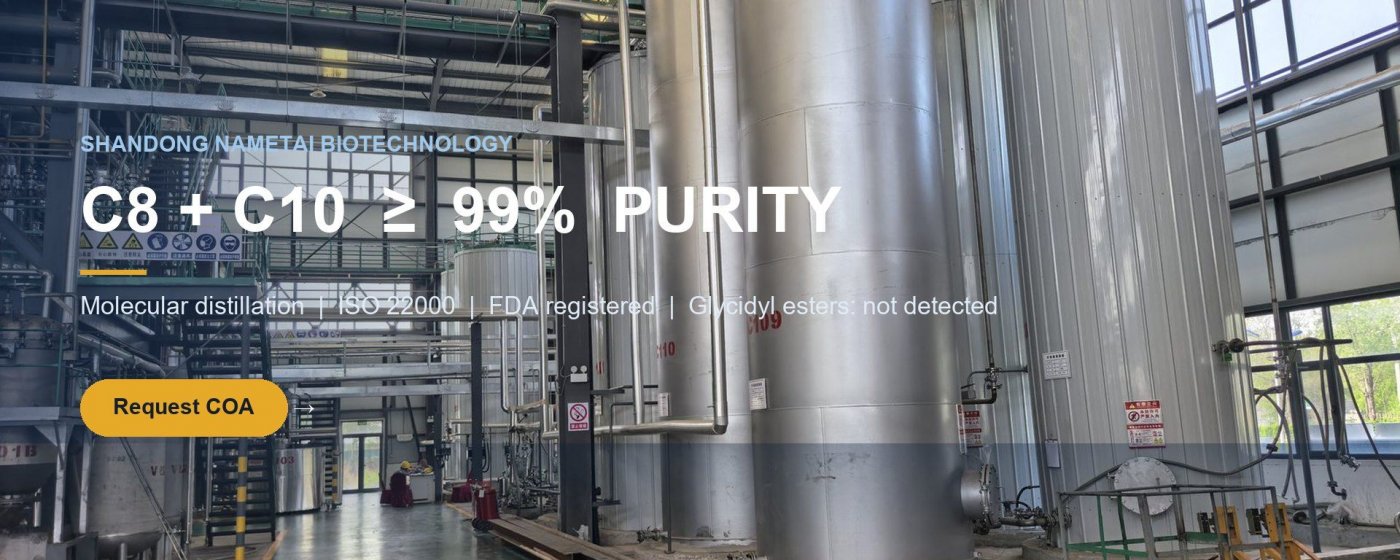
Esterification and distillation lines at the Dongying plant, where the ester family is produced.
Cosmetic markets differ in what they ask a raw material supplier to support. European notifications, for instance, rely on a correct INCI name and a documented specification; other markets may additionally expect heavy metals data or a specific certificate set. Ask your regulatory contact which documents the market needs, then confirm the supplier can issue them per batch.
A batch COA is issued with every shipment of our esters, together with the MSDS and the technical data sheet. Certificates held for the plant — including quality and food-safety management systems — are listed on our certification page, each naming its issuing body so it can be verified independently. Batch testing and release are described on the Quality & Compliance page.
GTCC and Its Neighbours
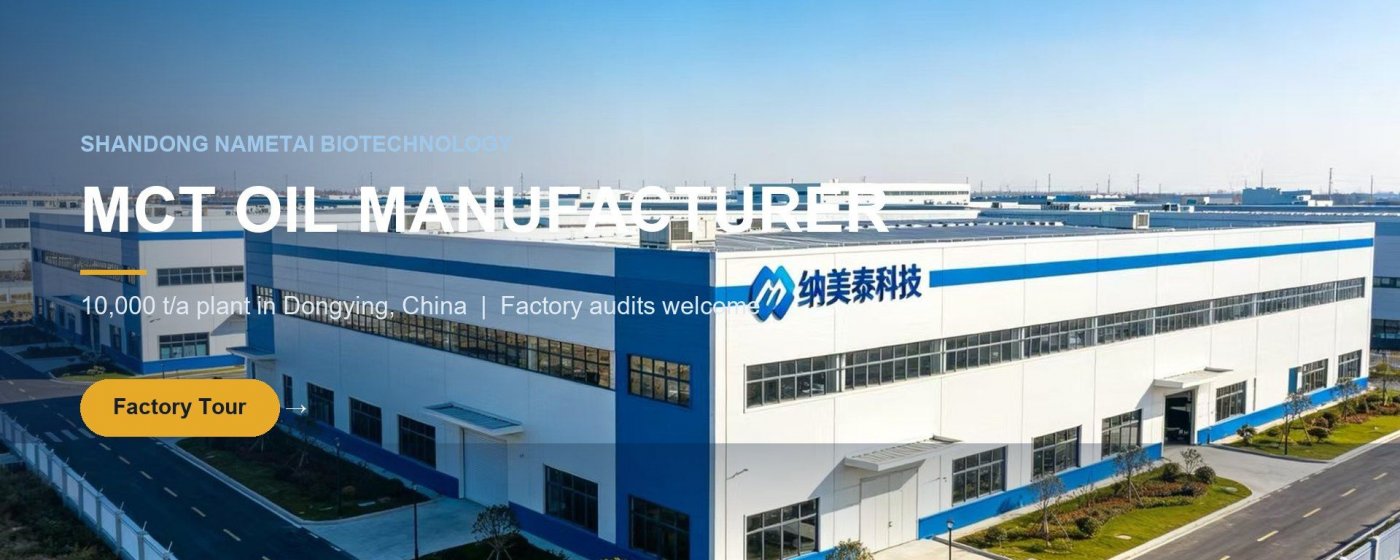
GTCC is part of a wider emollient ester family produced on the same Dongying lines by esterification and molecular distillation, at the plant's annual capacity of 10,000 tonnes. Formulators often shortlist two or three of them together, because they differ in skin feel and spreading behaviour rather than in chemistry:
- Isopropyl myristate (IPM) — a lighter, faster-spreading ester.
- Isopropyl palmitate (IPP) — a classic emollient with a slightly richer feel.
- Isopropyl laurate (IPL) — used where a different spreading profile is needed.
The full range, with specifications, is on the Emollient Esters family page.
Practical Sourcing Notes
- Confirm the specification before the sample. A sample without an agreed specification cannot fail or pass; it can only be liked.
- Ask for the batch COA that accompanies the sample, not a representative one.
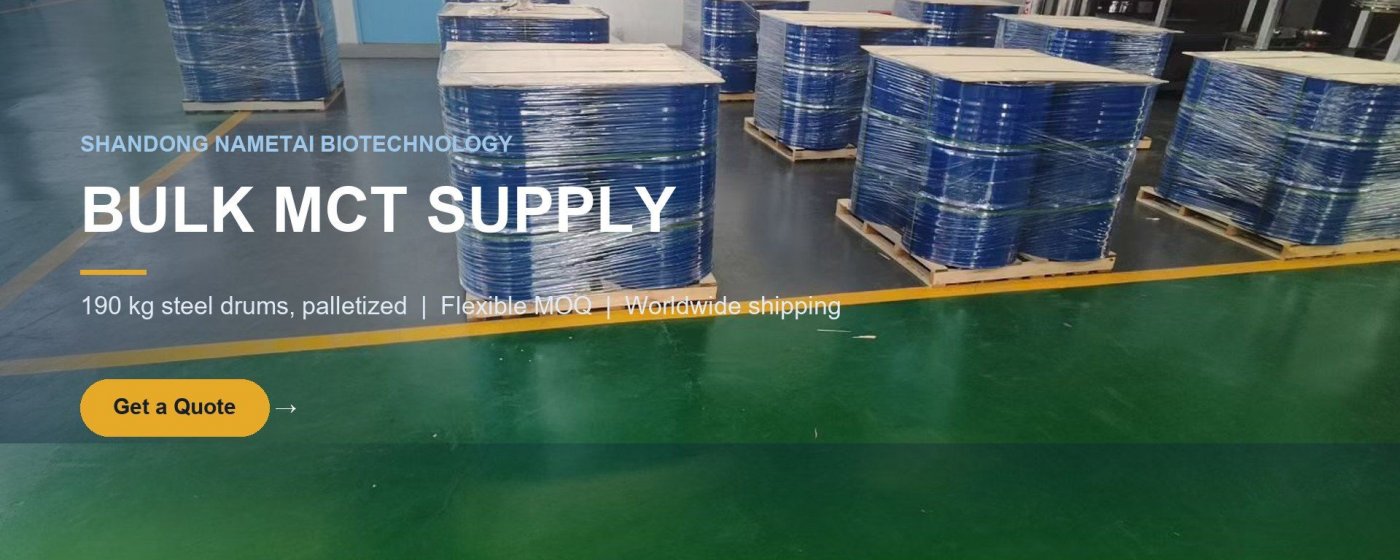
- Check packaging against your filling line. Our esters ship in 190 kg steel drums, with 25 kg and 1 kg available; drum closures should match your pumping arrangement.
- Confirm the minimum order quantity. It is 1 kg across MCT Oil, MCT Powder and Specialty Esters, which makes a first formulation trial inexpensive.
FAQ
Is GTCC the same as MCT oil?
They are close relatives. GTCC is the ester of glycerol with caprylic and capric acids and is positioned for cosmetic use; MCT oil as a food ingredient is specified against food standards. Check the specification and the ratio, not just the name.
What documents should a cosmetic buyer expect?
At minimum: specification, TDS, MSDS and a batch COA with every shipment. Depending on the market, heavy metals data and certificates held by the plant may also be requested.
Can we get a sample for formulation trials?
Yes. Samples are available in 1 kg or 20 kg quantities, and custom quantities can be evaluated against the requirement.
What is the lead time for ester orders?
Regular orders ship 7 days to port of departure; OEM and ODM orders are 30 days from order confirmation.
Related Reading
- C8 vs C10: what the ratio changes
- How to read an MCT oil COA
- What MCT oil is and how a grade is chosen
Request a Quote
Send the INCI name, the ratio and the packaging you need, and we will quote within one working day — use the request a quote form, or start from the Emollient Esters family page.