
 +8613295467567




Most MCT oil enquiries start with a specification sheet and end with a price. The part buyers rarely see is the plant in between — the place where palm and coconut oil become a clear, odorless triglyceride, get tested, and go into the drums that arrive at your port. This article walks through our Shandong facility the way an auditor would: raw materials, production stages, export packing, and the QC lab data behind a real production batch. If you are qualifying an MCT oil manufacturer, use it as a template for the questions to ask any supplier.
The Facility at a Glance: 5,220 m² Under One Roof
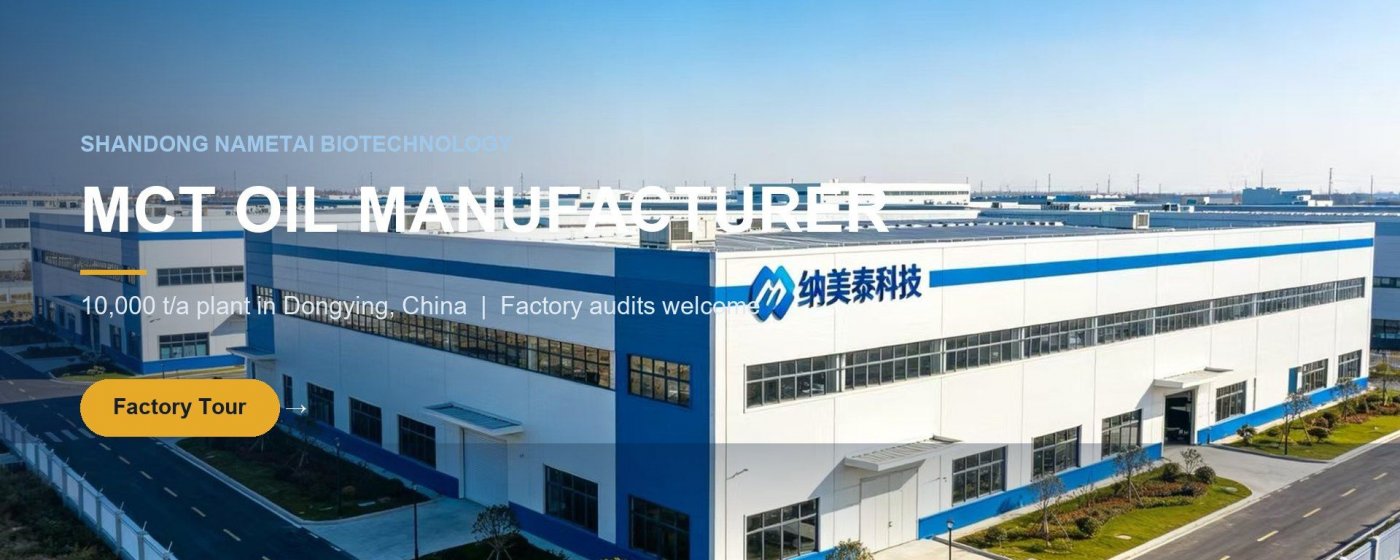
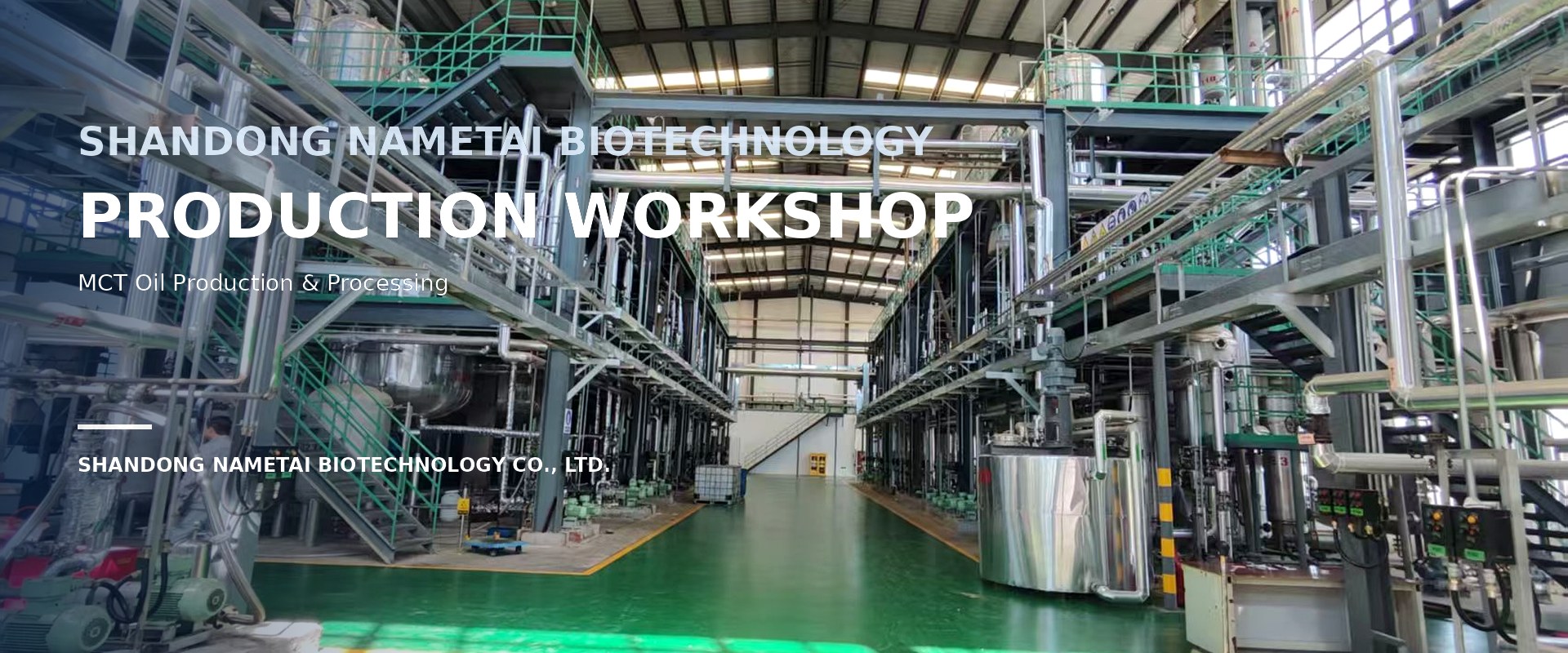
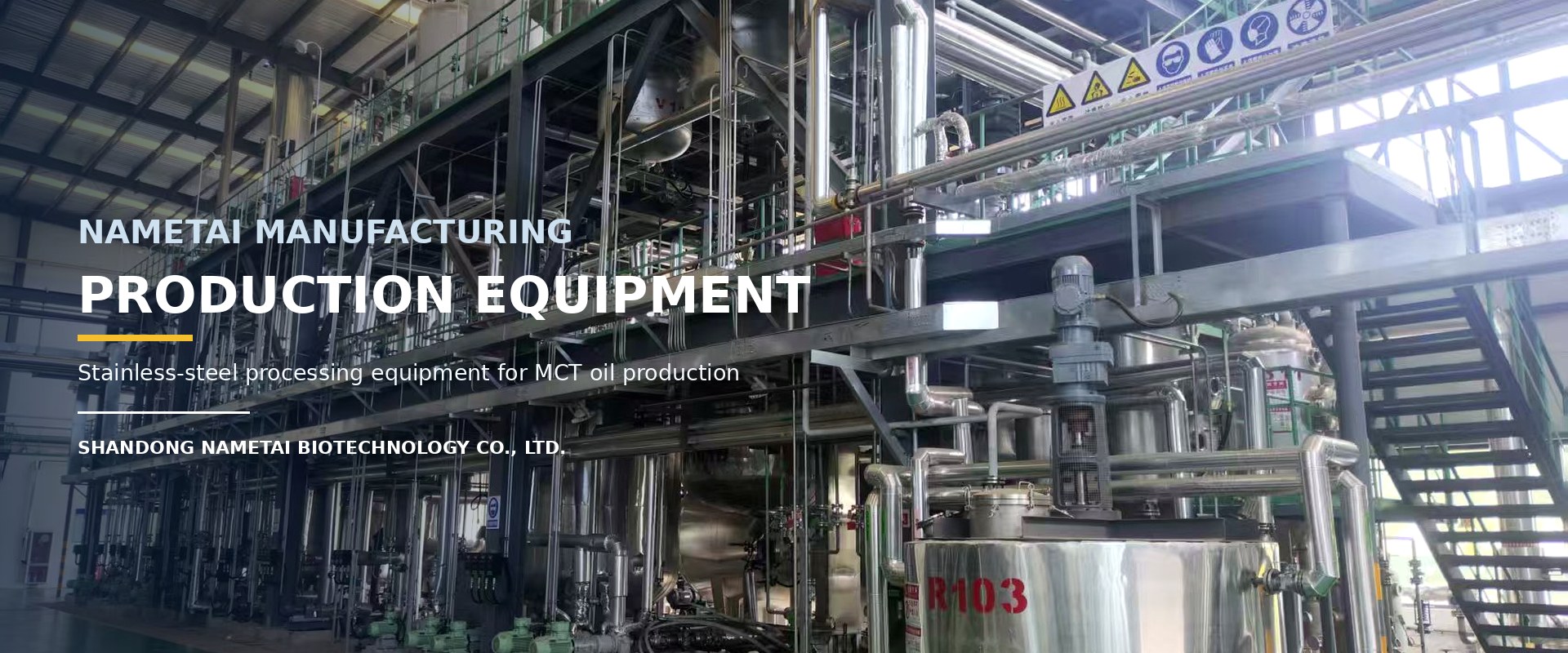
The plant operates as Shandong Nametai Biotechnology Co., Ltd and sits in the Yellow River Delta Agricultural High-tech Industrial Zone in Dongying, Shandong Province. Production runs in a 5,220 m² workshop that houses the three core stages of MCT production — esterification, molecular distillation and separation — in one building. Keeping the full chain under one roof matters to buyers: fewer transfer points between raw oil and finished drum, fewer parties in the quality chain, and one batch record that covers the whole process.
All of the photos and videos on our factory page were shot on this campus; this article adds the process facts and the batch data behind them.
Step 1 — Food-Grade Palm and Coconut Oil as Raw Material
MCT oil is built from medium-chain fatty acids, mainly caprylic acid (C8:0) and capric acid (C10:0). The feedstock is food-grade palm and coconut oil, and the C8:C10 ratio of the finished oil is fixed at the start: 60:40 or 70:30, selectable per order. That ratio is not a marketing detail. It decides how the oil behaves in your application — a 70:30 grade carries more of the faster-metabolized C8 fraction, which keto and sports-nutrition buyers usually specify, while 60:40 is the mainstream general-purpose grade.
When you qualify a supplier, ask where the raw oil comes from and what food-grade documentation accompanies each intake lot — this is the first control point that the finished COA rests on. Our food-grade MCT oil and GTCC/ODO pages show the specification levels each grade is released against.
Step 2 — Esterification, Molecular Distillation and Separation
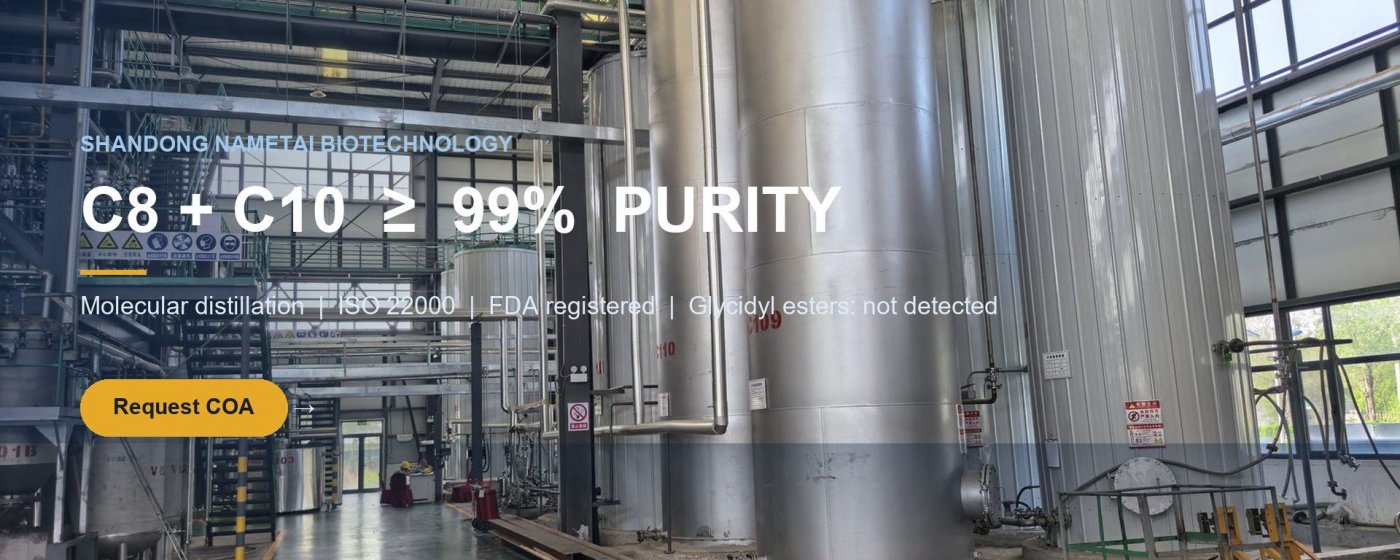
Inside the workshop the process runs in three named stages. Esterification recombines the medium-chain fatty acids with glycerol into triglycerides. Molecular distillation then separates and purifies the medium-chain fraction, stripping out the long-chain and residual components that would push iodine and acid values upward. The separation stage polishes the product before it moves to the filling area. Each stage is separately controlled, which is what keeps batch-to-batch parameters — saponification value, hydroxyl value, fatty-acid composition — inside a narrow band.
For a formulation buyer, the practical takeaway is this: process control shows up in the numbers on the COA. A tight saponification window and a peroxide value near zero are the fingerprints of a controlled plant, not of a trading office.
Step 3 — Export Packing: 190 kg Steel Drums to 1 kg Samples
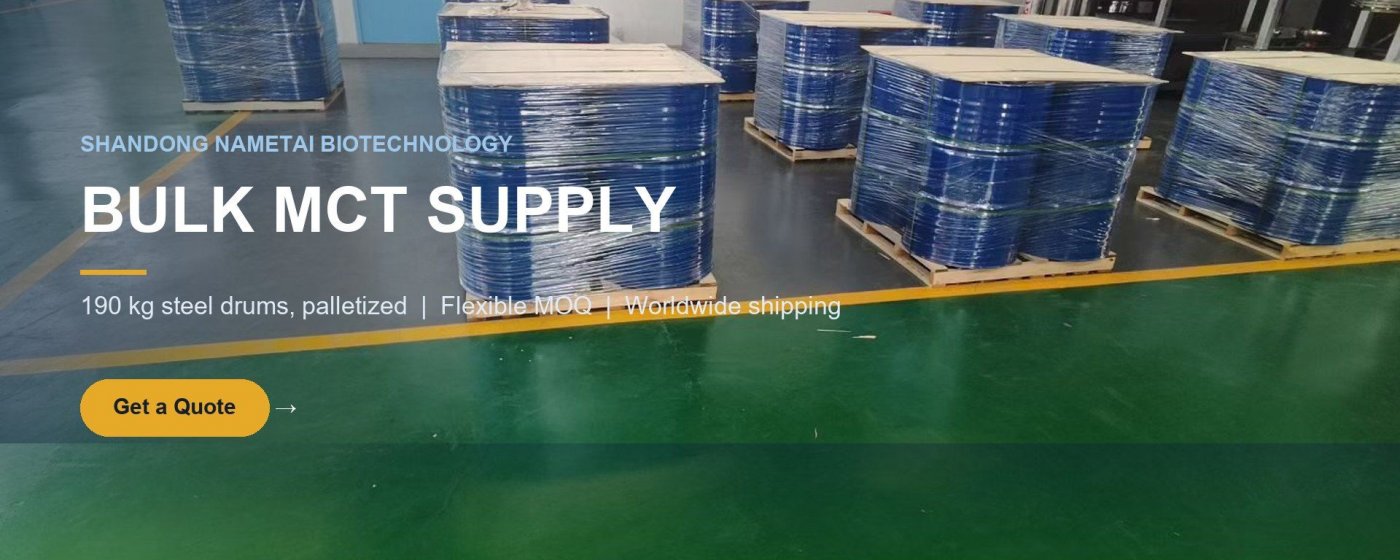
Finished oil leaves the production area in three pack sizes. Bulk orders ship in 190 kg steel drums, palletized and shrink-wrapped before they enter the finished-goods warehouse. Small and mid-size lots go out in 25 kg plastic drums, and buyers who want to validate the oil in their own laboratory can start with 1 kg samples. From the warehouse, drums move by forklift to the loading dock and onto trucks for container stuffing, with full export documentation prepared for every order.
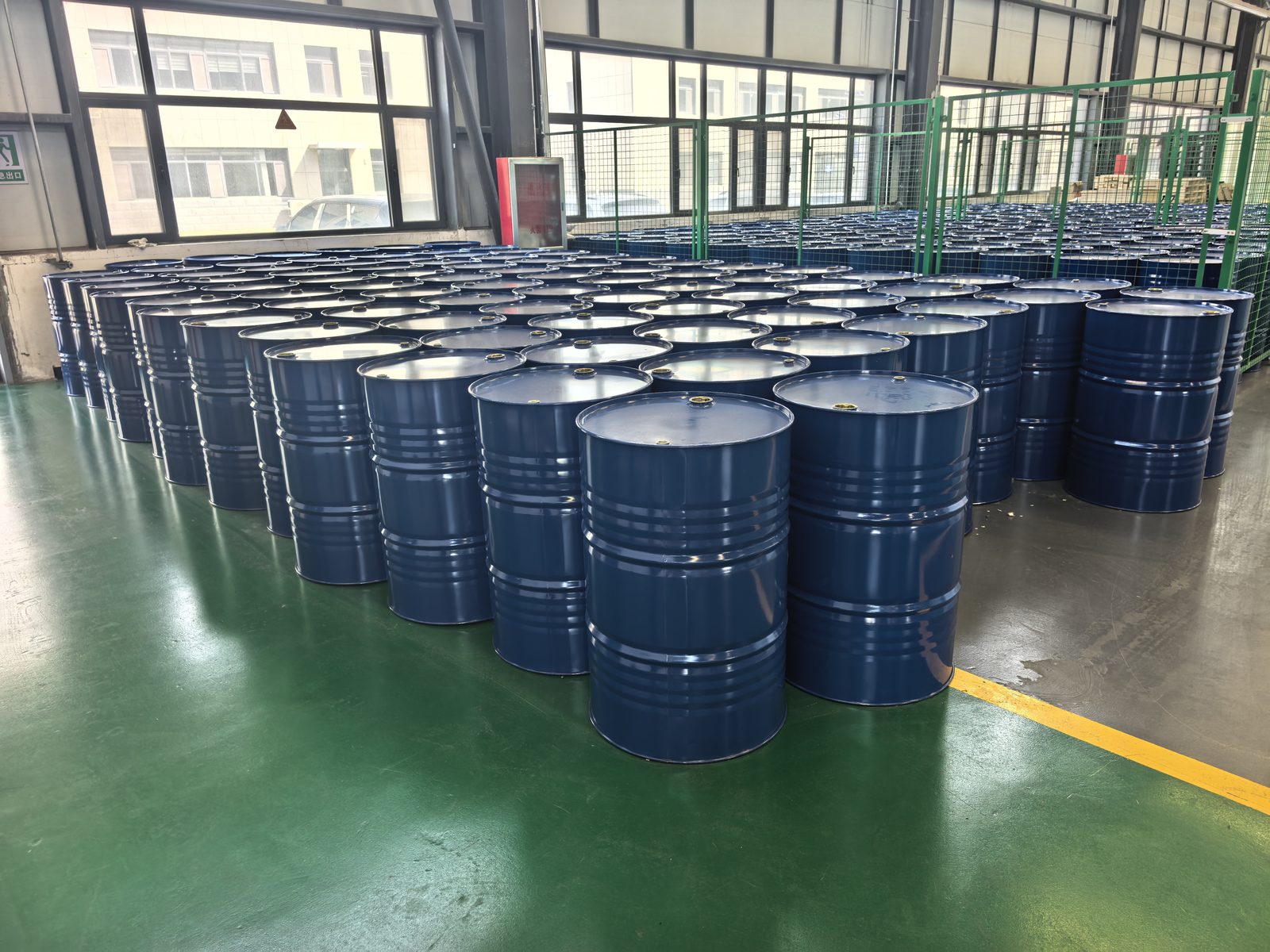
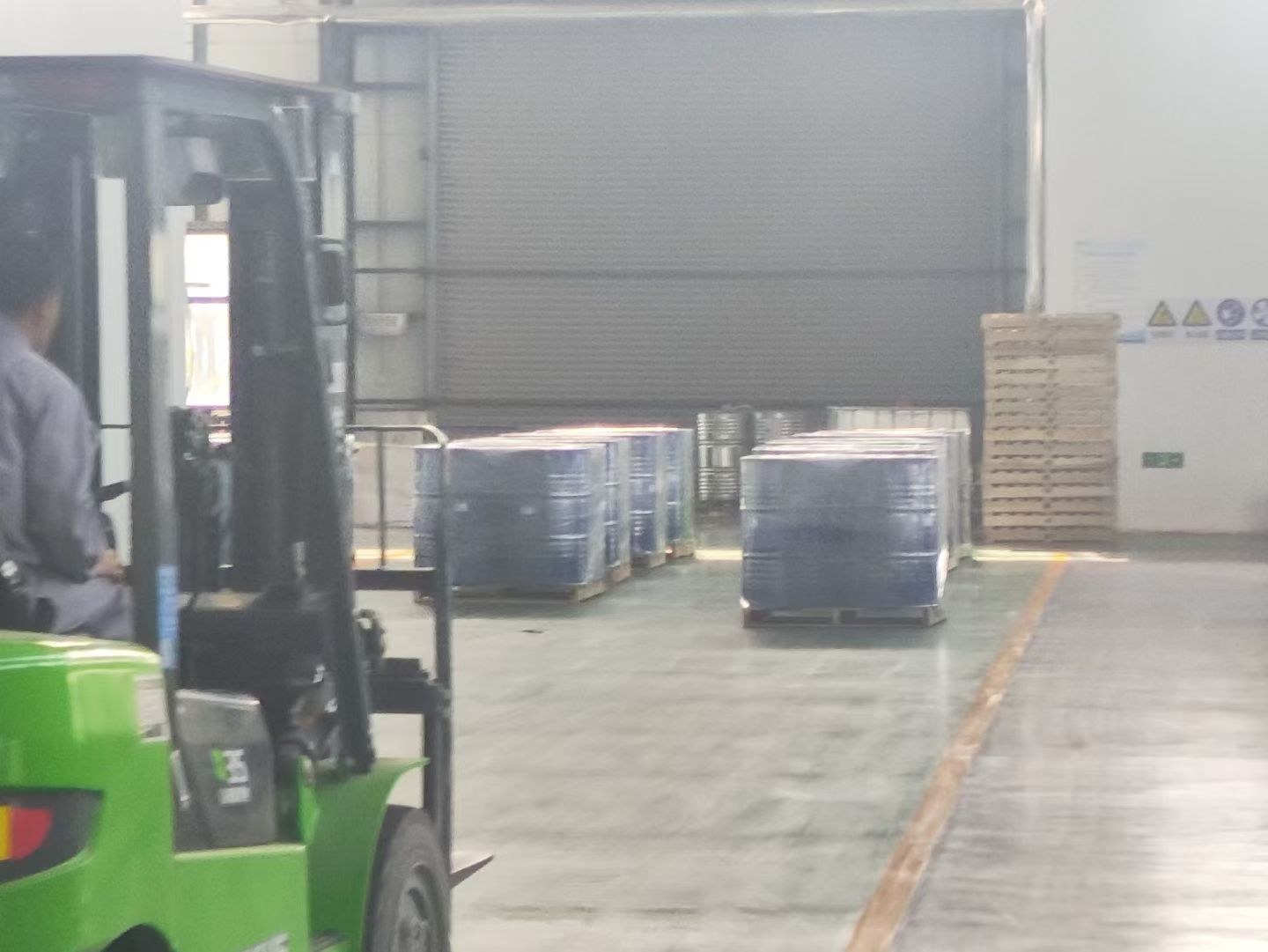
Packing is also a contamination checkpoint. Sealed drums, palletized storage and shrink wrap protect the product in exactly the segment of the journey a buyer never sees: the days between QC release and container loading.
Every Batch Tested Before Release — With the COA to Prove It
The in-house QC laboratory runs instrument-based analysis on raw materials, intermediates and finished batches. Fatty-acid composition and residual-solvent checks run on GC — we operate an Agilent 7890B with headspace autosampler, as shown in our QC lab walkthrough — while the physical and chemical parameters below are verified against the release specification before any drum ships. If you are new to these parameters, our guide on how to read an MCT oil COA explains what each row means for your formulation.
Here is the release table from a real production batch — lot NMT-260601, produced 31 May 2026, tested 10 June 2026, released against our enterprise standard Q/NMT-004-2026:
| Parameter | Unit | Specification | Result (NMT-260601) | Test method |
|---|---|---|---|---|
| Acid value | mg KOH/g | ≤ 0.2 | 0.06 | GB 5009.229 |
| Iodine value | g I2/100 g | ≤ 0.2 | 0.05 | GB 28302 |
| Saponification value | mg KOH/g | 325–360 | 337.57 | GB/T 5534 |
| Moisture and volatile matter | % | ≤ 0.2 | 0.03 | GB 5009.236 |
| Relative density (20 °C) | — | 0.940–0.955 | 0.940 | GB 5009.2 |
| Peroxide value | mmol/kg | ≤ 1.0 | 0.05 | GB 5009.227 |
| Hydroxyl value | mg KOH/g | ≤ 10 | 5.16 | ChP general chapter 0713 |
| C8:0 (caprylic acid) | % of total fatty acids | 50–80 | 56.98 | GB 5009.168 (third method) |
| C10:0 (capric acid) | % of total fatty acids | 20–50 | 42.37 | GB 5009.168 (third method) |
Three rows deserve a buyer's attention. C8:0 and C10:0 together sum to 99.35% of the fatty-acid profile, consistent with the C8+C10 > 99% requirement for MCT. The acid value of 0.06 mg KOH/g sits well under the 0.2 limit — a direct read on how gently the oil was processed and how fresh it is. And the peroxide value of 0.05 mmol/kg against a ≤ 1.0 limit is the oxidation headroom that decides shelf life. A batch COA carrying these values travels with every shipment.
Certificates and Documents You Can Verify
The plant's documentation set covers ISO 9001, ISO 22000, ISO 14001 and ISO 45001, HACCP, Kosher and HALAL certification, FDA facility registration and food production licenses. Per shipment, buyers receive the batch COA, the product specification sheet and the MSDS. For pharmaceutical applications, the same site supplies an excipient-grade MCT oil specified against Chinese Pharmacopoeia 2025 requirements — a different, stricter release table than the food grade above.
One habit separates professional buyers from casual ones: match every certificate to its scope and validity date, and ask that the COA lot number match the drums on the pallet. A factory with nothing to hide makes that easy.
Planning Your Own Audit: Four Checks That Matter
If you visit — in person or by video call — these four checks give you most of the picture in a single walk-through:
- Trace one lot end to end. Pick a drum in the warehouse and ask for its batch record: raw-oil intake, process parameters, QC release. A factory that can produce this within minutes runs a real quality system.
- Watch the filling and palletizing line. How drums are sealed, labeled and palletized tells you where contamination risk is actually managed.
- Look at the instruments, not only the certificates on the wall. Ask which instrument produced which row of your COA, and when it was last calibrated.
- Check the warehouse and tank area. Lot separation, drum condition and labeling discipline are visible in five minutes and impossible to fake for a day.
We welcome customer audits and live video inspections at the Dongying plant. To request a 1 kg sample, a quotation or a scheduled walk-through, send us a message through the request-a-quote page, or email [email protected] / call +86 132 9546 7567. Samples ship with the same batch COA you have just read about.