
 +8613295467567




Filtering questions are useful precisely because they save money: the twelve questions in our previous article let you disqualify a "supplier" before you spend a single dollar on samples or flights. But sooner or later, a serious buyer has to stand on the floor of the plant. A factory audit visit is where forwarded PDFs stop working — you either watch the instrument that tested your batch or you do not. This article walks through how a visit to our plant in the Yellow River Delta Agricultural High-Tech Industrial Zone of Shandong is structured: what we send before you fly in, what each stop of the day covers, and what you leave with. Whether you audit us or another supplier, the sequence below is a concrete checklist you can reuse.
Before the Flight: The Document Pre-Read
An efficient audit starts weeks before the visitor lands. Once a visit date is agreed, we send the document pack in advance: the food production license, the ISO 9001, ISO 22000, ISO 14001 and ISO 45001 certificates, HACCP, Kosher and HALAL certification, the U.S. FDA food facility registration — a facility registration, which we state precisely because it is not a product approval — a full specification sheet, and a sample batch COA with measured values, not only limits. Reading these first changes what the on-site day is for: instead of spending the morning verifying paperwork in a meeting room, your team arrives ready to test what the documents claim against what the plant actually does. It also gives us time to prepare the records your audit plan asks for, and to put the right people in the right rooms.
Arrival: Checking the Licenses Against the Site
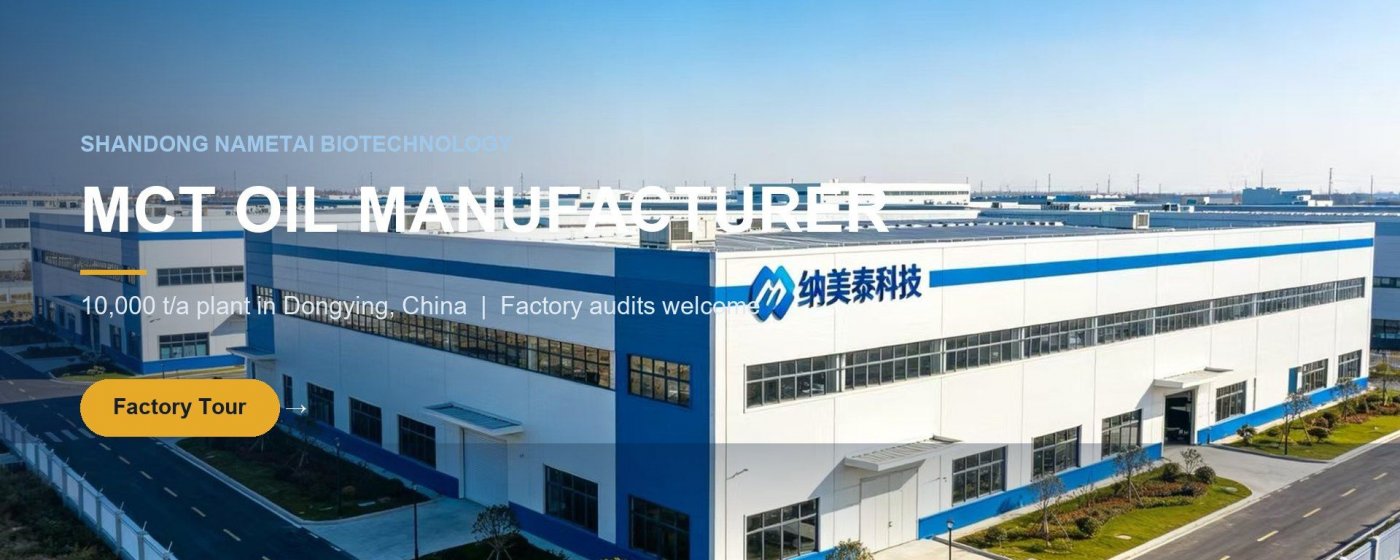
The first hour is usually paperwork, and it is where the trader-versus-factory question gets settled definitively. In China the food production license is issued to the entity that actually produces, and cross-checking is simple: the license, the certificates, the COA header and the quotation should all carry one name. Ours is SC20137052301879, valid to September 2030, covering edible fat products and the food additive glyceryl caprylate-caprate, issued to Shandong Nametai Biotechnology Co., Ltd. — the same entity that signs our quotations and fills the drums. If the name on a supplier's production license differs from the name quoting you the price, the audit is over before it starts, and everyone has saved a flight.
The Workshop: Three Process Steps in 5,220 Square Meters
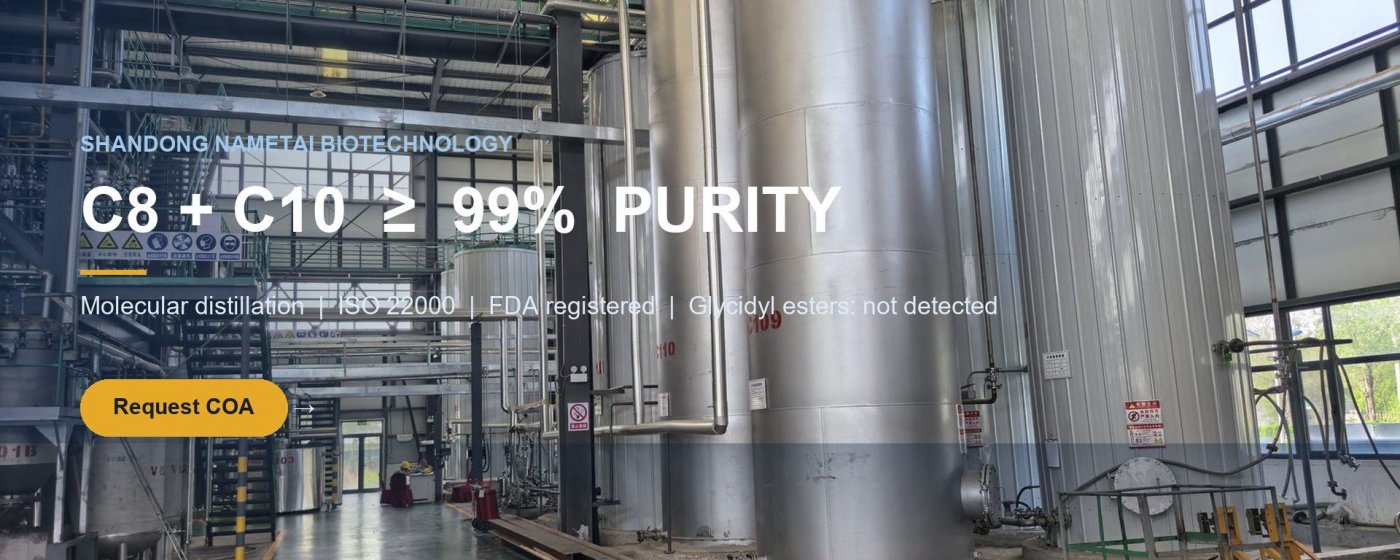
Then comes the floor. Our production workshop covers 5,220 m² and runs three steps in one continuous flow — esterification, molecular distillation and separation — with an annual capacity of roughly 10,000 tons. On a walk-through, experienced auditors focus less on the stainless steel and more on the records around it: whether the batch number on a reactor log matches the drums waiting in the warehouse, where cleaning records are kept, how raw-material lots are separated from finished-goods zones, and whether operators can explain what they are doing and why. These are questions a trading company cannot arrange, for the simple reason that there is no floor to stand on.
The QC Lab: Instruments You Can Watch Run
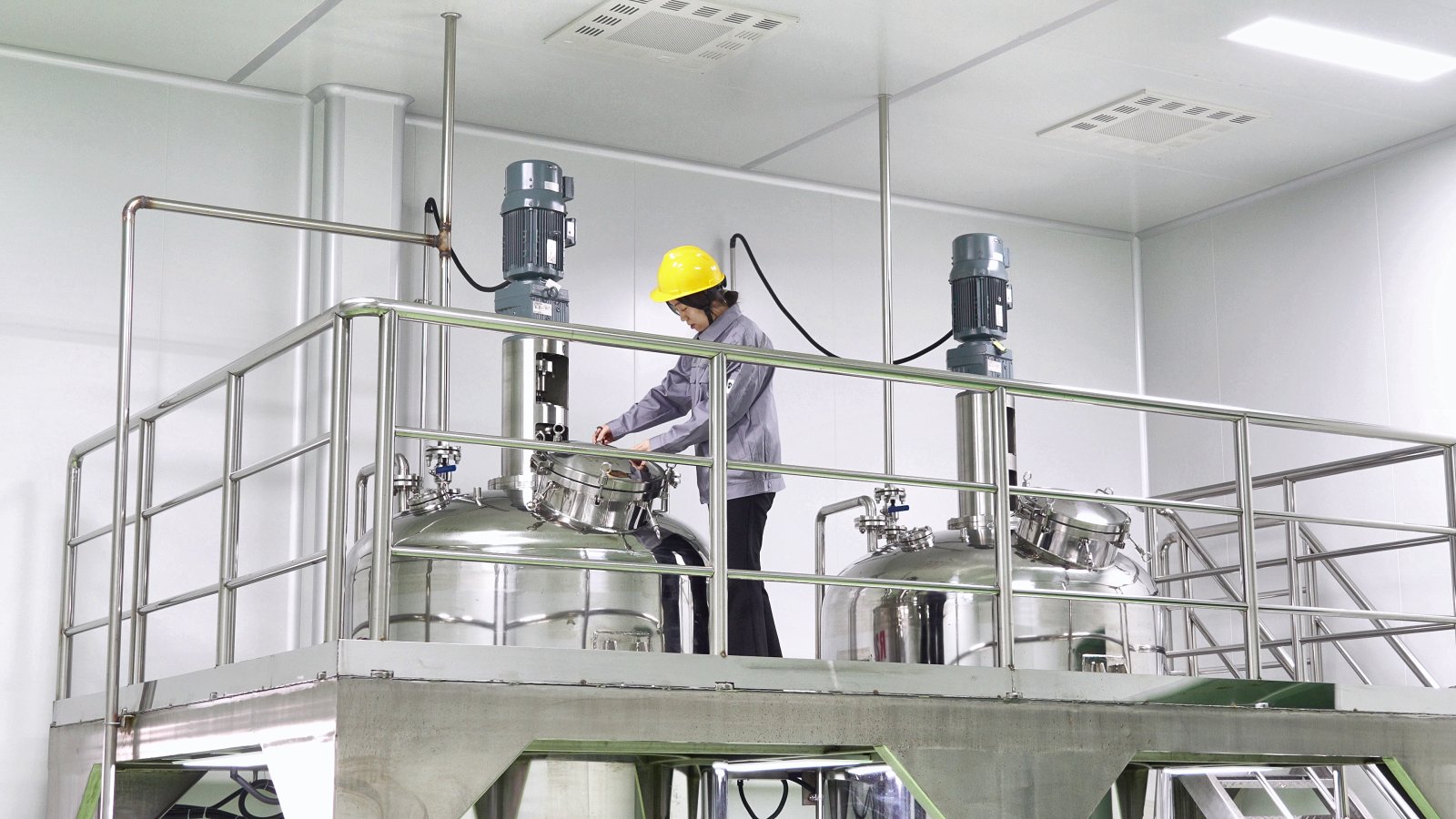
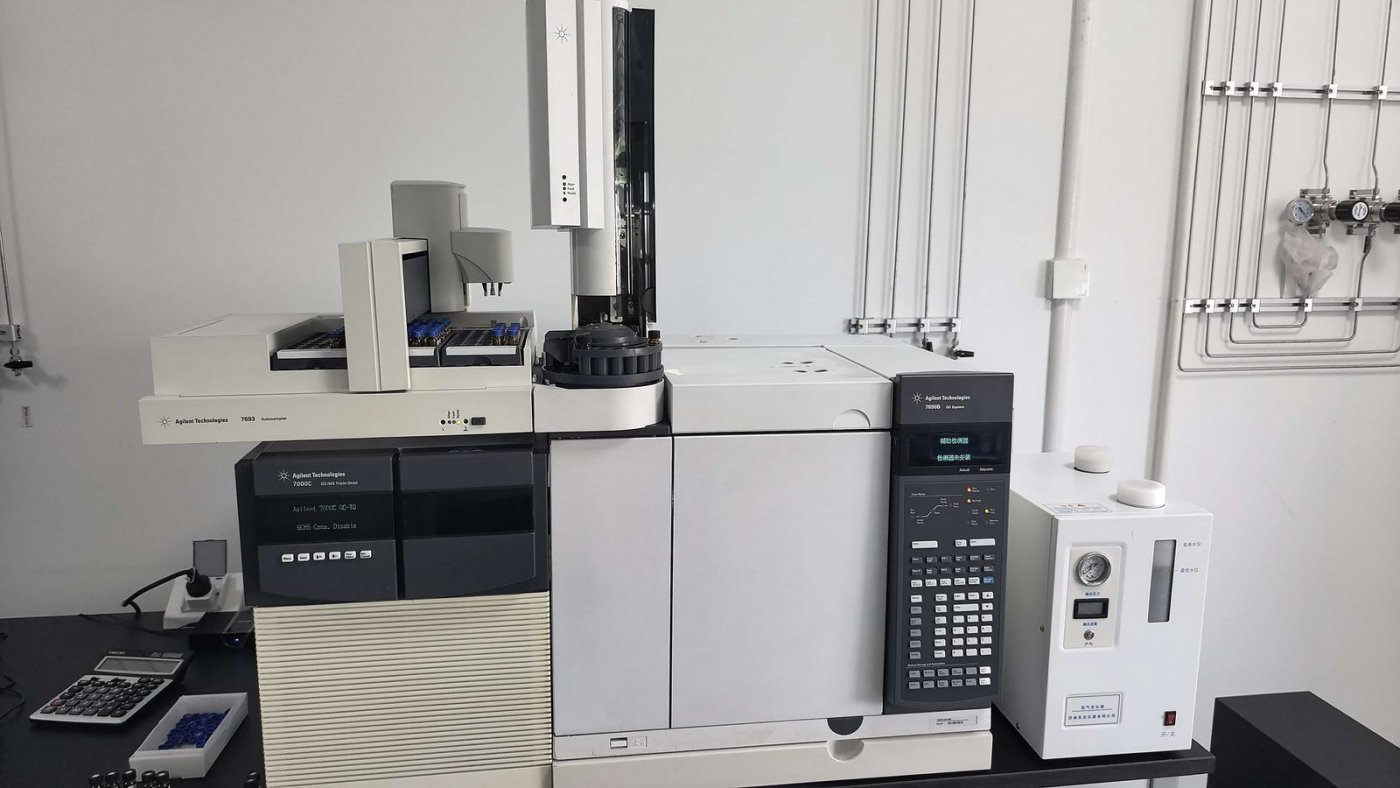
The laboratory stop is where specification claims turn into instruments and numbers. Our QC lab runs an Agilent 7890B gas chromatograph with a headspace autosampler for the fatty-acid profile, plus in-house tests for acid value, iodine value, saponification value, moisture, density, peroxide value and hydroxyl value on every batch. On lot NMT-260601, the limits and the measured results read: acid value ≤ 0.2 mg KOH/g, measured 0.06; peroxide value ≤ 1.0, measured 0.05; moisture ≤ 0.2%, measured 0.03%; C8:0 at 56.98% and C10:0 at 42.37% on the GC profile. An auditor can watch a titration in progress, ask which method it follows, and pull the raw chromatogram behind the lot number on your COA. Retention samples belong to the same logic: every batch is kept as a sealed sample, so a claim made months after shipment can still be settled on physical evidence from that lot. Heavy-metal and microbiological results come from an accredited third-party laboratory, and those reports can be reviewed during the visit.
Warehouse and Packing: From Drum to Pallet
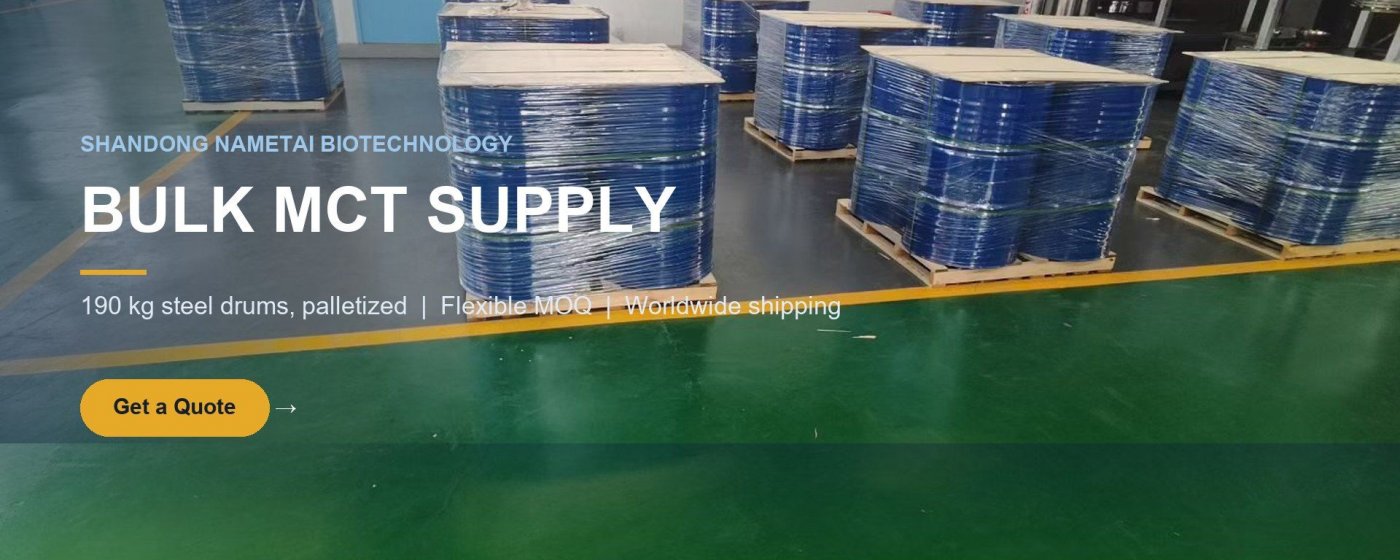
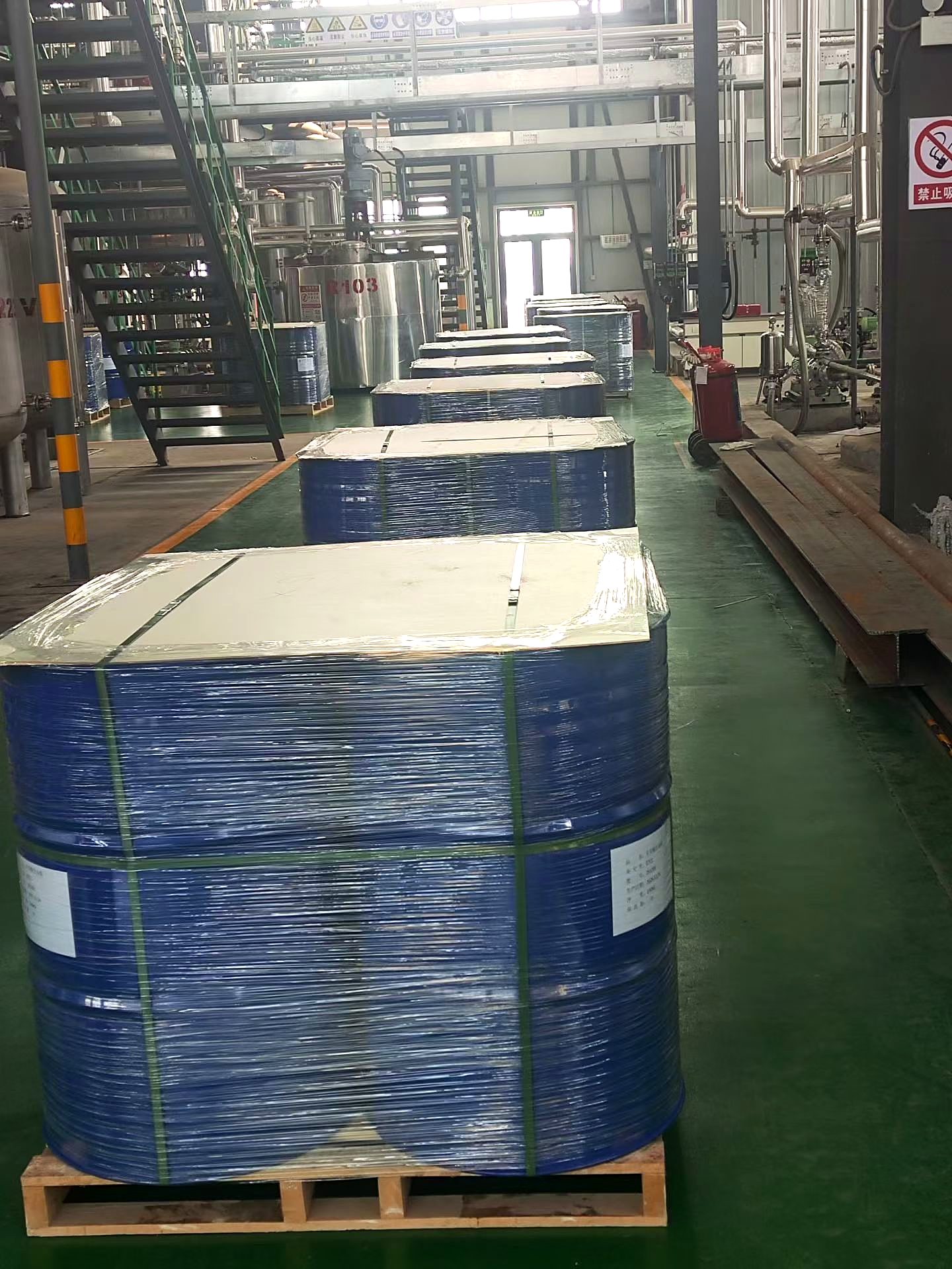
The last stop before the closing meeting is the warehouse, because packaging is where quality claims meet the product you will actually receive. Released batches are filled in the same building where they are made: 190 kg steel drums for bulk orders, 25 kg plastic drums for smaller lots, and 1 kg sample packs for laboratory validation. Drums leave four to a pallet, stretch-wrapped, and the lot number printed on each drum label matches the lot number on its COA — a link auditors verify by picking any drum off the pallet and comparing label, COA and release record side by side.
The Audit Day at a Glance
| Stage | What you see | What you verify |
|---|---|---|
| Document review | License, certificates, sample COA | One name on license, certificates and quotation |
| Workshop | Esterification, distillation, separation | Batch traceability and zone separation |
| QC lab | Agilent 7890B GC and in-house tests | Measured values behind the COA |
| Warehouse | Filling, palletizing, labeling | Drum label lot number = COA lot number |
| Closing meeting | Findings and open points | Agreed follow-ups in writing |
The Closing Meeting
The day ends the way a good audit should: with findings stated to your face. Anything your team flags is recorded as an open point with an owner and a timeline, and you leave with the document pack itself — license, certificates, COAs and third-party reports — rather than a promise to send scans later. If follow-up samples are needed for your own laboratory, they ship as 1 kg packs with the matching batch COA. Our minimum order quantity is 1 kg for exactly this reason: the pack that starts the relationship is the same pack that supports the audit.
If You Cannot Fly In Yet
A visit is the strongest evidence, but it is not the only one. For buyers who are not ready to travel, we run the same structure remotely: a live video walk-through of the workshop and the QC lab, with an operator on the line answering questions in real time, arranged within the same week of the request. Before either form of audit, it pays to arrive with the paperwork already screened — our earlier article lists what documents to request from an MCT oil supplier, and if you want to preview the plant itself, our photo walkthrough covers the facility from palm and coconut oil to finished MCT oil. The laboratory side is described in detail in our article on why we test every batch.
Plan Your Visit
To schedule an audit visit or a live video walk-through, to receive the document pack in advance, or to request a 1 kg sample with its batch COA, start with the product itself — our food-grade MCT oil page carries the full specification — and then send us a message through the request-a-quote page, or email [email protected] / call +86 132 9546 7567. We would rather be audited than asserted about. Bring the checklist.