
 +8613295467567




Most disqualification decisions in MCT oil sourcing happen too late. Buyers spend weeks comparing prices, then discover — after samples, after negotiation, sometimes after the first container — that their "manufacturer" was a trading company renting an office in the same city as three real factories. The twelve questions below are designed to be asked in the first two emails, before you invest in samples or an audit visit. None of them is a trick question. Each one simply asks for evidence that a factory can produce in minutes and a trader cannot produce at all. And because we would want the same scrutiny applied to us, each section ends with how things actually work at our plant in Dongying, Shandong.
Why the Trader Question Matters for MCT Oil Specifically
MCT oil looks like an easy product to trade: refined, standardized, shipped in drums. That is exactly why the trader-versus-factory question matters. A trading company can copy a specification sheet and forward a COA, but it cannot show you the reactor that made your batch, it holds no retention sample of your lot, and it cannot change a packing format when your filling line asks for one. Every extra party between you and the plant adds a point where batch continuity can break, and it converts every quality problem into a negotiation between two middlemen about who pays for it. The twelve questions below are grouped into three sets of four: the plant itself, the batch documents, and the commercial reality.
Questions 1–4: The Plant Itself
1. Whose name is on the production license? In China, the food production license (the SC license) is issued to the entity that actually produces the food. Ask for the license number and check that the name on it matches the name on the quotation. A trader can show you a business license; it cannot show you a production license in its own name. Ours is SC20137052301879, valid to September 2030, covering edible fat products and the food additive glyceryl caprylate-caprate — issued to Shandong Nametai Biotechnology Co., Ltd., the same entity that signs our quotations.
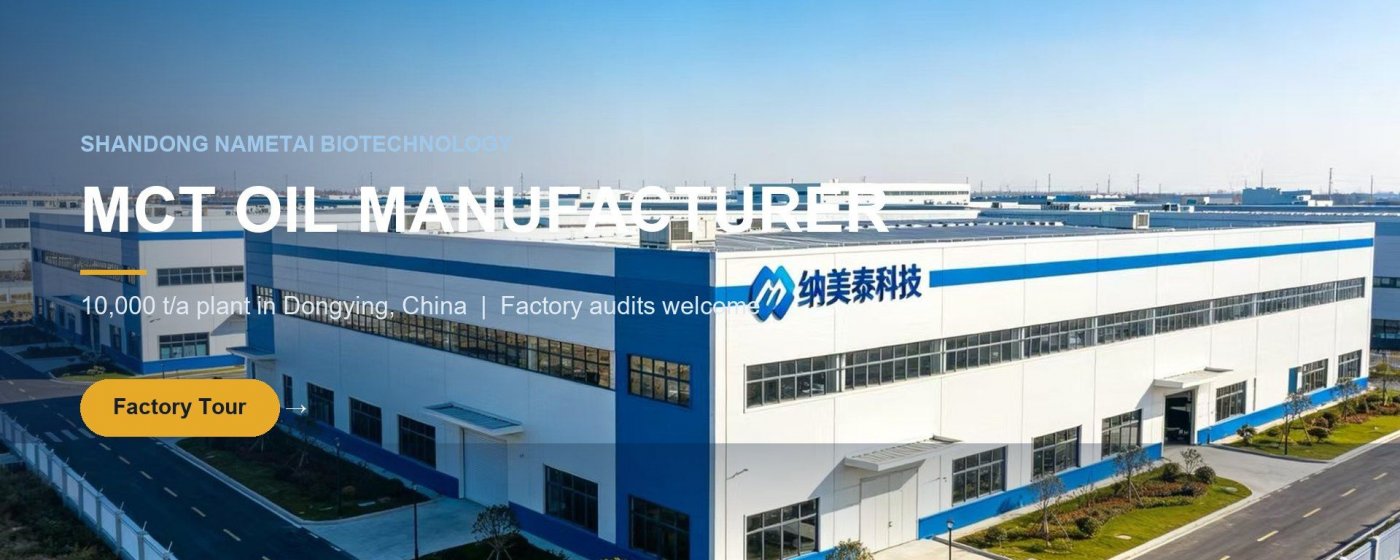
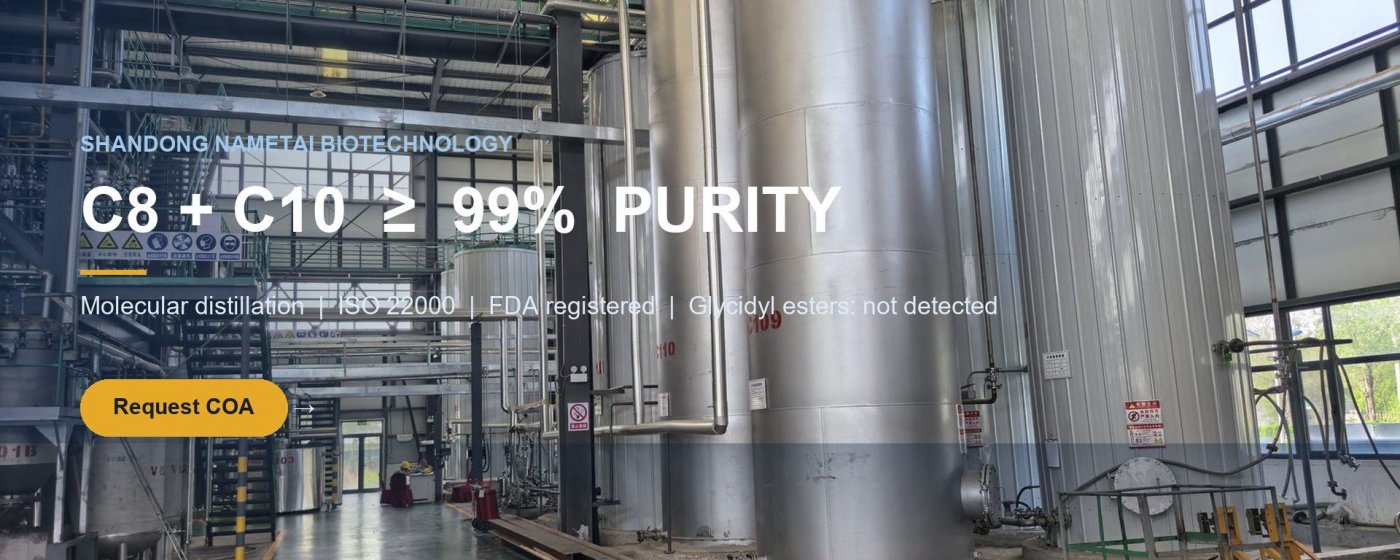
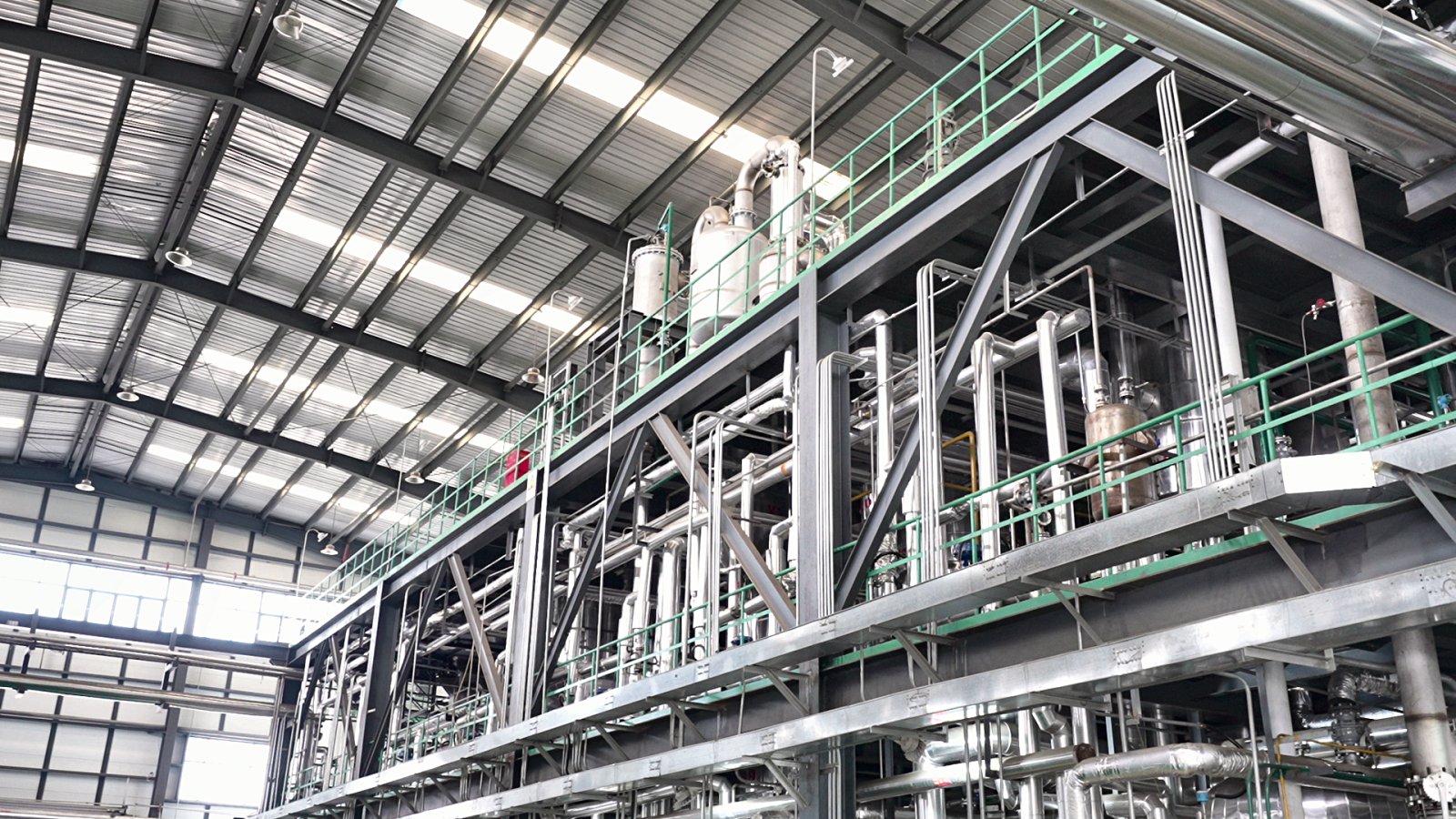
2. What is physically made at the site, and at what scale? A factory answers with process steps and square meters: our 5,220 m² workshop runs esterification, molecular distillation and separation, with an annual capacity around 10,000 tons. A trader answers with product categories it resells.
3. Will you host an audit — ours or a third party's? A factory that owns its line has nothing to hide and will welcome an inspection, including by third parties such as SGS, BV, Intertek or TÜV. Hesitation here is one of the loudest signals you will ever receive.
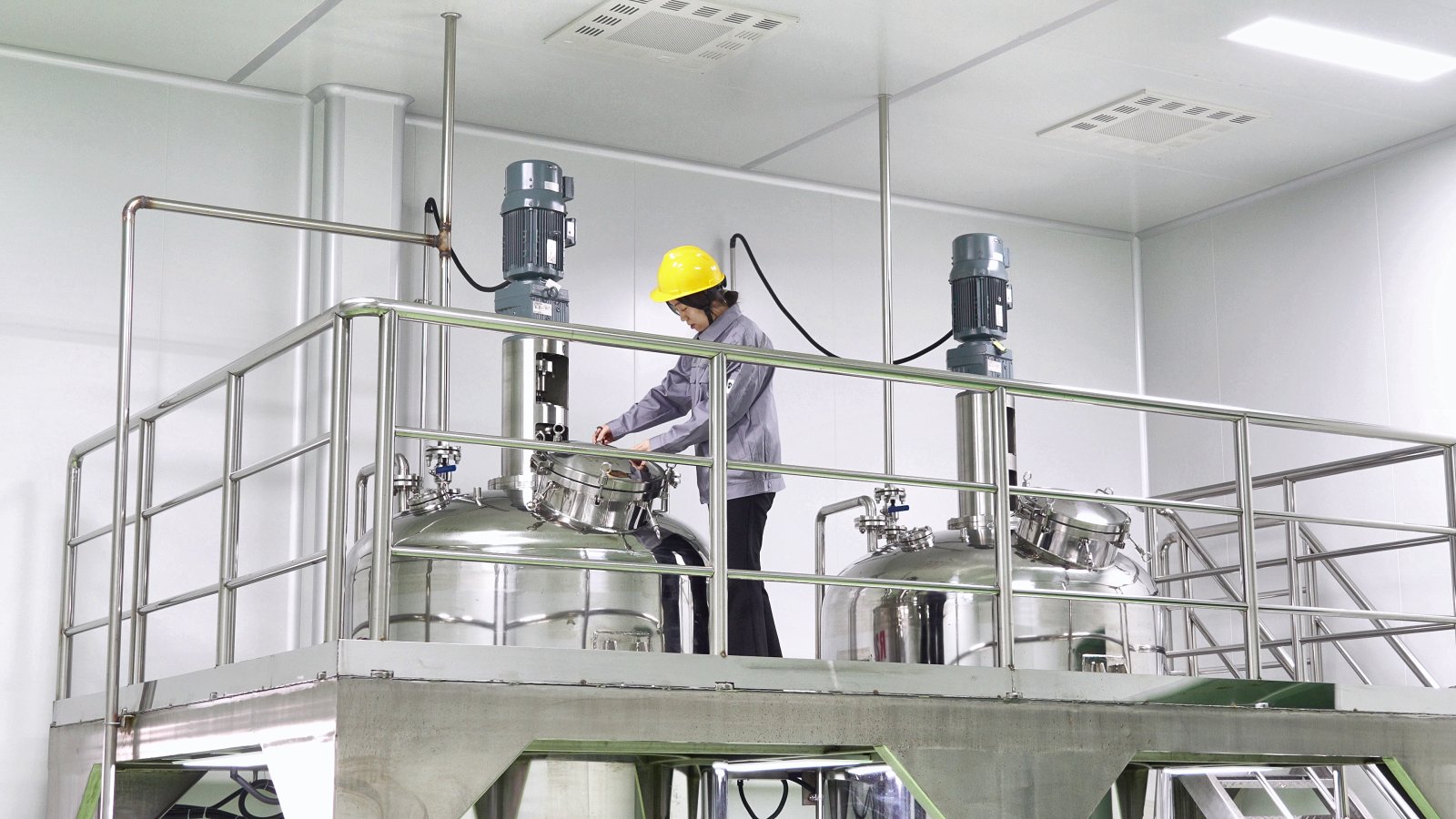
4. Can I see the line live before visiting? A real plant can put an operator on a video call and walk you through the workshop the same week. We do this routinely for first-time buyers who are not ready to fly in yet.
Questions 5–8: The Batch Documents
5. Does every shipment carry a batch COA, and does the drum label match it? This is the question that defeats mix-ups and forwarded paperwork at once. The lot number printed on the drum must be the lot number on the COA, and the COA must show measured values, not only limits. On our food-grade MCT oil, the specification caps acid value at ≤ 0.2 mg KOH/g and peroxide value at ≤ 1.0 mmol/kg; lot NMT-260601 measured 0.06 and 0.05 respectively, and moisture came in at 0.03% against a 0.2% limit. Those measured numbers exist because the batch was produced and tested in-house.
6. Which instrument produces the fatty-acid profile? The C8/C10 split on your COA is only as good as the instrument behind it. Our QC lab runs an Agilent 7890B gas chromatograph with a headspace autosampler; lot NMT-260601 profiled at 56.98% C8:0 and 42.37% C10:0. A trader will rarely know, and cannot control, which instrument — if any — produced the numbers it forwards.
7. Do you keep retention samples of each batch? A factory keeps a sealed sample of every lot so that a dispute can be settled on physical evidence months later. Ask where retention samples are stored and for how long.
8. Can third-party laboratory reports be provided? In-house testing proves capability; independent testing proves honesty. Our heavy-metal and microbiological results come from an accredited third-party laboratory, and those reports are available on request — ask any supplier for one recent example.
Questions 9–12: The Commercial Reality
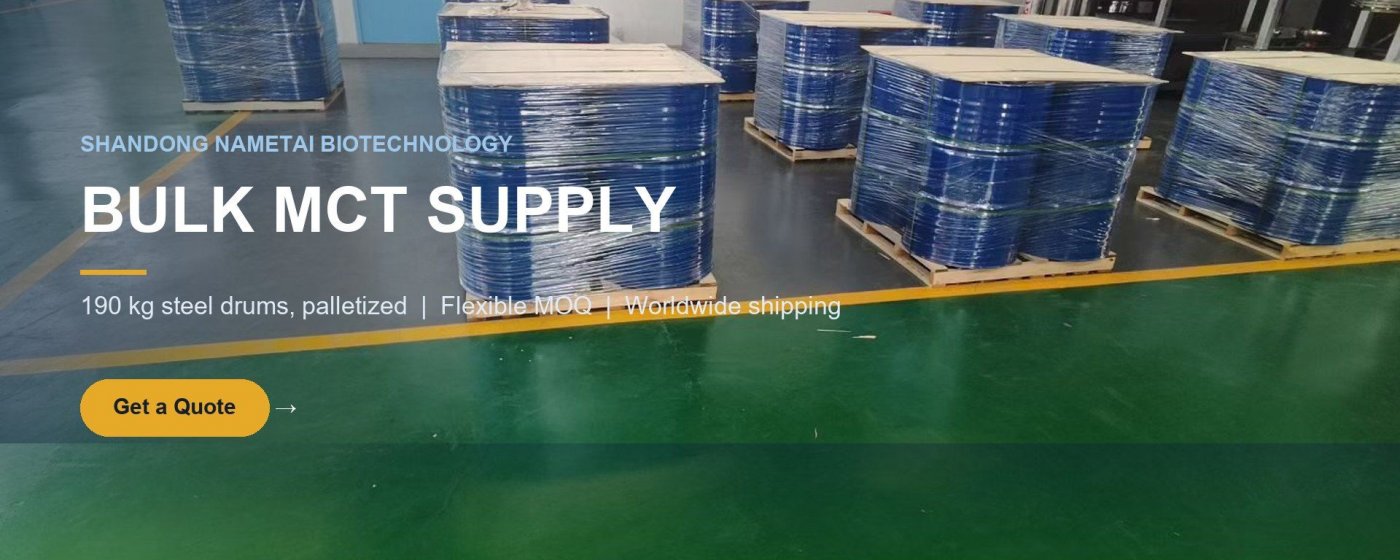
9. What do you pack, and from where? Pack formats reveal who touches the product. Our released batches are filled in the same building where they are made: 190 kg steel drums for bulk orders, 25 kg plastic drums for smaller lots, and 1 kg sample packs for laboratory validation, with four drums to a pallet and stretch-wrap before anything leaves the warehouse. A trader describes packs it orders from someone else.
10. What is the minimum order and the lead time? Tight, confident answers here usually mean the seller controls production. Our MOQ is 1 kg — the same pack a buyer uses for a first laboratory trial — and routine orders ship within 7 days to the port of departure.
11. Whose name is on the certificates? Certificates travel with the producing entity, not with the reseller. Ask who holds them and request the PDFs. We hold ISO 9001, ISO 22000, ISO 14001 and ISO 45001, HACCP, Kosher and HALAL certification, and a U.S. FDA food facility registration — a facility registration, which we state precisely because it is not a product approval.
12. Who is accountable when something goes wrong? This is the question traders answer worst. With one accountable party, a claim about a drum arrives at the desk of the person who filled it. With two, it arrives at a desk whose main job is forwarding emails.
The Twelve Answers, Side by Side
| # | Question | Factory answer | Trader answer |
|---|---|---|---|
| 1 | Production license | SC number in own name | Business license only |
| 2 | What is made on site | Process steps, area, capacity | Product list it resells |
| 3 | Audit welcome | Yes, incl. third parties | "Factory will arrange" |
| 4 | Live video of the line | Same week | Photos of unknown origin |
| 5 | Batch COA vs drum label | Lot numbers match, values measured | Forwarded PDF |
| 6 | Instruments behind the COA | Named GC model in own lab | Unknown |
| 7 | Retention samples | Kept per batch | None held |
| 8 | Third-party reports | Available on request | Reluctant or none |
| 9 | Pack formats | Filled in own plant | Ordered elsewhere |
| 10 | MOQ and lead time | Specific, confident | Vague, negotiable |
| 11 | Certificate holder | Producer's name | Producer's name, not theirs |
| 12 | Accountability | One party, end to end | Two parties, disputed |
From Questions to Evidence
These twelve questions are a screen, not a substitute for diligence. Once a supplier passes the screen, the next step is the document pack and the audit itself: our earlier checklist covers what documents to request from an MCT oil supplier, and a separate article walks through a remote and on-site supplier audit. When you are ready to see the plant rather than read about it, our walkthrough of the facility from palm and coconut oil to finished MCT oil shows what a factory answer looks like in photographs.
And when you want to put the twelve questions to us directly — license number, instrument list, retention-sample policy and all — start with the product itself: our food-grade MCT oil page carries the full specification, and every quotation is issued by the same entity that holds the production license.
To ask these twelve questions, request a 1 kg sample with its batch COA, or schedule a live video walk-through of the plant, send us a message through the request-a-quote page, or email [email protected] / call +86 132 9546 7567. If a supplier cannot answer these twelve, you have your answer already.