
 +8613295467567




Most buyers evaluate an MCT oil supplier on paper: specification sheet, COA, certificates, price. The stage that almost never gets examined is the one an order passes through last — the packaging line, where a released batch becomes sealed drums, wrapped pallets and a container load. That stage matters more than it looks. An oil that left the plant with a peroxide value of 0.05 can still arrive oxidized, wet or mislabeled if the packing and dispatch interface is careless. This article explains how the packing stage works at our Dongying plant, which contamination risks it is designed to control, and what you can check yourself when the drums arrive.
Where the Packaging Stage Sits in Our Process
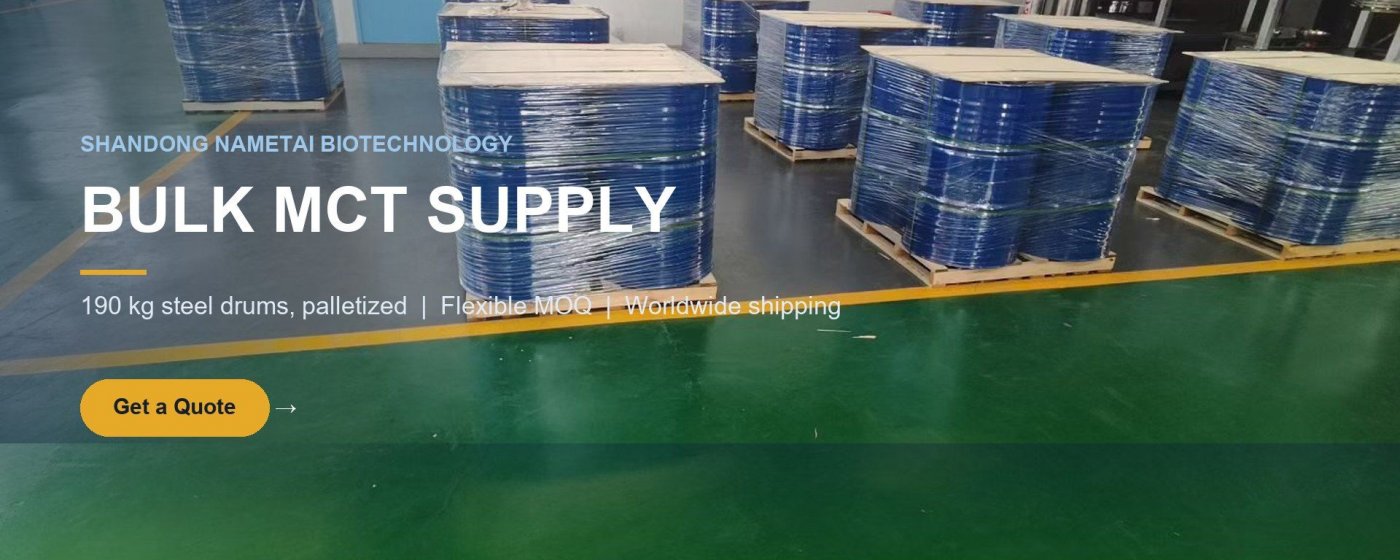
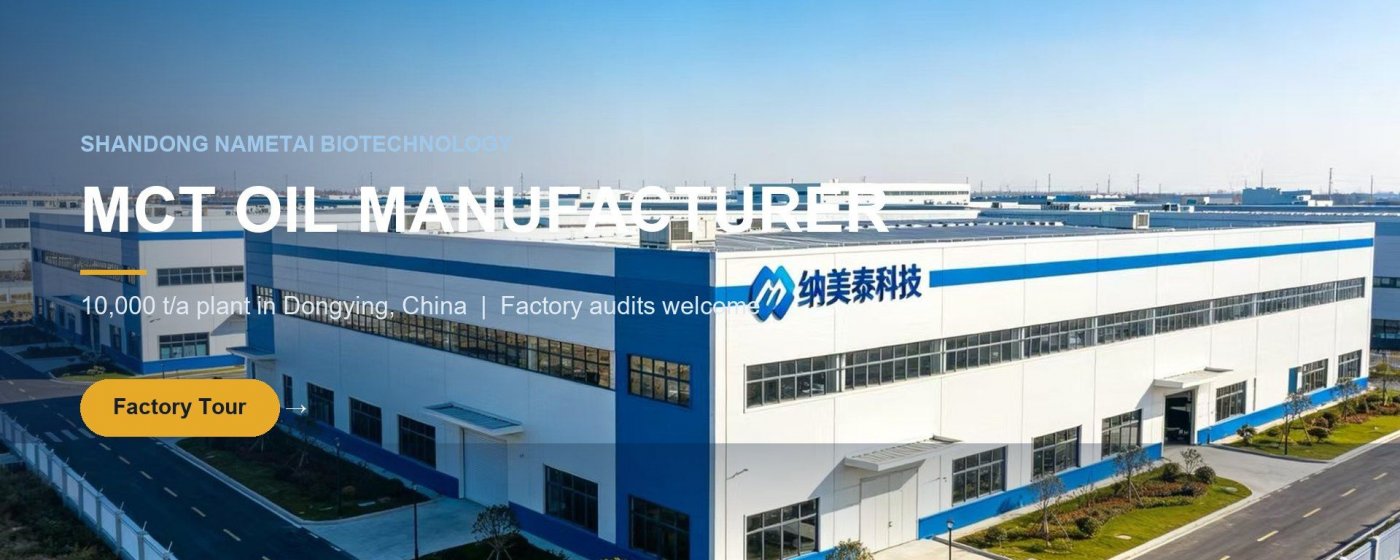
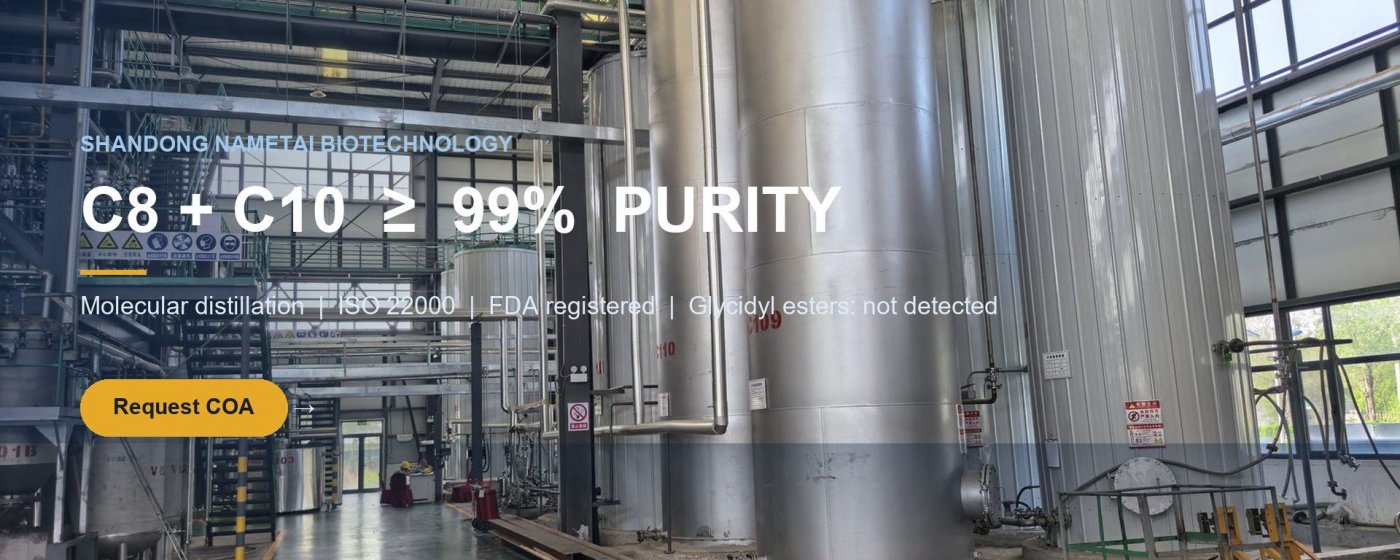
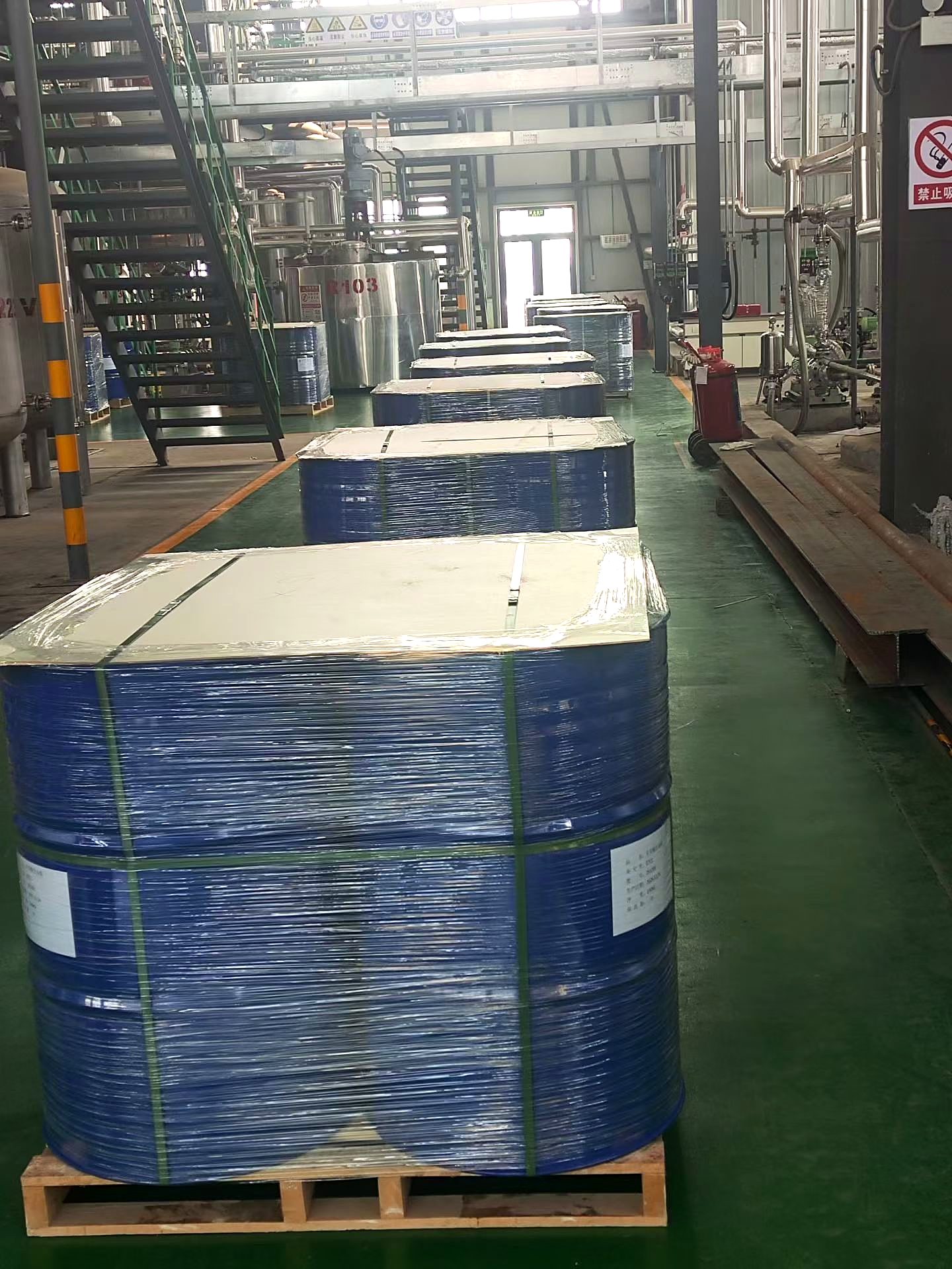
Inside the 5,220 m² workshop, production runs through esterification, molecular distillation and separation. After separation, the finished oil moves the shortest possible distance to the filling area inside the same building — there is no third-party repacking step between our plant and the drum you receive. Three pack formats are filled from the same released batch: 190 kg steel drums for bulk export orders, 25 kg plastic drums for small and mid-size lots, and 1 kg sample packs for buyers who want to validate the oil in their own laboratory before committing to a container.
Each drum is closed and labeled with the product name and the batch lot number before it leaves the filling area. That lot number is not decoration: it is the key that links the physical drum to the batch COA, the production record and the QC release data. For the full context of what happens before this stage, our earlier walkthrough covers the plant from palm and coconut oil to finished MCT oil.
Four Contamination Risks the Packing Stage Has to Control
Packaging is where an oil either keeps the quality it was released with, or quietly loses it. Four risks dominate, and each one maps to a number you already read on the COA.
Oxygen. Autoxidation is the main enemy of any edible oil. Oxygen reacts with the fat and forms peroxides, and the peroxide value on your COA is the direct measure of that process — our release limit is ≤ 1.0 mmol/kg, and lot NMT-260601 measured 0.05. Once a drum is open to air, the clock runs. The packing stage controls this the simple way: the oil goes into a closed steel drum, the lid is sealed, and the drum stays sealed until it reaches your warehouse. A half-empty drum standing open in a warm storeroom loses shelf life far faster than a sealed one.
Moisture. Water drives hydrolysis, which pushes the acid value up, and in extreme cases supports microbial growth. Our specification caps moisture at 0.2%, and lot NMT-260601 measured 0.03%. Keeping that number where it was measured means the drum must stay closed and dry from filling to devanning — which is why pallets are wrapped before they leave the building.
Foreign matter. This is the risk buyers think of first, and it is managed most cheaply at the source: filled drums are closed immediately, in the same area where they were filled, and they are not reopened anywhere in our plant. A drum that is never reopened between filling and your receipt cannot pick up anything in between.
Lot mix-ups. The quietest risk. Two batches of the same product look identical, and a warehouse error means your COA describes oil that is not in your drums. Labeling discipline — product name plus lot number on every drum, checked against the release documents — is what keeps the document and the contents identical.
Pack Formats: From 190 kg Drums to 1 kg Samples
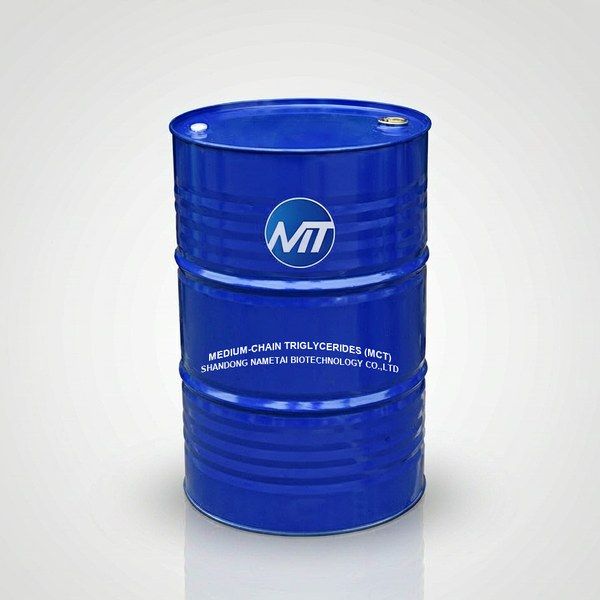
One released batch can be packed in three formats, so your order size decides the pack — not the product:
| Format | Net weight | Typical use |
|---|---|---|
| Steel drum | 190 kg | Bulk export orders, container loads |
| Plastic drum | 25 kg | Small and mid-size lots, production-scale trials |
| Sample pack | 1 kg | Laboratory validation before the first order |
For bulk buyers, the 190 kg steel drum has one further advantage that has nothing to do with strength: the wall is opaque. Light accelerates oil oxidation the same way oxygen does, and a steel drum removes light from the storage equation entirely — no warehouse lamp or sunlit corner ever reaches the oil.
Powders ship differently. Our microencapsulated MCT powder range goes out in 20 kg bags — a composite kraft paper bag with a polyethylene inner liner — or as 10 kg bags packed into 20 kg cartons, with the liner doing the moisture-barrier work that the drum wall does for oil.
Sealed, Palletized and Wrapped: The Days You Never See
The least supervised stretch of the journey is also the longest for the product: the days between QC release and container loading. In our plant this stretch is deliberately short and mechanical. Released drums are palletized and wrapped in the packing area, moved by forklift into the finished-goods warehouse, and stored in lot-separated rows until dispatch. At loading, the same pallets move from warehouse to dock to container without being reopened — the wrap comes off only when the pallet is devanned at your side.
None of this replaces testing; it preserves what testing certified. The batch COA that travels with your shipment describes the oil at release, and correct packing is what keeps those numbers true on arrival. If you want to see how the release numbers themselves are produced, our QC lab walkthrough covers batch testing, instruments and a real release table.
What You Can Check When the Drums Arrive
You do not need to audit a plant to protect an order; the drum itself carries most of the evidence. Five checks take only minutes at devanning:
- Seal and closure. Lids closed, seal rings in place, no sign the drum was opened in transit.
- Label versus COA. The lot number on the drum must match the lot number on the batch COA — this single check defeats most mix-up risk.
- Drum condition. Dents, rust or deformation on arrival are photograph-and-report items; they tell you how the container was stuffed and stowed.
- Wrap and pallet state. Broken stretch wrap and scattered drums mean the pallets were handled loose somewhere between the two warehouses.
- A retained sample. Draw a small top sample from one drum per lot and keep it sealed; if a dispute ever arises, you hold the evidence, not just the paperwork.
When you qualify a new supplier, add one question to the audit list: ask to see the filling and palletizing area, and ask what happens to a drum between sealing and the warehouse. A factory that fills, seals, tests and stores under one roof — like the line behind our food-grade MCT oil in Dongying — has fewer transfer points where contamination can enter, and fewer parties involved when something goes wrong.
To request a 1 kg sample, a quotation, or a video walk-through of the packing and warehouse areas, send us a message through the request-a-quote page, or email [email protected] / call +86 132 9546 7567. Samples ship with the batch COA of the same lot you will be evaluating.