
 +8613295467567




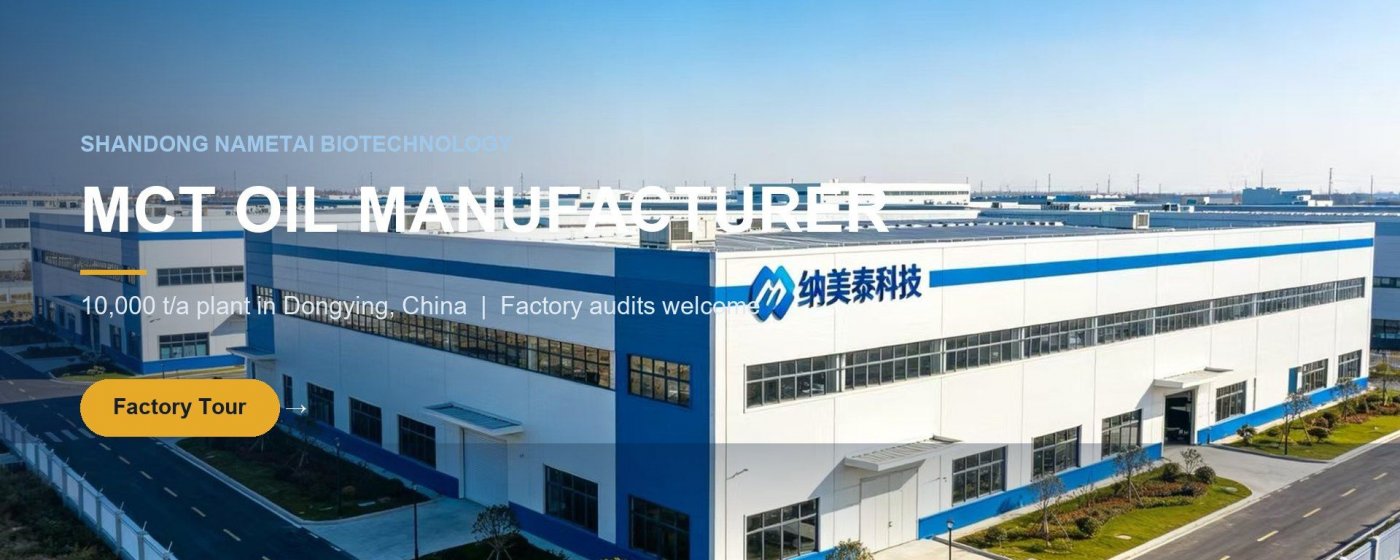
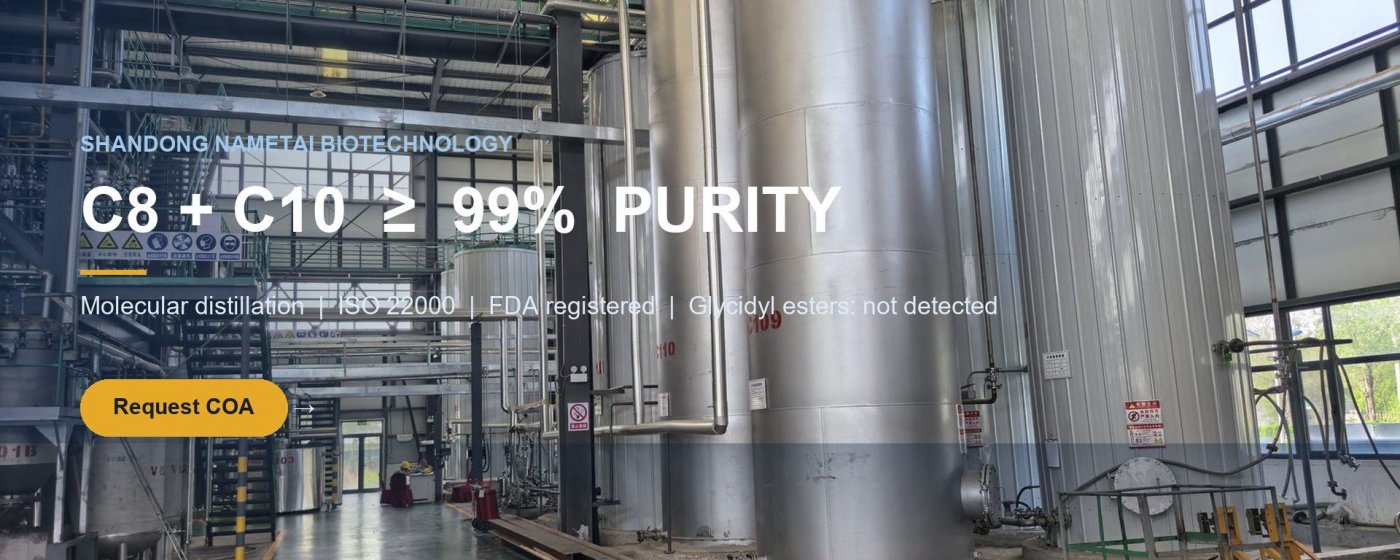
Every MCT oil buyer receives a certificate of analysis with each shipment, but few get to see the room where those numbers are produced. This article walks through our QC laboratory in Dongying, Shandong — what is tested, on which instruments, against which standard, and what a real release table looks like for a production batch. If you are comparing MCT oil suppliers, treat the lab, not the sales brochure, as the honest part of any offer.
Three Checkpoints: Raw Material, In-Process, Finished Batch
Testing at our plant is not a single event at the end of the line. It runs at three checkpoints. First, incoming control: every intake lot of food-grade palm and coconut oil is checked before it enters production, because a drum of finished MCT oil can never be better than the raw material it came from. Second, in-process monitoring: after esterification and molecular distillation, intermediate samples are drawn and measured so that process drift is caught between stages, not after filling. Third, and most important for you as a buyer, finished-batch release: no drum leaves the plant until every parameter in the release specification has been verified and recorded.
This is the practical meaning of “batch COA”. The certificate is not a copy of a generic datasheet — it reports the measured values of the specific lot filling your order, and it is issued only after that lot passes all release tests.
The Instrument Bench: Gas Chromatography for Fatty-Acid Composition
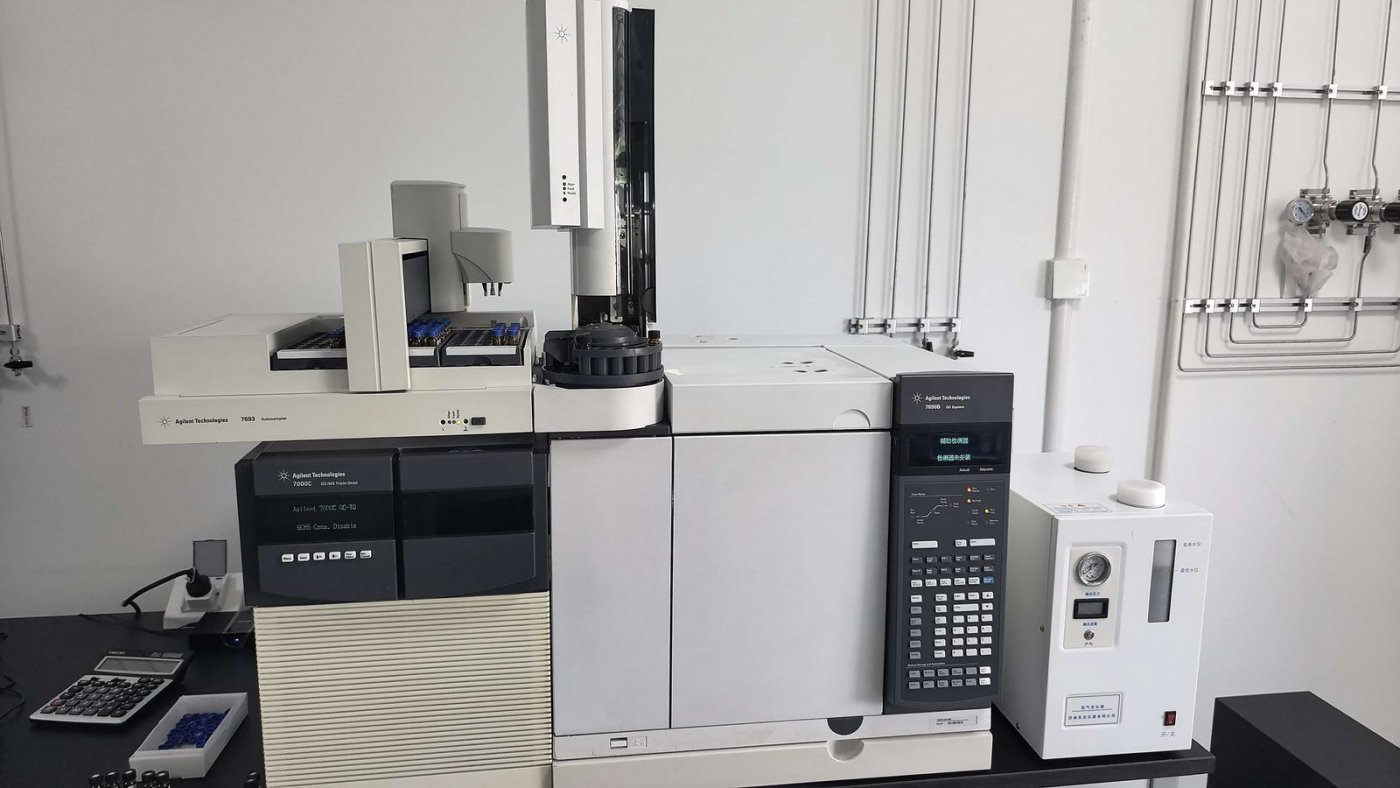
The headline instrument in the lab is a gas chromatograph — an Agilent 7890B GC fitted with a 7693A automatic headspace sampler, supported by an on-site hydrogen generator. Two jobs run on this bench. The first is fatty-acid composition: the C8:0 and C10:0 percentages that define an MCT oil are measured here by GC, not estimated from the raw-oil invoice. The second is residual-solvent checking on intermediates and finished oil, using the headspace sampler to keep the measurement clean and repeatable.
Why does instrument-level detail matter to a buyer? Because the two numbers that decide whether you received real MCT — C8 and C10 content — can only be proven by chromatography. A supplier without a GC in-house is asking you to trust a paper chain instead of a measurement. If you want to go deeper into how the method works, we published a dedicated walkthrough of GC testing for MCT oil composition.
Against What Standard Is a Batch Released?
Our food-grade MCT oil is specified and released against our enterprise standard Q/NMT-004-2026, which is anchored in GB 15196, the Chinese national food-safety standard for edible fat products and oils. The standard fixes the limits you see on the COA: acid value ≤ 0.2 mg KOH/g, iodine value ≤ 0.2 g I2/100 g, peroxide value ≤ 1.0 mmol/kg, moisture ≤ 0.2%, saponification value 325–360 mg KOH/g, relative density 0.940–0.955 at 20 °C, hydroxyl value ≤ 10 mg KOH/g, and a fatty-acid profile of 50–80% C8:0 with 20–50% C10:0.
For pharmaceutical applications, a different and stricter release table applies: our excipient-grade MCT oil is specified against the Chinese Pharmacopoeia 2025 edition, which adds tests the food grade does not carry — refractive index, viscosity, clarity and color, unsaponifiable matter, alkaline impurities and residue on ignition.
The Release Table: A Real Production Batch
Here is the release data of lot NMT-260601, produced 31 May 2026 and tested 10 June 2026 — the same table that travelled with the shipment as its batch COA:
| Parameter | Unit | Specification | Result (NMT-260601) | Test method |
|---|---|---|---|---|
| Acid value | mg KOH/g | ≤ 0.2 | 0.06 | GB 5009.229 |
| Iodine value | g I2/100 g | ≤ 0.2 | 0.05 | GB 28302 |
| Saponification value | mg KOH/g | 325–360 | 337.57 | GB/T 5534 |
| Moisture and volatile matter | % | ≤ 0.2 | 0.03 | GB 5009.236 |
| Relative density (20 °C) | — | 0.940–0.955 | 0.940 | GB 5009.2 |
| Peroxide value | mmol/kg | ≤ 1.0 | 0.05 | GB 5009.227 |
| Hydroxyl value | mg KOH/g | ≤ 10 | 5.16 | ChP general chapter 0713 |
| C8:0 (caprylic acid) | % of total fatty acids | 50–80 | 56.98 | GB 5009.168 (third method) |
| C10:0 (capric acid) | % of total fatty acids | 20–50 | 42.37 | GB 5009.168 (third method) |
Read the table the way a QC chemist would. The acid value of 0.06 against a 0.2 limit tells you the oil was processed gently and is still fresh — acid value climbs as triglycerides hydrolyse. The peroxide value of 0.05 against ≤ 1.0 is your oxidation headroom: it is the parameter that predicts how much shelf life is left when the drum reaches you. The iodine value of 0.05 confirms the oil is fully saturated — any long-chain unsaturated contamination would push it up. And C8:0 plus C10:0 sum to 99.35%, which is the number that distinguishes a true medium-chain triglyceride from a diluted blend.
If you are new to these parameters, our guide on how to read an MCT oil COA explains each row and its effect on your formulation in more detail.
What Travels With the Drum
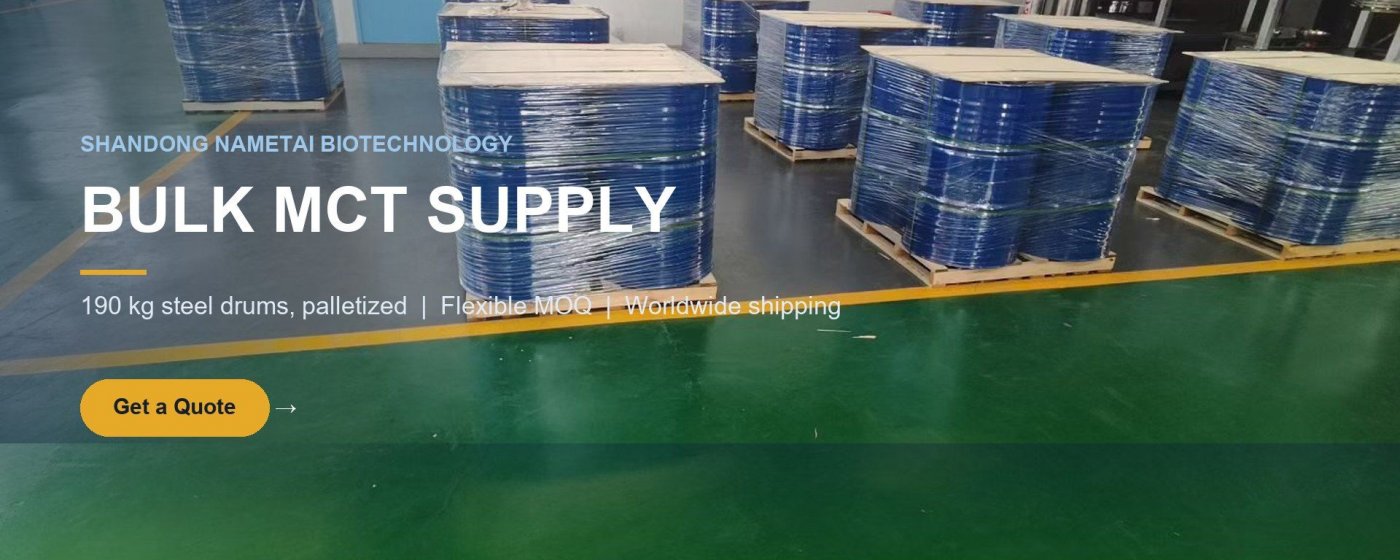
Each shipment is accompanied by the batch COA carrying the lot number printed on your drums, the product specification sheet, and the MSDS. The plant's certification set — ISO 9001, ISO 22000, ISO 14001, ISO 45001, HACCP, Kosher, HALAL, FDA facility registration and food production licenses — covers the system around the lab, but the COA remains the document that binds the specific lot to the specific values. That is why we ask buyers to check one thing on arrival: the lot number on the drum matches the lot number on the COA.
Four Questions That Reveal a Supplier's Lab
When you qualify an MCT oil supplier, the lab is where claims meet evidence. Four questions get you there quickly:
- Which instrument produced the fatty-acid line of my COA? A named GC with a model number means the measurement exists; vague answers mean it may not.
- Against which standard is the batch released? A numbered enterprise or national standard — not “industry practice”.
- Can the COA lot number be matched to the drums on the pallet? Traceability from document to physical product is the core of any real quality system.
- May I see the lab during an audit or video inspection? A factory that tests its own batches has nothing to hide; one that outsources testing will usually say so.
We welcome customer audits and live video inspections of the Dongying plant, including the QC laboratory. To request a 1 kg sample, a quotation, or a scheduled lab walk-through, send us a message through the request-a-quote page, or email [email protected] / call +86 132 9546 7567. Samples ship with the batch COA of the same lot you will be evaluating.