
 +8613295467567



A supplier is easier to judge after the first sample than during the first meeting. Most of the risk in buying MCT powder sits in questions that can be answered with documents: what carrier the oil is sprayed onto, whether the oil load on the specification is the oil load in the drum, how the powder behaves when it is blended into a finished product, and whether every batch arrives with a certificate of analysis that matches the specification sheet you approved.
What MCT Powder Actually Is
MCT powder is not dried MCT oil. Medium-chain triglycerides are liquids at room temperature and cannot be spray-dried on their own. The powder is produced by emulsifying MCT oil with a wall material — typically a starch derivative or a protein — and spray-drying the emulsion, which encapsulates the oil in fine particles that flow like a powder.
Two consequences follow from that process, and both should shape how you evaluate a supplier.
The oil content is a specification, not a constant
The percentage of MCT oil carried in the powder is a designed value. 50%, 70% and higher are all commercially available, and the same supplier may offer several. A higher oil load means less carrier per kilogram, which changes dosing, flow and cost per unit of oil. The figure on the specification sheet has to be verifiable by analysis, not just stated on a web page.
Everything else is the wall material
The carrier determines how the powder disperses, how it tastes, how it behaves in a tablet press or a beverage line, and which label declarations apply. Two powders with the same oil percentage and different carriers are not interchangeable. Ask what the wall material is before comparing prices, because a price difference between two MCT powders is often a carrier difference.
The Seven Questions Worth Asking
1. What is the oil load, and how is it verified?
Ask for the oil content figure together with the analytical method used to establish it. A supplier who reports 70% MCT should be able to show the assay on the certificate of analysis for the batch in question, not only on a marketing sheet.
2. What is the wall material?
Starch-based and protein-based carriers behave differently in application. The answer determines dispersibility, taste profile and the allergen and labelling position of your finished product. It should be a clear, named answer.
3. Is the specification you quote the specification you ship?
Compare the limit values on the specification sheet with the actual results on a recent certificate of analysis. This is the single most common gap found in supplier evaluation: a well-written specification that the routine batch results do not fully meet.
4. What does every batch ship with?
For MCT powder, the standard document set is a certificate of analysis for that batch. Confirm the document set in writing before the first order, so that what arrives with the goods matches what was agreed during the enquiry.
5. Can you supply a sample at production scale?
A laboratory sample does not prove that a production run will behave the same way in your process. Where the application is sensitive to particle size or flow, ask whether the sample comes from a production batch rather than a pilot batch.
6. What is the minimum order and the lead time?
Both should be stated plainly. For a first order, the practical questions are the minimum quantity that can be supplied, and how long from order to shipment. Custom or OEM production normally takes longer than a standard grade, and the difference should be quoted rather than discovered.
7. Who actually manufactures it?
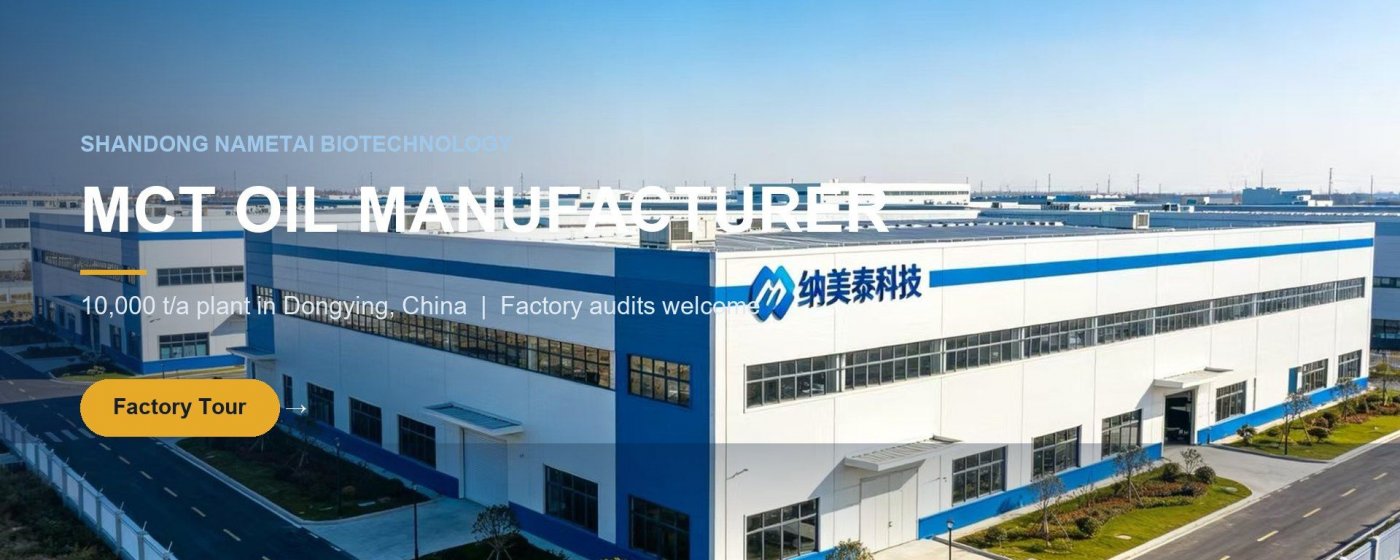
A trading company may have no visibility into the plant that makes the powder, which becomes a problem when a specification changes. Ask whether the supplier manufactures or trades, and expect a consistent answer over time. Plant-level evidence — production lines, laboratory equipment, packing operations — is part of this question, and pages such as Inside Our Factory exist to answer it directly.
Reading the Certificate of Analysis
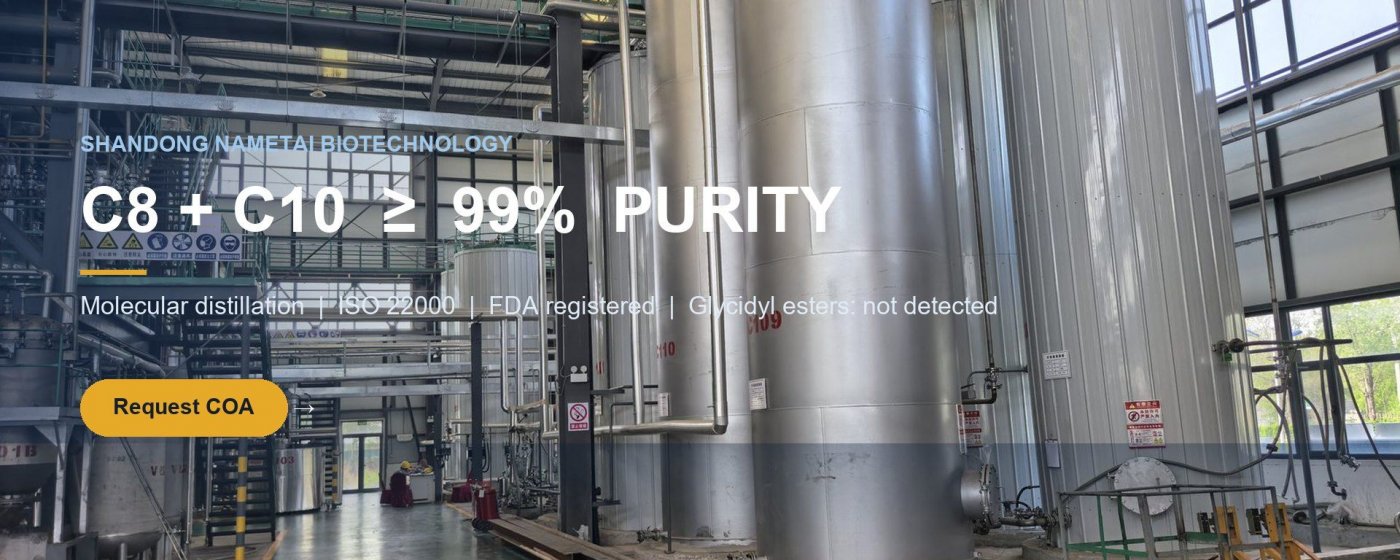
For MCT powder, the certificate should report at minimum the oil content, the fatty-acid composition of that oil (C8 and C10 separately), moisture, and appearance. If the powder is sold as food grade, the microbiological results belong on the sheet as well. A certificate that reports only a total fat figure leaves the most important parameter — how much of it is C8 and C10 — unverified.
The same discipline applied to MCT oil applies here; the parameter list is set out in How to Read an MCT Oil COA, and the fatty-acid row in particular is covered in C8 vs C10 MCT Oil.
Grade and Application Fit
MCT powder is generally specified where a dry format is required: nutritional powders and sachets, powdered beverage mixes, tablet and capsule formulations, clinical nutrition, and dry pet food or supplement applications. Which of these you are formulating into decides the grade, the carrier and often the oil load. The requirement-to-product mapping is set out on the Applications page, and the powder range itself is on MCT Powder.
Commercial Terms to Confirm in Writing
| Item | What to confirm |
|---|---|
| Minimum order | 1 kg for standard grades; state the quantity for custom work. |
| Lead time | Regular grades quoted from order to port of departure; samples on a separate, shorter schedule. |
| Samples | 1 kg or 20 kg from stock; custom quantity on request. |
| OEM / ODM | Both available — confirm which applies to your project. |
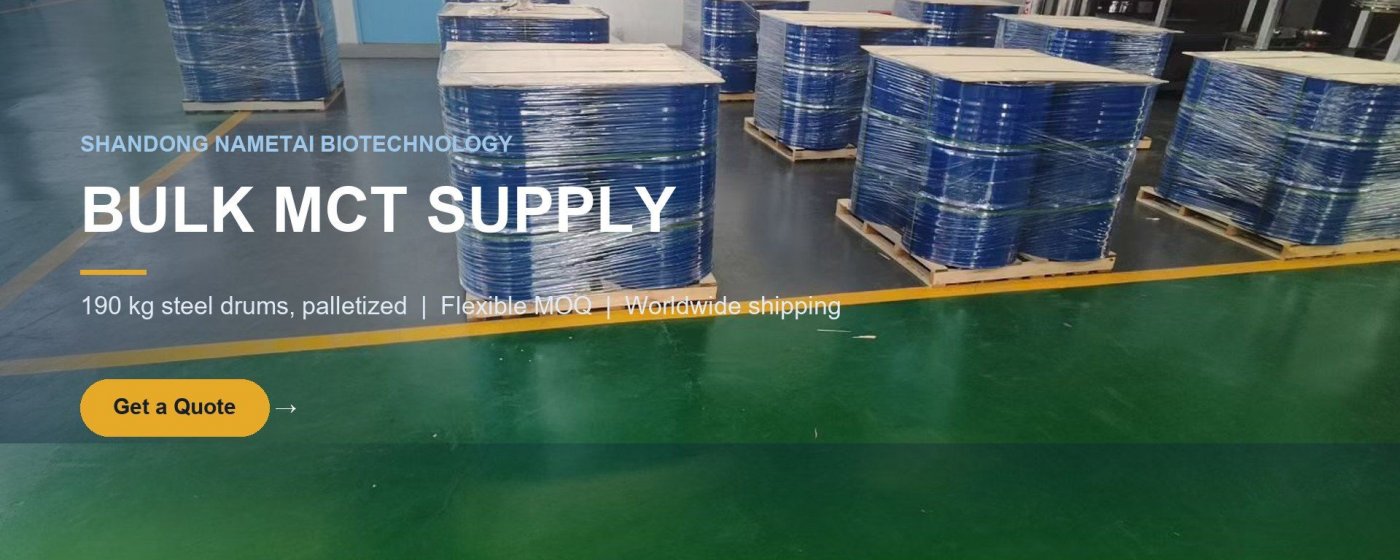
| Packaging | Bulk orders palletised and prepared for container shipment. |
| Custom formulation | Evaluated against the application; ask before assuming it is out of scope. |
Common Questions
Is MCT powder simply diluted MCT oil?
In effect the oil is carried on a wall material, so a kilogram of powder contains less than a kilogram of MCT oil. That is why the oil load percentage matters: it determines how much powder you need for a given oil dose.
Does the C8:C10 ratio matter in powder form?
Yes, for the same reason it matters in the oil. The fatty-acid composition of the encapsulated oil is what the certificate of analysis should report, and it should match the oil you specified.
Can the carrier be changed to suit my formulation?
Carrier selection is a formulation decision and custom requirements can be evaluated against the application. Raise it during the enquiry rather than after a specification has been fixed.
What is the difference between food grade and other grades?
The limit values and the documentation set, rather than the basic composition. This comparison covers where the grades diverge on the test sheet.
Related Pages
- Products: MCT Oil · MCT Powder · Emollient Esters
- Manufacturing: Inside Our Factory · Quality & Compliance · Certification
- Selection: Applications · Knowledge Hub · MCT Oil vs MCT Powder
Request a Quote
For a quotation, a sample (1 kg or 20 kg) or batch documentation, use the enquiry form on this page — request a quote — or the Contact Us page. The minimum order quantity is 1 kg for MCT Oil, MCT Powder and Specialty Esters.