
 +8613295467567





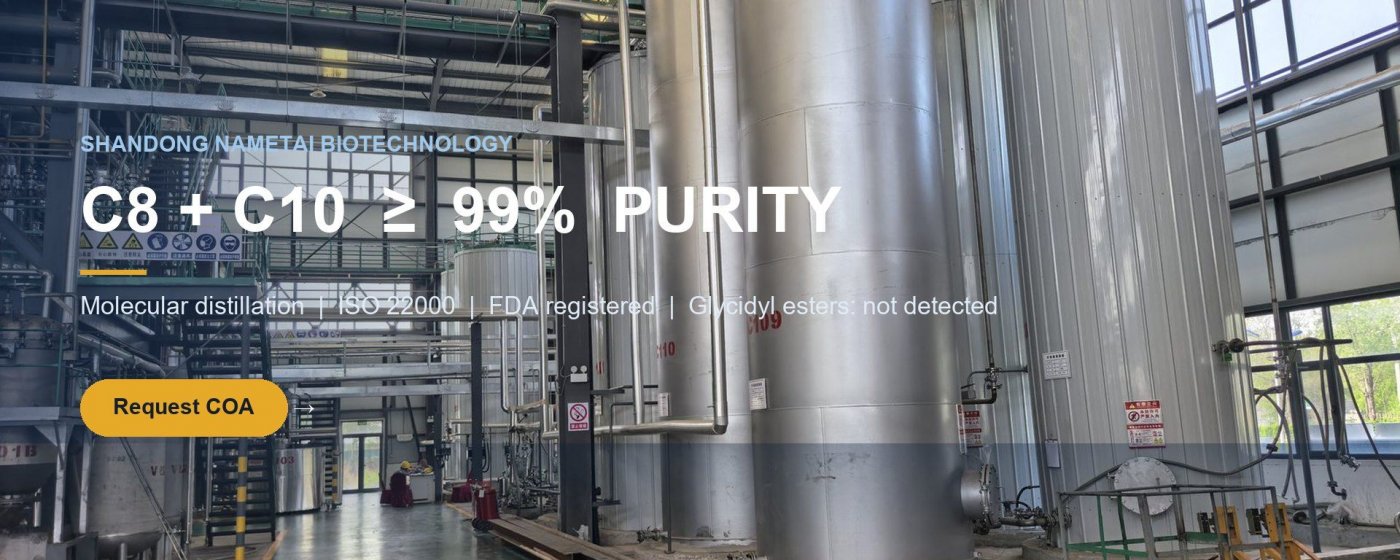
Pharmaceutical-grade MCT oil is defined by a written standard, not by a marketing adjective. For our grade, that standard is the Chinese Pharmacopoeia (ChP 2025, Volume IV). This article walks through what the monograph actually requires, how a batch is released against it, and what a buyer should verify on the batch COA before the material enters a registration-relevant formulation.
What "ChP 2025 Volume IV" means for a buyer
Volume IV of the Chinese Pharmacopoeia covers pharmaceutical excipients. An MCT oil "manufactured to ChP 2025 Volume IV requirements" is tested and released against the monograph's test items and limits — appearance, identification, physical-chemical parameters and fatty acid composition. That is a different, tighter regime from food-grade supply, where the same substance ships against food standards.
The practical difference for a buyer is documentation: a pharma-grade batch must demonstrate conformance to the monograph, item by item, on the batch COA. Our article on pharmaceutical-grade versus food-grade MCT oil compares the two documentation regimes across twelve parameters.
The monograph limits and how our batches perform
The specification table on our Pharmaceutical Grade MCT Oil page lists the monograph limit and a typical value from routine batches side by side. The parameters and limits are reproduced below.
| Parameter | Unit | Limit | Typical |
|---|---|---|---|
| Relative density | — | 0.93–0.96 | 0.95 |
| Refractive index | — | 1.440–1.452 | 1.449 |
| Viscosity | mPa·s | 25–33 | 29 |
| Acid value | mg KOH/g | ≤ 0.2 | 0.1 |
| Hydroxyl value | — | ≤ 10 | 5 |
| Iodine value | — | ≤ 1.0 | 0.2 |
| Peroxide value | meq/kg | ≤ 1.0 | 0.0 |
| Saponification value | mg KOH/g | 310–360 | 350 |
| Unsaponifiable matter | % | ≤ 0.5 | 0.2 |
| Water | % | ≤ 0.2 | 0.06 |
| Residue on ignition | % | ≤ 0.1 | 0.01 |
And the fatty acid composition that defines the substance:
| Fatty acid | Limit | Typical |
|---|---|---|
| C6:0 | ≤ 2.0% | 0.0 |
| C8:0 | 50.0–80.0% | 61.2 |
| C10:0 | 20.0–50.0% | 38.8 |
| C12:0 | ≤ 3.0% | 0.0 |
| C14:0 | ≤ 1.0% | 0.0 |
| ≥ C16 | ≤ 1.0% | 0.0 |
Two habits make this table useful rather than decorative. First, look at the distance between limit and typical: an acid value limit of ≤0.2 with typical 0.1, or a peroxide limit of ≤1.0 with typical 0.0, means the process holds real margin — the batch COA should sit in the same neighbourhood. Second, remember the page's own caveat: specification values are per the standard; typical values are indicative, and only the batch COA carries the actual results for the batch you receive.
How a batch is released against the monograph
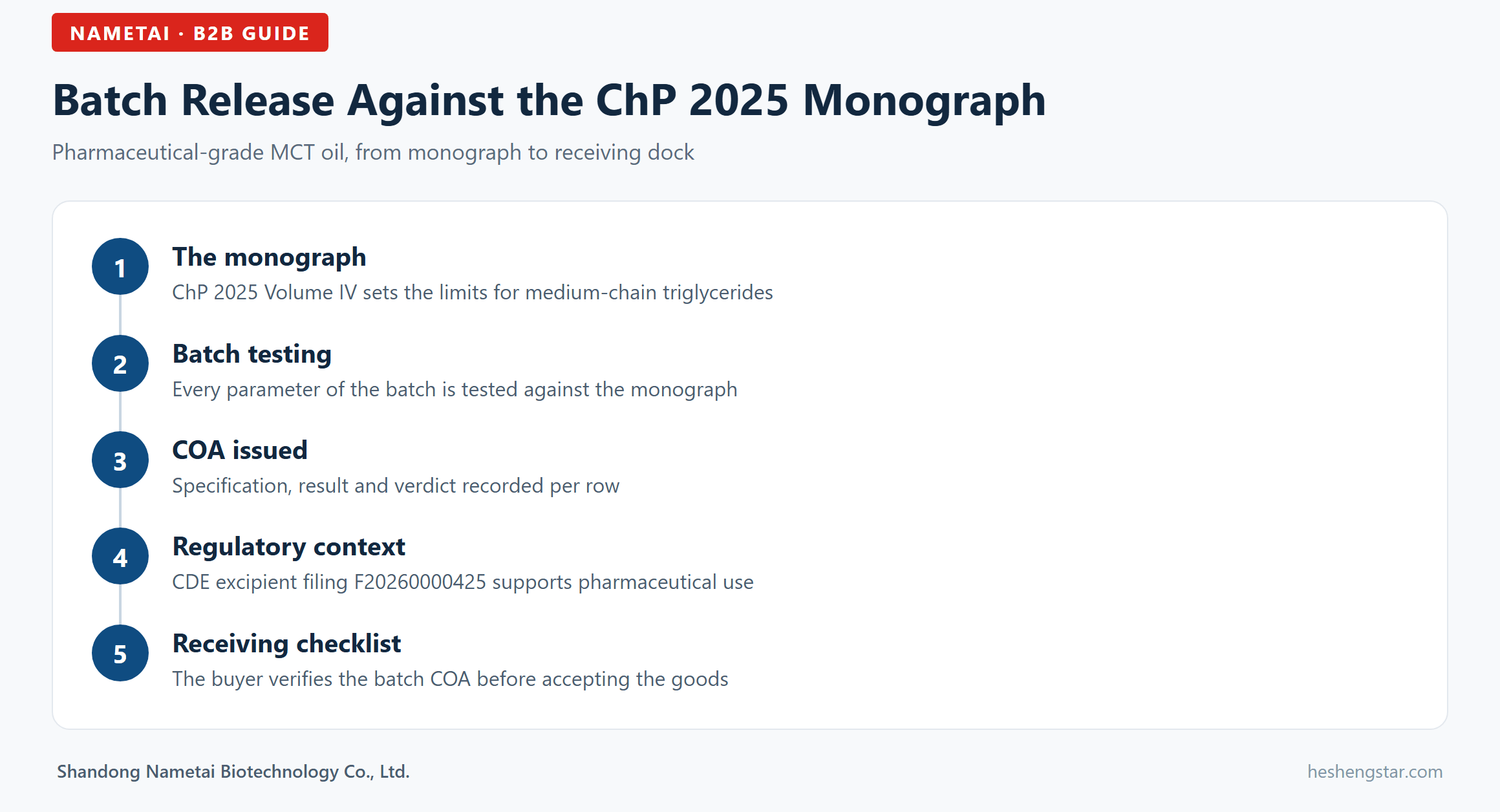
From monograph to receiving dock: how a batch is released.
Every batch is tested in our own QC laboratory before release, covering the monograph items: relative density, refractive index, viscosity, acid value, hydroxyl value, iodine value, peroxide value, saponification value, unsaponifiable matter, water, residue on ignition, and fatty acid composition by gas chromatography. Heavy metals and microbiology are verified by third-party laboratory reports per food-grade requirements, and retained samples are kept per batch.
The batch COA that travels with each shipment shows the actual result for each item, so a receiving QC team can compare it against the monograph limits without interpretation. If your team wants to see the testing environment first, our QC laboratory article documents the Agilent 7890B GC system and a real batch sequence; the factory page shows the production environment, including the dedicated pharma-grade refining stage.
Regulatory context: the CDE excipient filing
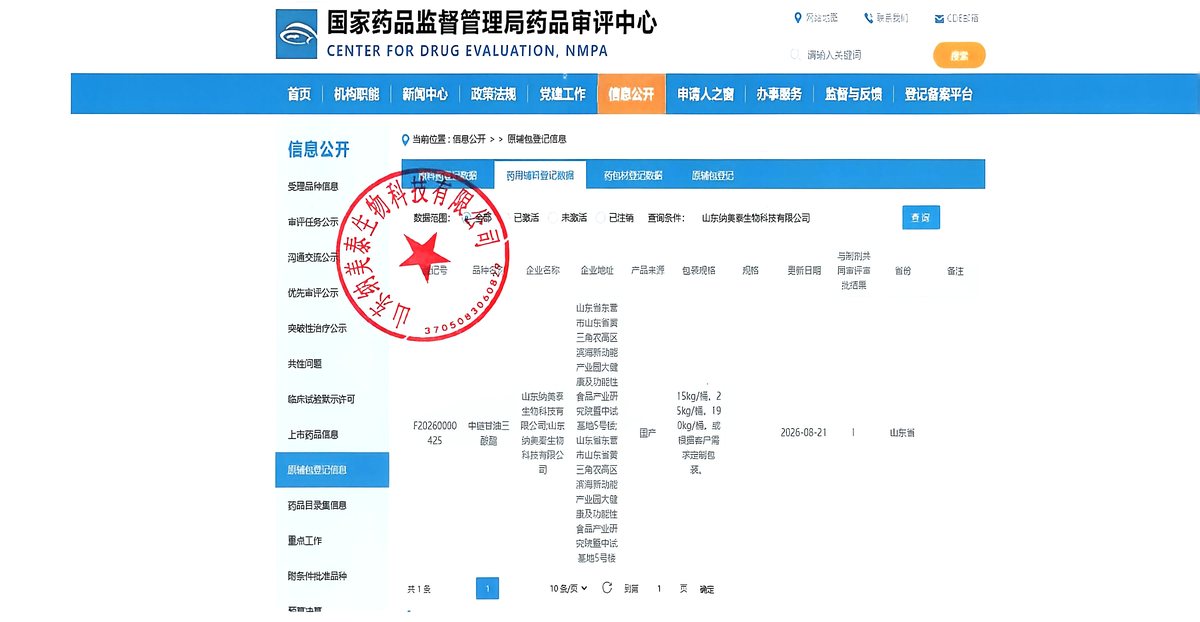
The CDE filing F20260000425 supports pharmaceutical applications.
Our medium-chain triglycerides are filed with the CDE pharmaceutical excipient filing platform (filing number F20260000425), and the filing status is active. For buyers building registration dossiers in China, an active excipient filing means the dossier exists in the regulator's platform and can be referenced in association review. What it does not mean is product approval: the excipient dossier is reviewed within each drug application that references it, and your formulation, route and fitness remain subject to that review.
We describe the mechanism honestly in our article on the CDE excipient filing, including what "active" does and does not guarantee. For the supplier-selection decision that surrounds such filings, see how to choose an MCT oil manufacturer for pharmaceutical applications.
What to verify on the batch COA — a receiving checklist
- Batch number on the COA matches the drums received.
- Every monograph item appears with an actual result — not "complies".
- Fatty acid composition by GC sits within the C8 50–80% / C10 20–50% window.
- Method references for each test are stated.
- The report is signed and dated by the releasing laboratory.
For buyers who also source food-grade MCT oil, keep the two documentation sets separate: the same substance released against different standards produces different paperwork, and mixing them up at goods-in creates exactly the ambiguity a pharma-grade supply chain is supposed to eliminate.
Commercial terms
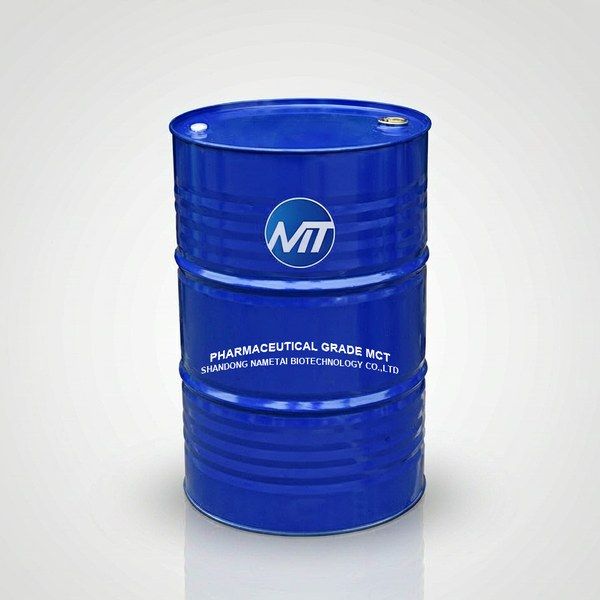
Pharmaceutical-grade MCT oil ships in 190 kg steel drums.
The minimum order quantity is 1 kg. Samples are available in 1 kg or 20 kg quantities. Regular orders ship within 7 days to the port of departure; OEM and custom orders within 30 days. A batch COA with actual results is issued with each shipment; TDS is provided with shipment or upon request; third-party reports are available as needed. Payment terms are agreed upon according to the contract between both parties.
Frequently asked questions
Is pharmaceutical-grade the same substance as food-grade MCT oil?
Yes — medium-chain triglycerides either way. The difference is the standard: this grade is tested and released to ChP 2025 Volume IV excipient requirements with monograph-method documentation, while food-grade material ships against food standards. The parameter differences are set out in our pharmaceutical-versus-food-grade comparison.
Does an active CDE filing mean the product is approved?
No. The filing (F20260000425, status: active) means a complete excipient dossier exists on the CDE platform and can be referenced in drug applications. The excipient is reviewed within each referencing drug application — an activation, not a product-specific approval.
What documents accompany a pharma-grade shipment?
Each shipment carries a batch COA with actual test results, and a technical specification sheet (EN/CN); third-party laboratory reports are available upon request. For filing-referencing projects, batch COAs, chromatograms and stability documentation support the association review.
Can you support an audit of the production site?
Yes. The site welcomes customer and third-party audits, and video walk-throughs can be arranged. The factory page shows the production environment as it is, including the pharma-grade refining stage.
How is the pharma grade packed?
Standard packing is shown on the product page's packaging table; bulk shipments can be arranged with four drums per pallet, stretch-wrapped. Unopened shelf life is 24 months stored cool, dry and sealed, away from light and heat.
Related reading
For the full product detail, see the Pharmaceutical Grade MCT Oil page. For the two standards compared, see pharmaceutical-grade vs food-grade MCT oil. For the filing mechanism, see the CDE excipient filing explained. For quality system detail, see Quality & Compliance and Certification.
Need the monograph documentation package for your registration work? Use the enquiry form on this page — request a quote.