
 +8613295467567




Most sourcing failures in the MCT oil category are not caused by bad oil. They are caused by a document set that looked complete at the quotation stage and turned out, three weeks later, to be a template, an expired certificate or a specification nobody had signed. The fix is procedural and cheap: decide before you negotiate which documents you need, ask for all of them at once, and check each one against a specific standard rather than against a general impression.
This checklist is written for the stage before an order is placed. It covers what to request, in what form, and what makes each document usable in a supplier qualification file. It does not cover how to interpret the numbers on a certificate — that is a separate skill, covered in our guide to reading an MCT oil COA.
Why Supplier Documentation Matters
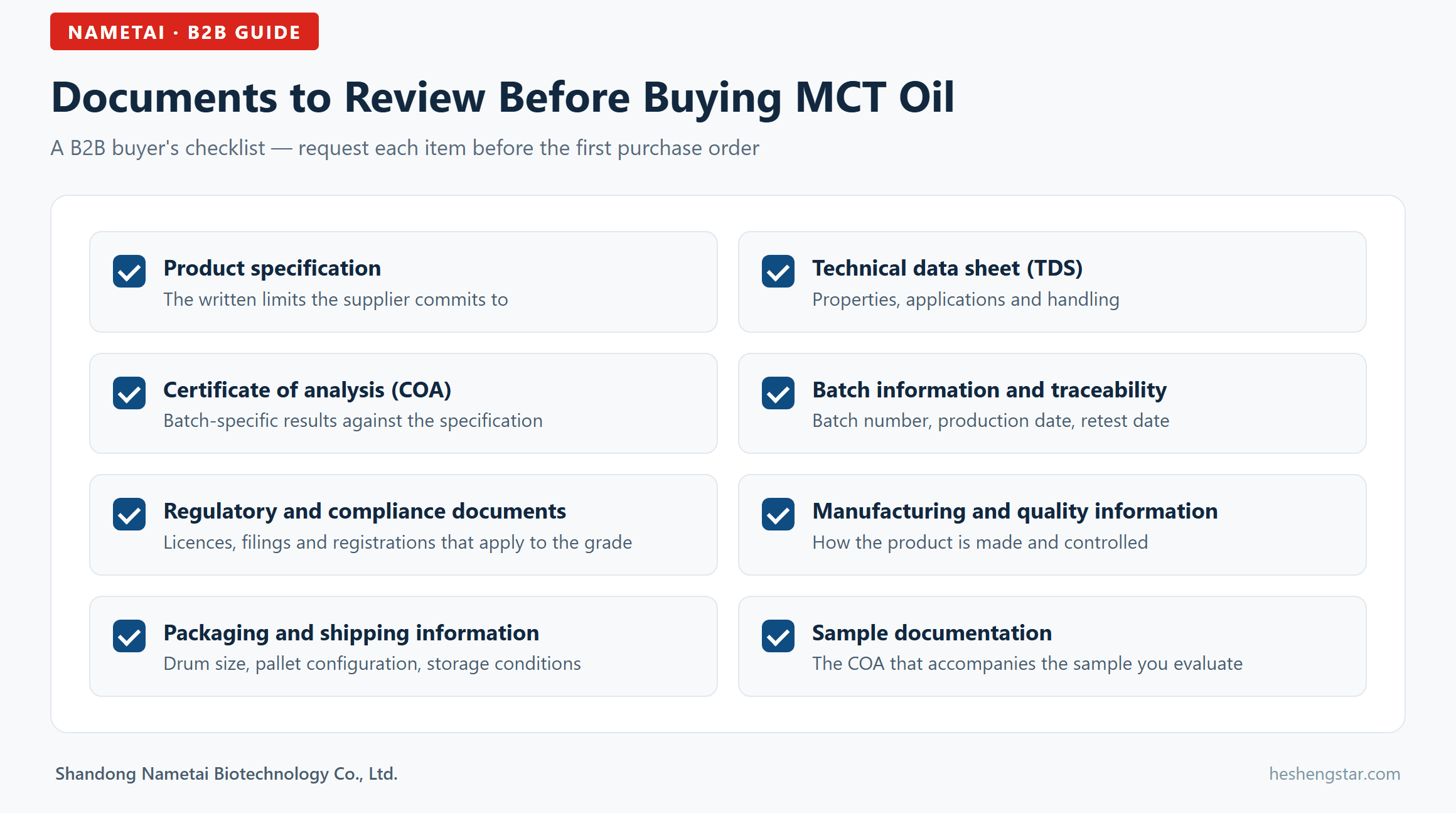
Eight document groups to request before the first purchase order.
An MCT oil specification is a small document with a large role: it defines what the supplier is obliged to deliver, it is the reference against which a batch certificate is judged, and it is the evidence your QA function relies on when it signs off a new source. If the specification is vague, every downstream document inherits the vagueness, and the first genuinely difficult conversation — about a batch that does not match expectation — will happen without a written reference point. There is a practical reason to front-load the request, too: the documents you need for supplier qualification are the same documents your own customers, auditors or regulators will ask you for. One working rule before the list: ask for documents, not for assurances. "We can provide that" and "we always ship a COA" are not documents, and a supplier who answers an enquiry with actual files is telling you what the rest of the relationship will look like.
1. Product Specification
The specification sheet is the anchor document, so request it first and request a version that identifies itself. A usable specification names the product and the grade precisely — not "MCT oil" but which grade, and against which standard it is released; carries a full parameter panel with units, specification limits and ideally typical values; attaches the test method to each parameter, because a limit without a method is not verifiable; and shows a version number and an effective date.
What to watch for: a panel that lists results only for the parameters that tend to look good; a specification with no version control, so you cannot tell whether the sheet you hold is current; and a limit quoted without a unit. Peroxide value is the classic trap, quoted in mmol/kg by Chinese and European laboratories and in meq/kg in many American documents, and comparing the two without converting produces a factor-of-two error that surfaces at the port rather than at the quotation. If you are buying more than one format, ask for a separate specification for each: a liquid MCT oil specification and a microencapsulated powder specification are not interchangeable, and the powder declaration has more moving parts — total fat, surface oil, granularity, carrier and allergen declaration, and plasticizer limits — that a liquid panel does not need. The full item-by-item powder declaration is set out in our guide to auditing an MCT powder specification.
2. Technical Data Sheet (TDS)
A TDS answers questions the specification does not: how the material behaves, how it should be stored and handled, what it is intended for, and what its limitations are. Ask for a TDS covering storage conditions and shelf life, recommended handling, the applications the material is intended for, and packing options; where the material is going into a regulated product, the TDS is also where you confirm identity data such as the substance identity, the INCI name and the typical physical constants. Two practical points. A TDS is a technical summary, not a quality record, and it does not replace the batch certificate for a delivered lot. And it is worth asking whether the TDS can be issued in the language your own documentation system uses; we issue technical specification sheets in English and Chinese, and TDS can be provided with shipment or upon request.
3. Certificate of Analysis (COA)

Behind every COA row: an actual test, run on your batch.
The COA is the document that ties the specification to physical goods, and it is the one buyers most often receive in a form that cannot be used. Ask for a certificate that identifies the specific batch, by number, in a way that can be traced to the drums you receive; shows the specification limit, the measured result and the verdict for each parameter, rather than "conforms" against the whole list; states the method used for each test; and carries an issue date consistent with the production and shipment dates.
A COA that says "conforms" on every line conveys almost nothing: it tells you the supplier has a template, not that a specific lot was measured. Equally, a certificate showing limits that differ from the specification you agreed is a flag worth resolving before the material moves. Request a sample COA at the enquiry stage — a real one, from a recent batch — because how a supplier responds to that request is one of the most useful signals in the whole qualification process. Interpretation of the individual parameters is a separate exercise; our guide to reading an MCT oil COA walks through it line by line, and the ten parameters that carry most of the information are summarised in a companion article.
4. Batch Information and Traceability
Traceability is what makes a COA meaningful; without it, a certificate describes an anonymous quantity of oil. Ask how a delivered lot can be traced back to its production record, and whether retained samples are kept — retained samples matter because they are the only way to settle a dispute about a specific drum months after delivery, turning an argument into a re-test. Ask too how batch numbering works, so that the number on the certificate can be matched to the number on the drum label and on the shipping documents. A supplier who can explain their batch numbering in one paragraph has a functioning system; a supplier who cannot usually has a numbering convention invented for the certificate. In our own operation, retained samples are kept per batch so that a delivered lot can be traced back to its production record.
5. Regulatory and Compliance Documentation
Regulatory documents are the most misread category in supplier files, because they all look like certificates and they do very different things. The discipline is to match the scope of the document to the claim being made. Ask for, and check the scope of:
- Management-system certificates — for example ISO 9001 for quality management and ISO 22000 for food safety, with the associated environmental and occupational health and safety certificates. Check that the certificate names the manufacturing site, not just a parent company, and check the validity dates.
- Food safety and religious dietary certification — HACCP, and Halal and Kosher certificates where your market requires them. Check that the product is covered by the certificate scope, and in the case of Halal, by the product annex rather than the main certificate alone.
- Business licence and production licence — the production licence states what the site is licensed to manufacture, and its annex lists the product categories.
- Facility registrations — a US FDA food facility registration registers a facility. It is not an FDA product approval, and a supplier who presents it as one is misrepresenting it.
- Excipient filings, where the material is used in a pharmaceutical application — in China, a filing on the CDE public excipient platform, identifiable by filing number and status flag. Ask for the filing number and check the record yourself; our article on the CDE excipient filing explains what the status flag does and does not mean.
Two rules keep this category honest. Certificates should be issued in the name of the manufacturer — if the certificate names a different entity from the one quoting you, ask why. And no supplier should be assumed to hold a document it has not shown; in particular, management-system certificates are not the same thing as a GMP certificate, and a food facility registration is not a product approval.
6. Manufacturing and Quality Information
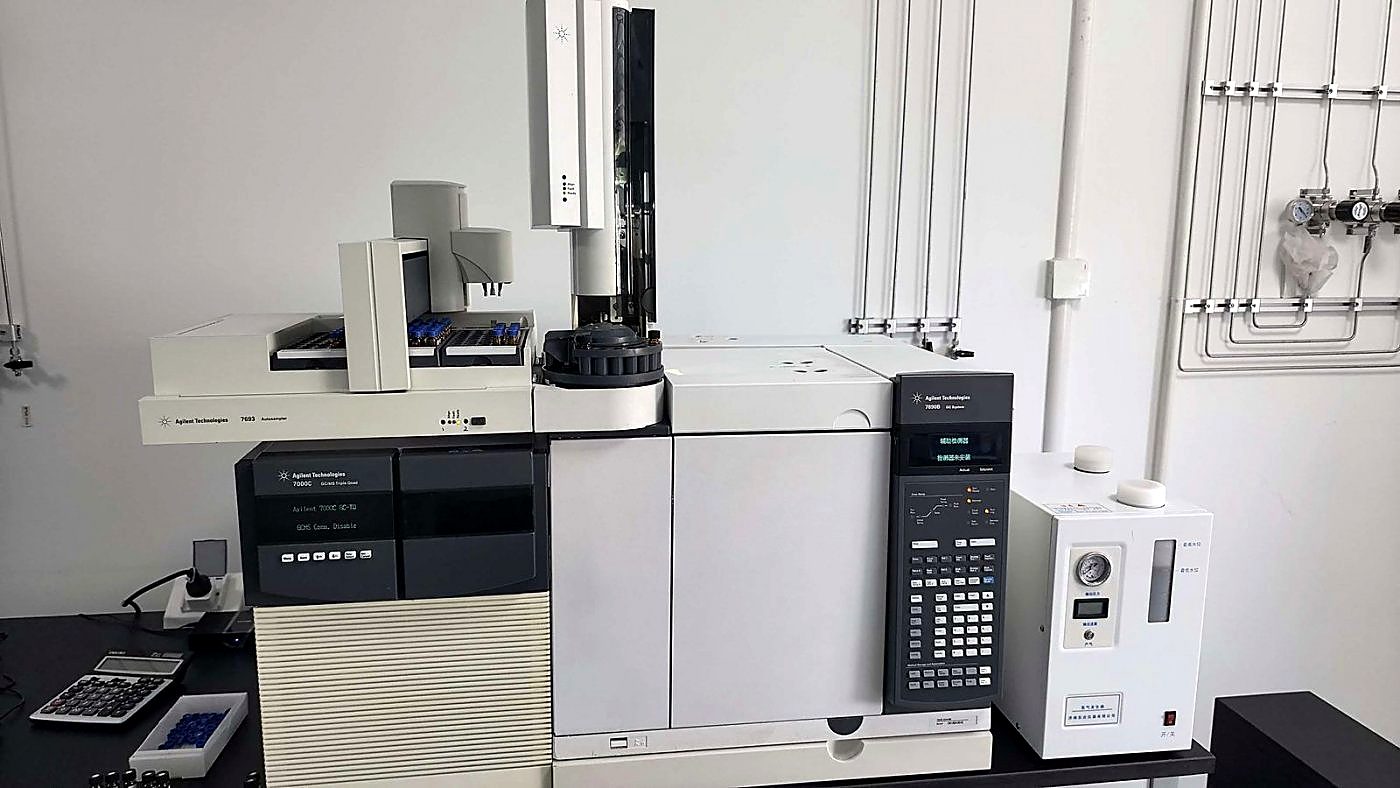
In-house instruments keep batch data independent and traceable.
Documents describe a product; they do not, on their own, describe a plant. Ask for the manufacturing information that makes the documents credible: who actually manufactures the material and at which site, the process route used, and the release routine — which parameters are tested on every batch, which are tested at type-inspection frequency, and which are covered by a third-party laboratory. Ask also which instrument the fatty-acid composition is determined on, since composition by gas chromatography is the test that defines an MCT grade.
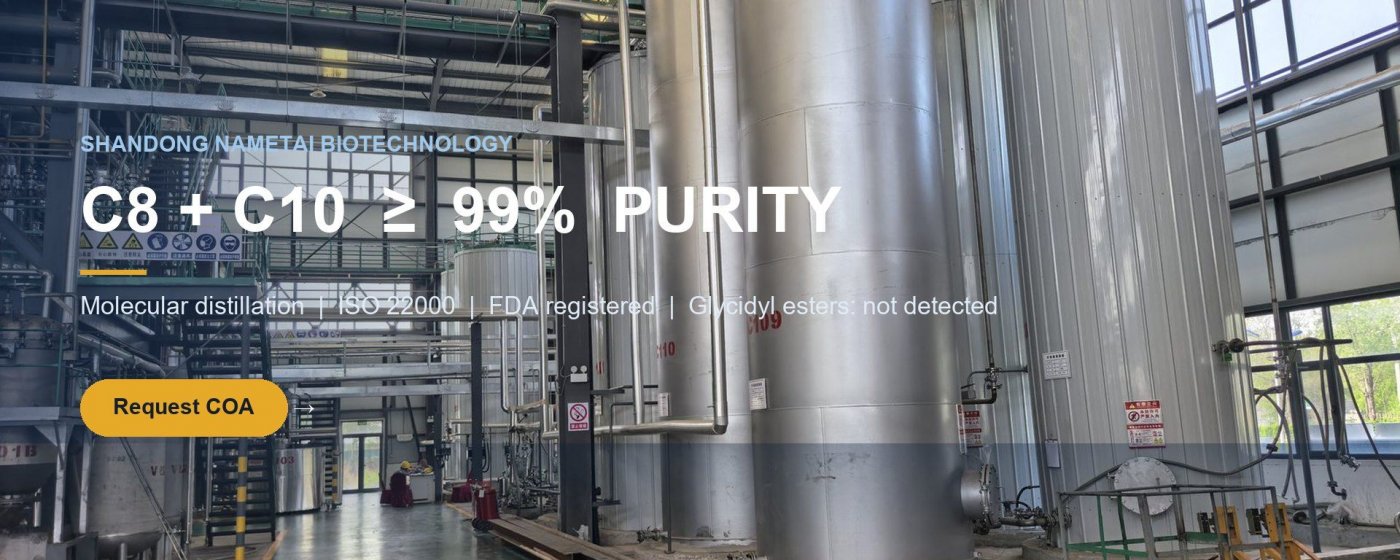
Our own position is set out in Quality & Compliance: every batch is released against a full specification, with fatty-acid profile by GC, acid value, peroxide value, moisture and impurities tested in-house on each lot, heavy metals and microbiological items verified through third-party laboratory reports, and retained samples kept for batch traceability. The production route — esterification, molecular distillation, separation and a dedicated pharmaceutical-grade finishing stage — is described on the factory page.
7. Packaging and Shipping Information
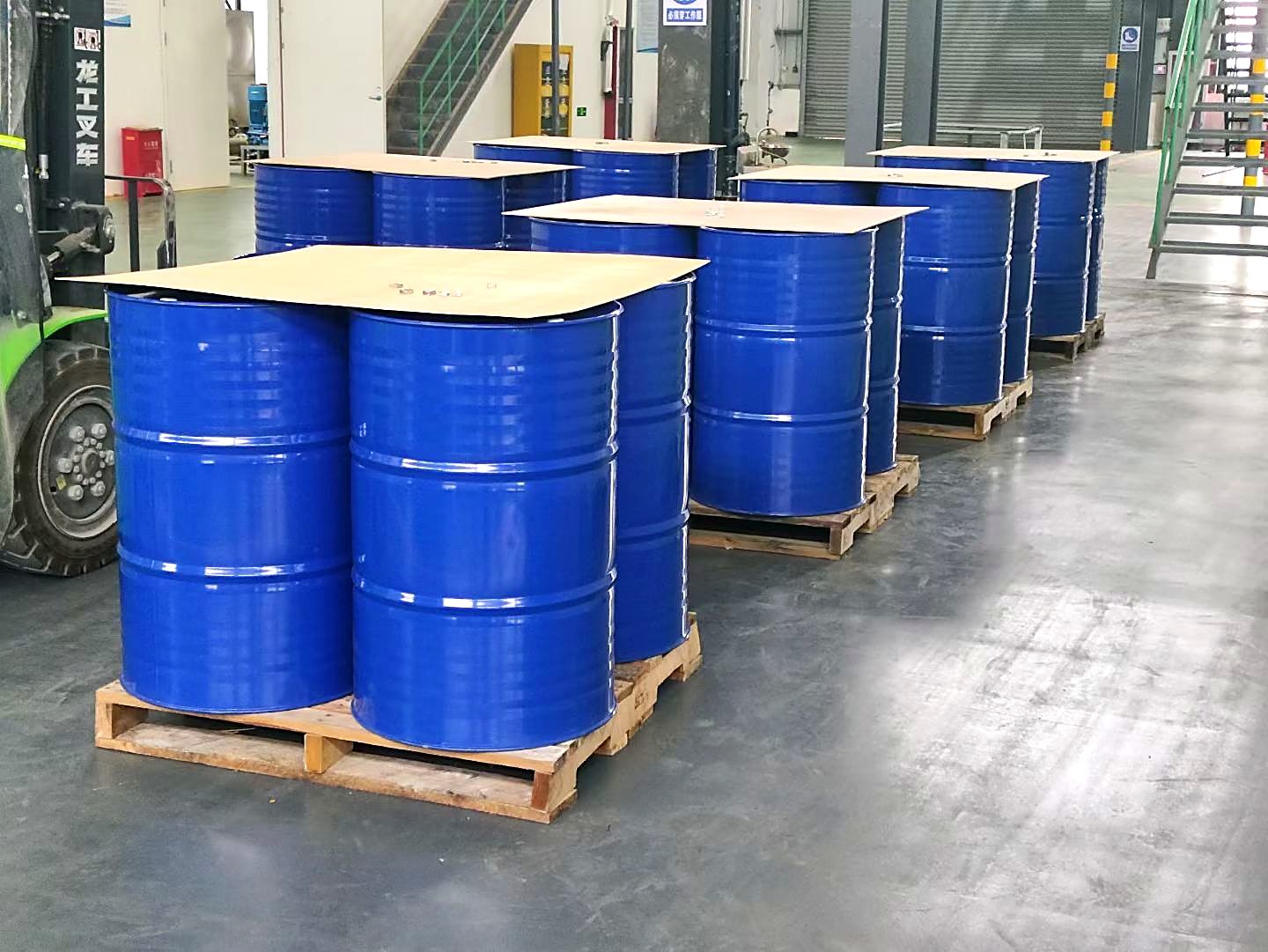
Packaging and shipping details belong in the document set, not in a phone call.
Packaging documents protect the material in transit and protect you at goods-in. Ask for the container type and size, the palletisation and wrapping arrangement, and the net and gross weights per unit:
- The standard pack sizes for bulk, mid-batch and sample quantities.
- The container material — for bulk oil this is normally a steel or iron drum, and the difference between a plastic drum and a steel drum matters if the material will be stored outdoors or for a long period.
- The pallet configuration, and whether loads are stretch-wrapped for container loading.
- Storage and shelf-life conditions, including the recommended storage temperature for the powder where applicable.
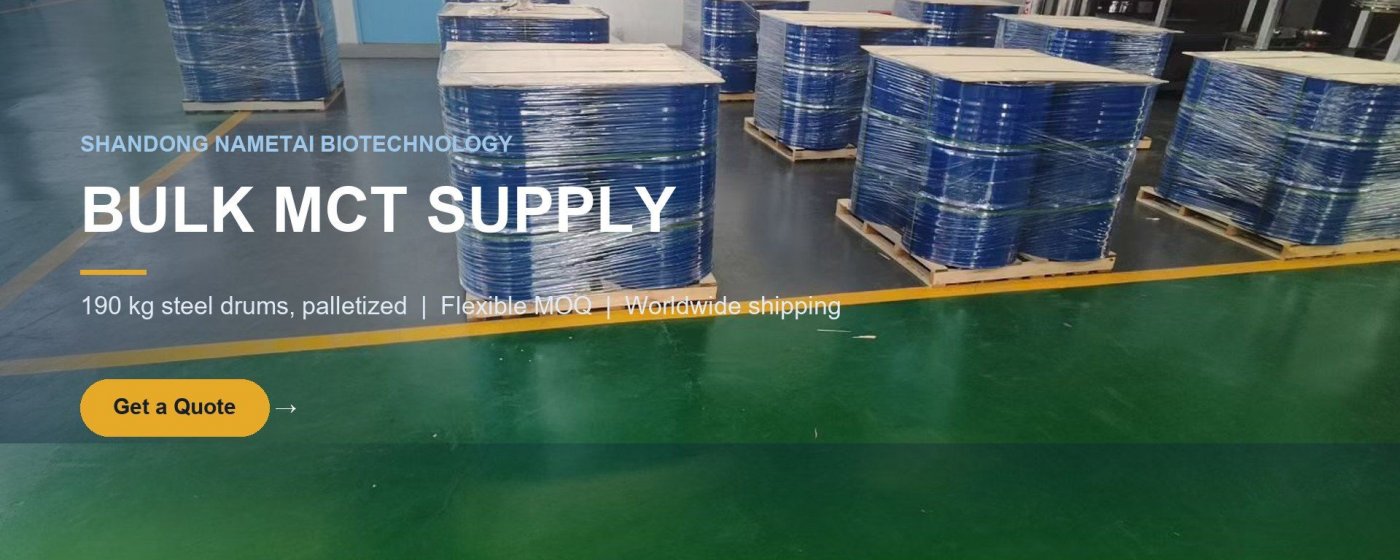
For reference, our standard bulk pack for MCT oil is a 190 kg iron drum, with a 25 kg plastic drum for small and medium batches and 1 kg packs for samples and trials, and bulk shipments can be arranged with four drums per pallet, stretch-wrapped for container loading. Shelf life is 24 months unopened under the recommended storage conditions. If the material is going into a regulated or a food-contact application, add a question about the packaging itself: a migration or food-contact statement for the container and any inner liner, and a non-GMO statement where relevant. This is the item most often missing from an otherwise complete file.
8. Sample Documentation
Samples should arrive with paperwork, not just with oil. Ask for the batch certificate for the sample batch, so that the sample can be compared with the specification you were quoted, and ask which production line the sample came from — a sample drawn from the line that will actually supply you is more informative than one drawn from a retained pilot stock. Match the pack size to your intended trial: a 1 kg pack is normally enough for laboratory work, while a production-scale trial is better served by a 20 kg pack.
9. Commercial Information
Commercial terms belong in the same pack as the technical documents, because they determine whether a trial is possible and what happens if a batch is questioned. Request in writing: the minimum order quantity; the available sample quantities; the lead time, stated separately for regular orders, samples and OEM or custom orders; the packaging and palletisation terms; the payment terms; and the position on OEM/ODM and custom formulation.
For transparency, our standard terms are a minimum order quantity of 1 kg across MCT Oil, MCT Powder and Specialty Esters; samples available in 1 kg or 20 kg quantities, with sample quantities adjustable to customer requirements; and lead times of 7 days to the port of departure for regular orders, and 30 days from the order date for OEM or custom orders. OEM and ODM services are available, and custom formulation requests can be evaluated according to product requirements. Payment terms are agreed upon according to the contract between both parties. One caution on wording: a supplier who states that any custom formulation can be produced without qualification is describing a sales process, not a technical one.
A B2B MCT Oil Supplier Document Checklist
| # | Document | What makes it usable |
|---|---|---|
| 1 | Product specification | Full panel with units, limits, typical values, methods, version and date |
| 2 | Technical data sheet | Storage, shelf life, handling, intended applications, pack options |
| 3 | Batch COA | Batch number, measured values, methods, limits, issue date |
| 4 | Batch traceability statement | How a delivered lot maps to its production record; retained samples |
| 5 | Management-system certificates | Issued to the manufacturing site, in date, scope visible |
| 6 | Food safety / dietary certificates | HACCP, Halal, Kosher — scope covers the product you are buying |
| 7 | Business and production licences | Production licence annex matches the product category |
| 8 | Facility registration | Understood as a facility registration, not a product approval |
| 9 | Excipient filing reference | Filing number plus verification of the status flag (if pharma use) |
| 10 | Third-party test reports | Coverage of heavy metals, plasticizers, microbiology |
| 11 | Packaging and shipping data | Container type and size, palletisation, net/gross weights |
| 12 | Food-contact / migration statement | For the container and inner liner where applicable |
| 13 | Sample batch certificate | Links the sample to the specification you were quoted |
| 14 | Commercial terms | MOQ, samples, lead times, packaging, payment, OEM/ODM position |
How to Review the Documents Before Ordering
- Specification against your requirement. Check that the limits suit your process, not merely that the product is described as MCT oil; pay particular attention to the parameters your formulation is sensitive to.
- COA against specification. Do the limits on the certificate match the limits on the specification you were quoted? If not, establish which one is current.
- Certificate against claim. Does each certificate's scope actually support the claim being made, and does it name the manufacturing site?
- Dates against story. A certificate issued well before the production date, or a document pack that has not been updated since a plant change, is worth a question.
- Sample against specification. Test the sample against the limits you were sent, then keep the results with the sample certificate.
Work through the list before commercials are agreed. Every question is easier to ask while the order is still optional, and a supplier's willingness to answer them is itself part of what you are buying.
What Nametai Can Provide
Shandong Nametai Biotechnology Co., Ltd. manufactures MCT oil, microencapsulated MCT powder and fatty acid esters in Dongying, Shandong. The document set we supply covers the checklist above: a specification sheet with the standard and methods attached; a batch COA with the actual test results, issued with every shipment; TDS with shipment or on request; third-party laboratory reports on request; management-system certificates, HACCP, Halal and Kosher certification, a US FDA food facility registration and a China food production licence, all issued in the company's name; and, for pharmaceutical applications, the CDE excipient filing F20260000425 held in active status.
Rather than describe the certificates, we publish them: scans are available in the certification section, with the issuing body visible on each document so it can be verified independently. Buyers who need copies for a supplier qualification file can request them, and we welcome factory visits and third-party audits by appointment. What we will not do is claim a document we do not hold — we do not hold a GMP certificate, a pharmacopoeial monograph approval, a DMF or a CEP, and we do not present our FDA food facility registration as a product approval.
FAQ
What documents should I request from an MCT oil supplier?
At minimum: a version-controlled specification sheet, a TDS, a batch COA with measured values, a batch traceability statement, management-system and food safety certificates, the business and production licences, packaging and shipping data, and written commercial terms. For pharmaceutical use, add the excipient filing reference and third-party test reports.
Is a COA the same as a specification sheet?
No. The specification defines the product and its limits; the certificate reports how one specific batch actually performed against those limits. You need both, and they should agree.
Detailed COA versus a "conforms" certificate — which should I accept?
A certificate should show the batch number, the specification limit and the measured result for each parameter, the test method, and an issue date consistent with production and shipment. A certificate that reports "conforms" without measured values is not a usable quality record.
Should I ask for a sample COA at the enquiry stage?
You should ask, and treat the response as information. A real certificate from a recent batch, sent before commercials are discussed, is a positive signal; a template or a refusal is equally informative.
What if the supplier will not provide a document I need?
Ask why, and ask in writing. In some cases the document exists but is issued per order; in others it does not exist at all, and the distinction is worth knowing before an order is placed rather than after.
Related Pages
- Interpreting the documents: How to read an MCT oil COA · The 10 COA parameters that matter · Auditing an MCT powder specification
- Products: MCT Oil · Pharmaceutical Grade MCT Oil · MCT Powder · Specialty Esters
- Evidence: Quality & Compliance · Certification · Inside our factory · CDE excipient filing
- Buying guides: Choosing an MCT oil manufacturer for pharmaceutical applications · Sourcing MCT oil from China
Request a Quote
For a quotation, a specification sheet, a sample batch COA or a complete supplier qualification pack, use the enquiry form on this page — request a quote — or the Contact Us page. The minimum order quantity is 1 kg for MCT Oil, MCT Powder and Specialty Esters.