
 +8613295467567



Microencapsulated MCT powder is not just "MCT oil in powder form". It is a formulated product: oil, carrier, and process. That formulation decides how the powder flows, how it tastes, and — the question that most often surprises buyers — what allergen declarations the finished label needs. This article covers the three things a B2B buyer must check about carriers, allergens and labelling before specifying an MCT powder.
What the carrier does — and what it adds to the label
The carrier is part of the ingredient list - and part of the allergen declaration.
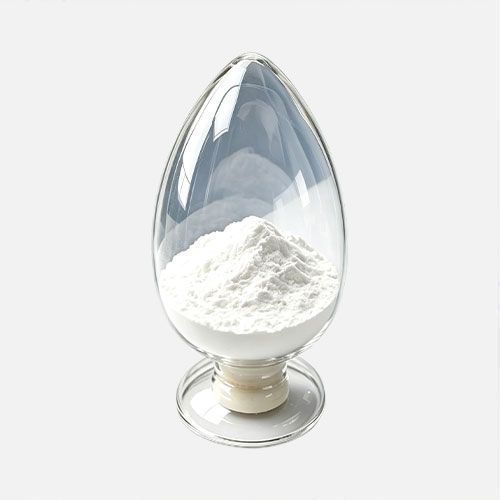
Spray-dried MCT powder is typically 70% oil by load, held in a carrier matrix that turns the liquid oil into a free-flowing powder. The carrier is a functional ingredient in its own right: it forms the wall around the oil droplets, controls surface oil, and determines flowability and dispersibility.
The most common carrier for MCT powder is sodium caseinate — a milk protein. That choice has excellent technical properties, but it means the powder contains milk, one of the major regulated allergens in the EU, the US and most other markets. Our own specification states this openly: protein content 2.0–10.0% from the carrier, which is typically sodium caseinate — a milk allergen.
Practical consequences for your label:
- The finished product must declare milk as an allergen where your market's labelling rules require it.
- "Dairy-free" or "non-dairy" claims need careful review when a caseinate-carried powder is used.
- If your market or customer base cannot accept milk-derived ingredients, discuss alternative carriers with the supplier before assuming a solution exists — feasibility should be evaluated according to product requirements, not promised in advance.
The specification rows that reveal powder quality
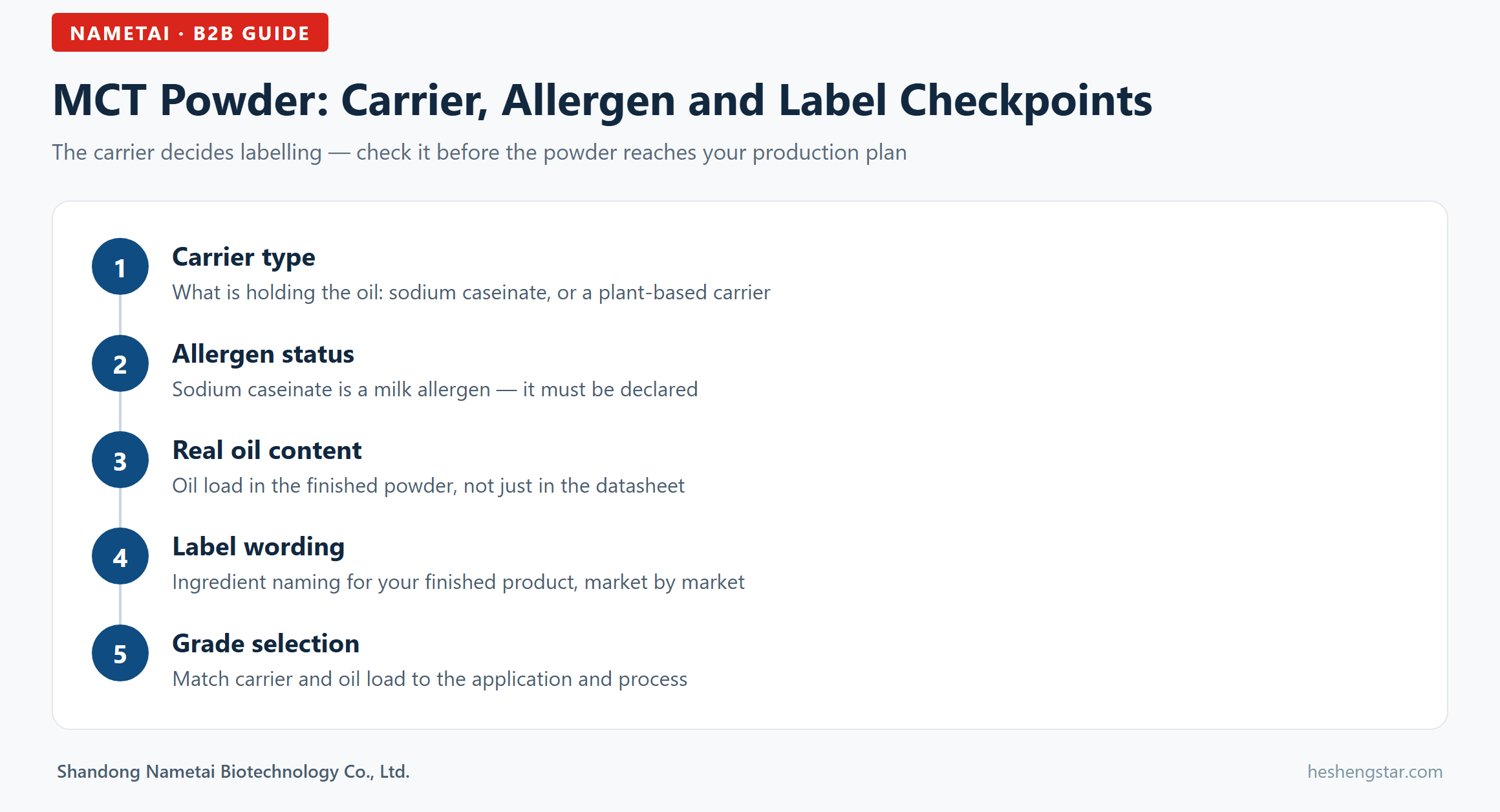
Carrier, allergen and label checkpoints - in order.
An MCT powder specification is longer than an oil specification because the powdering process adds its own failure modes. These are the rows we consider the most diagnostic, with the limits from our MCT 70% microencapsulated powder:
| Item | Limit | Method | What it tells you |
|---|---|---|---|
| Total fat | 68.0–74.0% | GB 5009.6 | Oil load is as declared — the dosing math for your formula |
| Surface oil (wet basis) | ≤ 5.0% | SC/T 3505 | Encapsulation efficiency; high surface oil means sticky powder and faster oxidation |
| Particle size (through 40 mesh) | ≥ 90% | GB/T 5507 | Flowability and dispersibility in mixing |
| C8 + C10 in the fat phase | ≥ 95% | GC | The powder really contains MCT, not a diluted blend |
| Protein (carrier) | 2.0–10.0% | — | Carrier content — and, for caseinate, the milk allergen |
| Ash | ≤ 5.0% | — | Carrier and salt load |
| Moisture | ≤ 3.0% | — | Stability and caking risk |
Surface oil is the row buyers most often undervalue. Oil that sits on the particle surface rather than inside the matrix is exposed to air: it drives caking, flavour drift and oxidative defects during shelf life. A ≤5.0% surface oil limit with a real method behind it is a better quality signal than almost any marketing claim.
Contaminant limits worth asking about
Because powders are processed foods, plasticizer limits belong in the specification. Our MCT powders specify DBP ≤ 0.3 mg/kg, DEHP ≤ 1.5 mg/kg and DINP ≤ 9.0 mg/kg, verified by third-party laboratory reports alongside our in-house release testing. If a supplier's powder specification is silent on plasticizers, ask why — the absence of a limit is not the absence of a risk.
For a full parameter-by-parameter audit of a powder specification, our article on the MCT powder specification checklist walks through all thirty-four items.
Labelling in practice: what to put on your finished product
From the powder specification, your label work usually comes down to three declarations:
- Allergen declaration: milk, when the carrier is sodium caseinate — per your market's allergen labelling regulation.
- Fat content and serving math: use the total fat limit and the actual batch COA value, not the marketing name, when calculating declared nutrition.
- Ingredient naming: "microencapsulated MCT powder (medium-chain triglycerides, sodium caseinate)" or the equivalent your regulation requires — confirm wording with your regulatory advisor.
We supply the specification and batch COA documentation your regulatory team needs for these declarations, but the final label compliance judgement belongs to your side — regulations differ by market and product category.
Choosing between powder grades
Our powder line covers five grades: MCT 70% Microencapsulated Powder, High-load MCT Microencapsulated Powder, Powdered Medium-Chain Triglycerides (C8), Ketogenic MCT Powder and Pet Grade MCT Microcapsule Powder. They differ in oil load, carrier system and target application — not in documentation standard: every grade ships with a batch COA, and the sample policy (1 kg or 20 kg) applies across the line.
If the choice between oil and powder is still open, our comparison of MCT oil versus MCT powder covers the trade-offs from a formulation and logistics standpoint.
How to evaluate a powder supplier
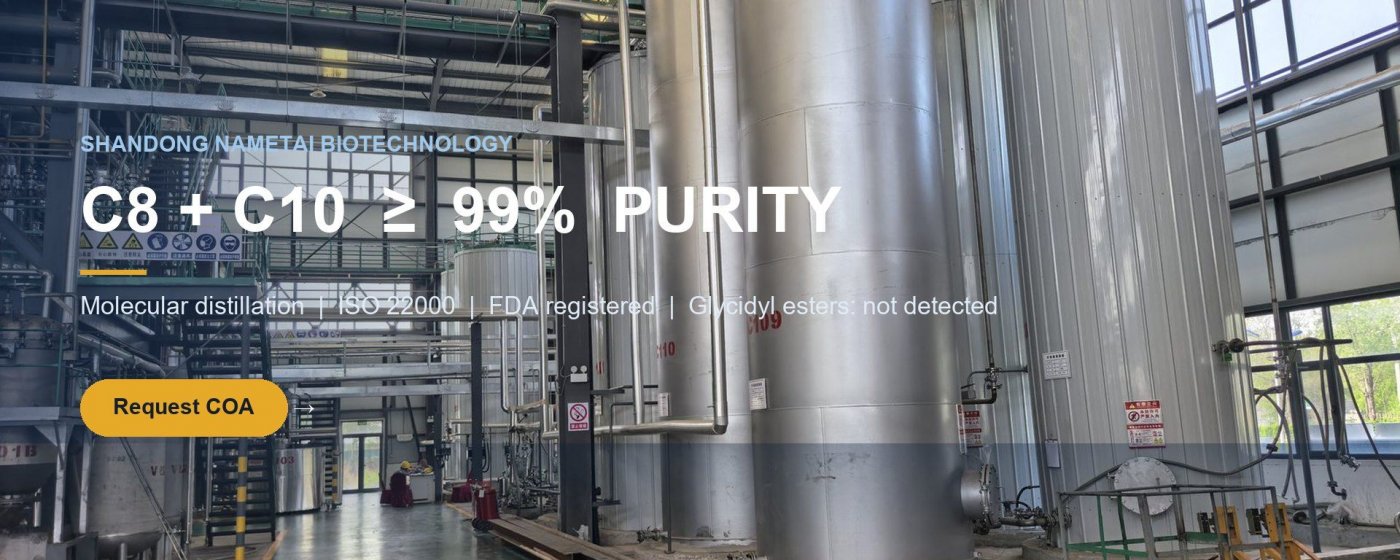
Carriers, allergen status and surface oil all trace back to the supplier's process control. Our seven-question checklist for evaluating an MCT powder supplier covers the supplier-side due diligence, and the factory page shows the production environment, including the crude-fat testing used to verify powder oil load.
Frequently asked questions
Does your MCT powder contain milk?
Our standard grades use sodium caseinate as the carrier, which is a milk protein — the specification states protein at 2.0–10.0% and identifies the milk allergen openly. If your product requires a milk-free position, contact us: alternative carriers can be evaluated according to product requirements, but feasibility must be confirmed case by case rather than assumed.
Can I claim "non-dairy" on a product made with your powder?
That depends on your market's regulation and the carrier in the grade you use. We provide the full specification and COA documentation; the claim decision should be made by your regulatory advisor. What we can guarantee is that the documentation accurately states what the powder contains.
Why is surface oil limited to 5%?
Surface oil is oil outside the encapsulation matrix — exposed to air, prone to oxidation, and a driver of caking. The ≤5.0% limit (SC/T 3505, wet basis) keeps the oil inside the matrix where it is protected, which is what gives the powder its shelf life.
Do plasticizer limits really matter for a powder?
Yes — powders pass through more processing equipment than oils, and plasticizers are a recognized monitoring point for processed foods. Our specifications set DBP ≤ 0.3, DEHP ≤ 1.5 and DINP ≤ 9.0 mg/kg, with third-party verification.
Can I get samples of different grades to compare carriers?
Yes. Samples are available in 1 kg or 20 kg quantities across the powder line, each with its batch COA. Comparing two grades in your own mixing trial is the fastest way to feel the flowability and dispersibility differences.
Related reading
For the full specification audit, see the MCT powder specification checklist. For supplier due diligence, see How to Evaluate an MCT Powder Supplier: Seven Questions. For the quality system behind the specifications, see Quality & Compliance and the factory page.
Ready to compare grades or request samples with full documentation? Use the enquiry form on this page — request a quote.